
BestProductsForMen.org participates in affiliate programs, which means we may earn a commission if you click on a link and make a purchase. This comes at no additional cost to you. We only recommend products we personally trust, use, or believe will provide value to our readers.
Our goal is to provide honest, helpful reviews and recommendations so you can make informed decisions.
Key Takeaways
- These resistance band exercises are designed specifically to help you break through a strength plateau.
- Resistance bands create variable tension that traditional weights can’t match, challenging muscles in new ways to overcome plateaus
- Adding tempo variations (like 4-second lowering phases) with resistance bands recruits more muscle fibers than regular training
- Resistance bands can both assist with difficult exercises (like pull-ups) and add progressive overload to movements you’ve mastered
- Training with bands creates peak tension at different points in the range of motion compared to weights, activating neglected muscle fibers
- FitBandz resistance training systems offer specialized band configurations designed to target plateau-breaking muscle activation patterns
Why You’ve Hit a Fitness Plateau (And What It Really Means)
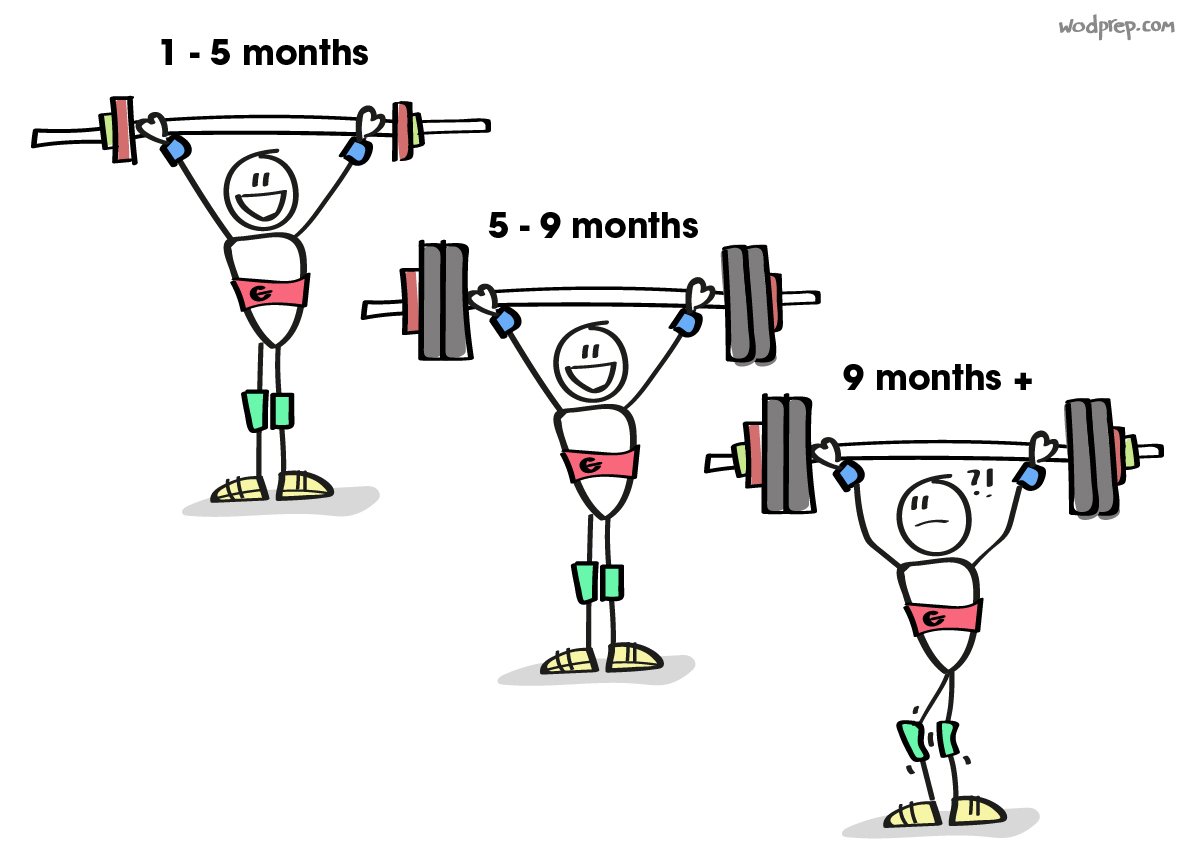
“3 Reasons Your CrossFit PR Plateaus and …” from wodprep.com
That frustrating moment when progress stops isn’t a sign you’ve reached your limit—it’s a signal your body needs a new challenge. After weeks of consistent training, your muscles have adapted to the stimulus you’ve been providing. This adaptation is actually good news—your body has become more efficient at handling the workload you’re giving it.
What many people miss is that plateaus are predictable and necessary parts of the fitness journey. Your nervous system learns movement patterns, your muscles strengthen specific fibers, and your body optimizes energy expenditure. The problem isn’t that you’ve peaked; it’s that you’re no longer providing novel stimuli to force continued adaptation.
Resistance bands offer a unique solution because they change the resistance curve of traditional exercises. Where dumbbells and barbells provide consistent resistance throughout a movement, bands create progressive tension—the farther you stretch them, the harder they pull back. This variable resistance pattern challenges your muscles in ways they haven’t experienced, even if you’ve been lifting for years.
- Most plateaus occur after 4-6 weeks of the same training routine
- Your body becomes neurologically efficient at familiar movements
- Muscle fiber recruitment patterns become fixed with repetitive training
- Psychological fatigue from repetitive workouts reduces training intensity
- Progress measurement methods may be too limited (focusing only on weight lifted)
Introducing resistance bands doesn’t mean abandoning your current training—it means enhancing it. By altering the resistance curve, bands target your weak points in ways that traditional training hasn’t. FitBandz resistance training systems are specifically designed to challenge muscles at their strongest and weakest points throughout a complete range of motion.
The Science Behind Resistance Bands vs. Traditional Weights
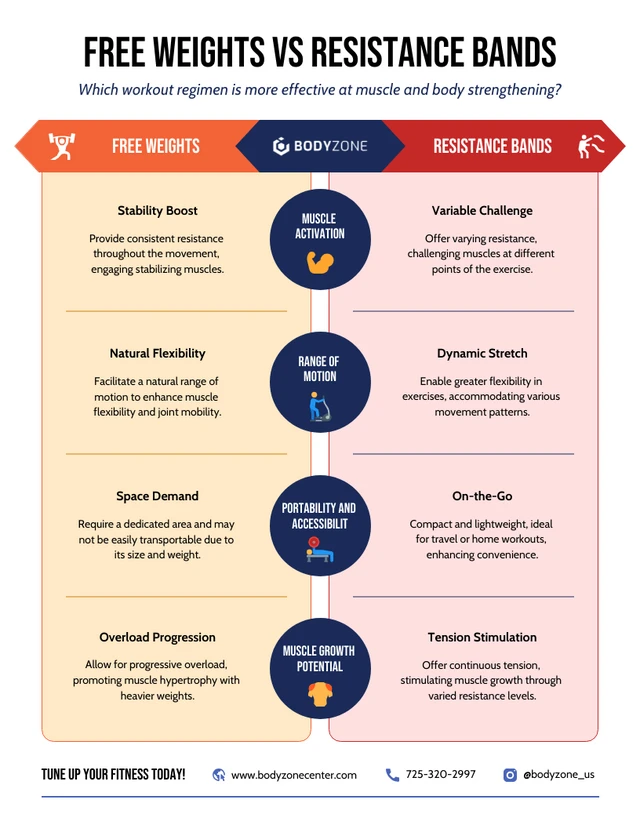
“Gym Fitness Training Infographic – Venngage” from venngage.com
The fundamental difference between bands and weights lies in how resistance is applied during movement. Weights rely on gravity, providing constant resistance in a single direction. Bands, however, increase tension as they stretch, creating a resistance curve that peaks at full extension—precisely where many muscles are strongest. This alignment of peak tension with peak strength creates a more complete muscle stimulus.
Research published in the Journal of Strength and Conditioning Research shows that variable resistance training (like bands) produces greater power development than constant resistance alone. This occurs because variable resistance better matches your strength curve—the natural variation in leverage and force production capability throughout a joint’s range of motion.
Progressive Tension Advantage
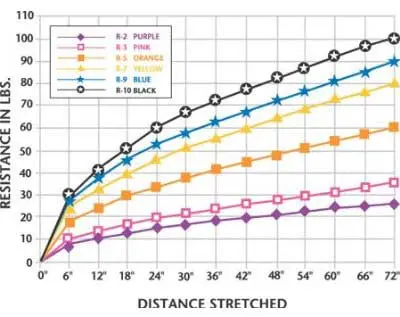
As you stretch a resistance band, the tension increases linearly, creating what exercise physiologists call “ascending resistance.” This means minimal tension at the beginning of the movement and maximum tension at the end. For most pressing and pulling movements, this perfectly matches your body’s natural strength curve, where mechanical leverage improves as you extend through the movement.
This progressive tension creates a unique training stimulus that constant-weight exercises can’t provide. At the weakest points in your range of motion (often the beginning), the band applies less force, allowing proper form. As you move to stronger positions, the band tension increases, providing continued challenge throughout the entire range. For more ideas, check out this guide on resistance band exercises.
- Bands provide 20-40% more tension at the end of the movement compared to the beginning
- Muscle activation increases linearly with band tension through the range of motion
- Bands force controlled eccentrics (lowering phase) due to decreasing tension
- Force vector changes constantly throughout the movement, improving stabilizer recruitment
Joint-Friendly Resistance
“Human Resistance Bands EliteFTS Pro …” from www.dentalhousecr.com
Traditional weights place maximum stress on joints at the weakest mechanical positions—often at the beginning of a lift or at the “sticking point.” This is why injuries typically occur during these vulnerable positions. Resistance bands apply minimal force at these weak points and increase resistance as your joints move into stronger, more stable positions. This reduced stress at vulnerable joint angles makes bands particularly valuable for those with previous injuries or joint sensitivity.
The natural deceleration provided by bands also reduces the ballistic impact that can occur with weight training. When lowering a weight quickly, you must actively decelerate to avoid injury. With bands, the decreasing tension naturally slows the movement, reducing joint stress while still providing an effective training stimulus.
Muscle Activation Patterns
Band training creates distinctive neural recruitment patterns compared to free weights. Studies using EMG (electromyography) measurements reveal that bands activate different motor unit populations, particularly in the terminal range of motion. This novel stimulus activates previously undertrained muscle fibers, creating the perfect environment for breaking through plateaus. For those interested in enhancing their workout space, consider exploring compact home gym kits as an effective way to incorporate band training into your routine.
The continuous tension provided by bands also eliminates the “resting point” that occurs with weights at certain positions. For example, at the bottom of a bench press, the bar momentarily rests on your chest, reducing muscle activation. With bands, tension remains constant throughout the movement, forcing continuous engagement and increasing time under tension—a key factor for muscle growth.
5 Upper Body Band Exercises to Shock Your Muscles
“6 Upper Body Resistance Band Workouts …” from www.onepeloton.com
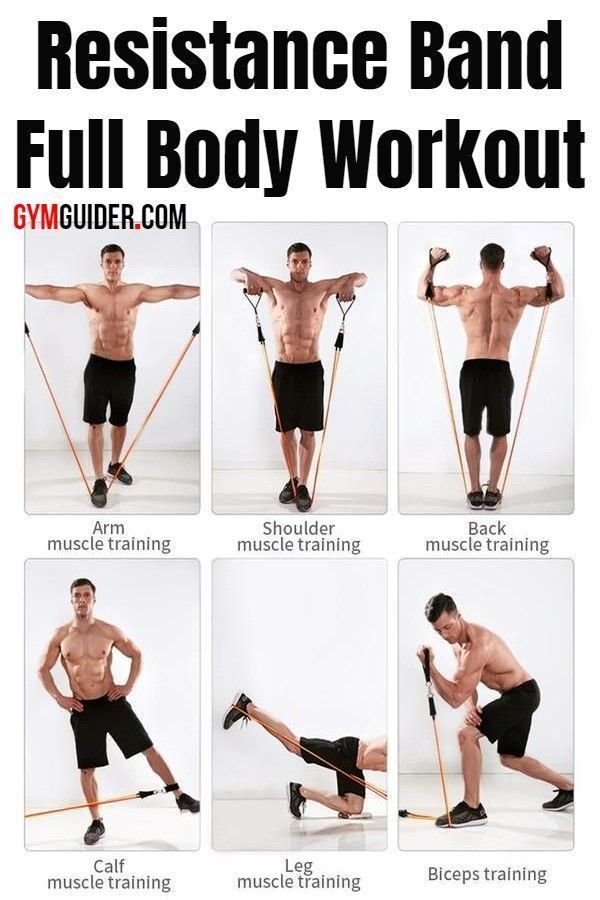
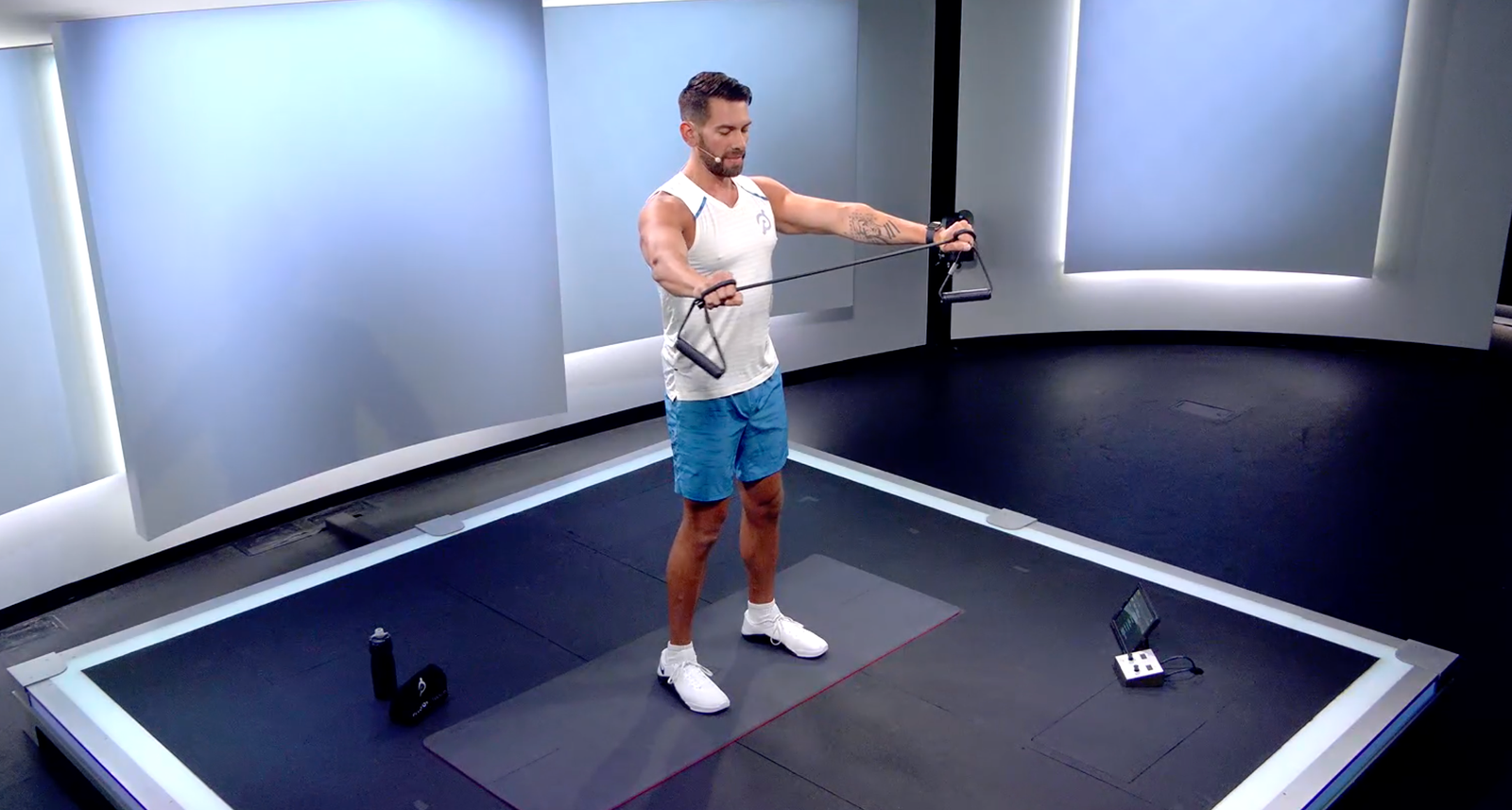
When progress stalls, introducing novel stimuli is essential for continued adaptation. These five upper body exercises utilize resistance bands to create new tension patterns, challenge stabilizers in different ways, and stimulate growth in previously plateaued muscle groups. Incorporate these movements into your routine for 3-4 weeks to break through stubborn plateaus. For more inspiration, check out this full body resistance band workout.
For optimal results, focus on controlled tempo with these exercises. The unique properties of bands reward proper form and punish rushing through repetitions. By controlling the eccentric (lowering) phase for 3-4 seconds on each rep, you’ll maximize the growth stimulus and minimize the risk of compensation patterns that can lead to injury.
Resistance Band Workout at Home
1. Banded Face Pulls for Shoulder Definition
Traditional face pulls often become stale, with diminishing returns for rear deltoid and rotator cuff development. The banded version creates peak tension precisely where you need it—at full retraction. Anchor a band at chest height and grip with palms facing down. As you pull toward your face, externally rotate your shoulders so your thumbs point backward at the end position.
The key difference with bands is maintaining constant tension throughout the movement. Focus on a 1-second hold at full retraction, where the band tension is highest. This intensifies activation of the often-neglected posterior deltoids and external rotators that stabilize your shoulder joint. Perform 3 sets of 15-20 reps with controlled tempo to stimulate these smaller muscle groups that often stagnate with traditional training.
2. Variable Tension Pushups
“Regressing the Push-Up: How to Make …” from davidwilliamrosales.com
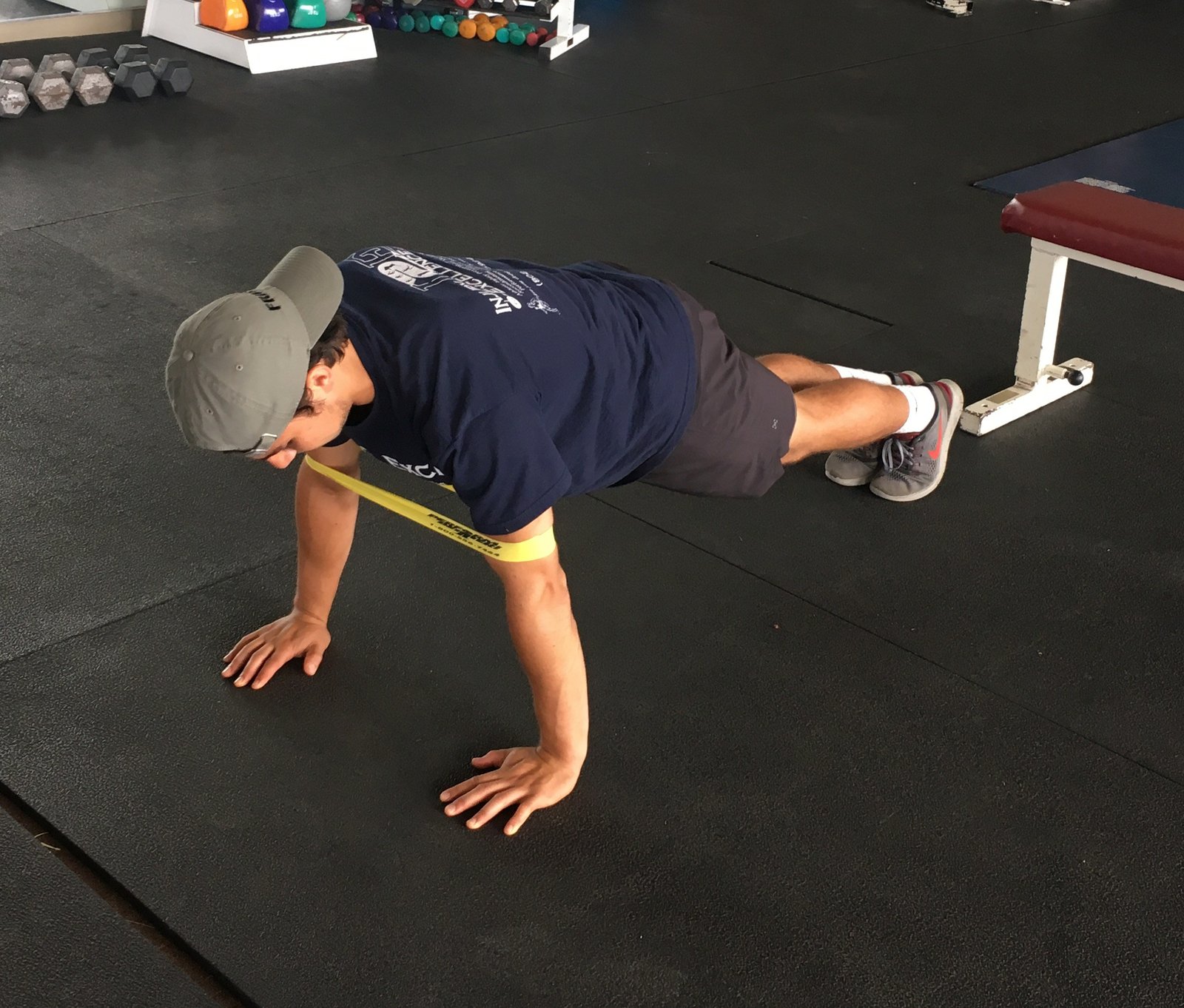
Transform the basic pushup into a progressive resistance challenge by placing a band across your back, secured under your hands. As you push away from the floor, the band creates increasing resistance, peaking at the top of the movement where your chest muscles are strongest. This variable resistance matches your strength curve, providing maximum challenge throughout the entire range of motion.
For maximum plateau-breaking effect, use a 4-2-1 tempo: lower for 4 seconds, pause for 2 seconds at the bottom with chest hovering just above the floor, then explode up against the band resistance for 1 second. This tempo manipulation ensures both mechanical tension and metabolic stress—two primary drivers of muscle growth that are often undertrained in traditional programs.
3. Rotational Chest Press
Stand sideways to an anchor point with the band at chest height. Begin with your arm across your body, then press forward while rotating your torso to face the direction of the press. This movement combines horizontal pressing with rotational core engagement, challenging your chest and shoulders in a functional pattern rarely trained with traditional weights.
The rotational component activates the pectoralis major in its often-neglected role as an internal rotator of the shoulder. By combining pressing and rotation, you’re training intermuscular coordination that can transfer to improved performance in other exercises once you return to traditional training. Perform 3 sets of 12-15 reps per side, focusing on controlled rotation and full chest extension.
4. Overhead Press with Band Separation
Stand on the middle of a resistance band and grasp both handles at shoulder height. As you press overhead, simultaneously separate your hands wider apart, adding horizontal tension to the vertical press. This compound movement pattern challenges your shoulders through multiple force vectors simultaneously, creating a novel stimulus for deltoid development.
The band separation component activates the often-undertrained middle deltoid fibers while the overhead press engages the anterior deltoids. This combination provides complete deltoid stimulation in a single movement, addressing common imbalances that can lead to plateaus and potential injury. Perform 3 sets of 10-12 reps, focusing on full range of motion in both the vertical press and horizontal separation.
5. Multi-Angle Bicep Curls
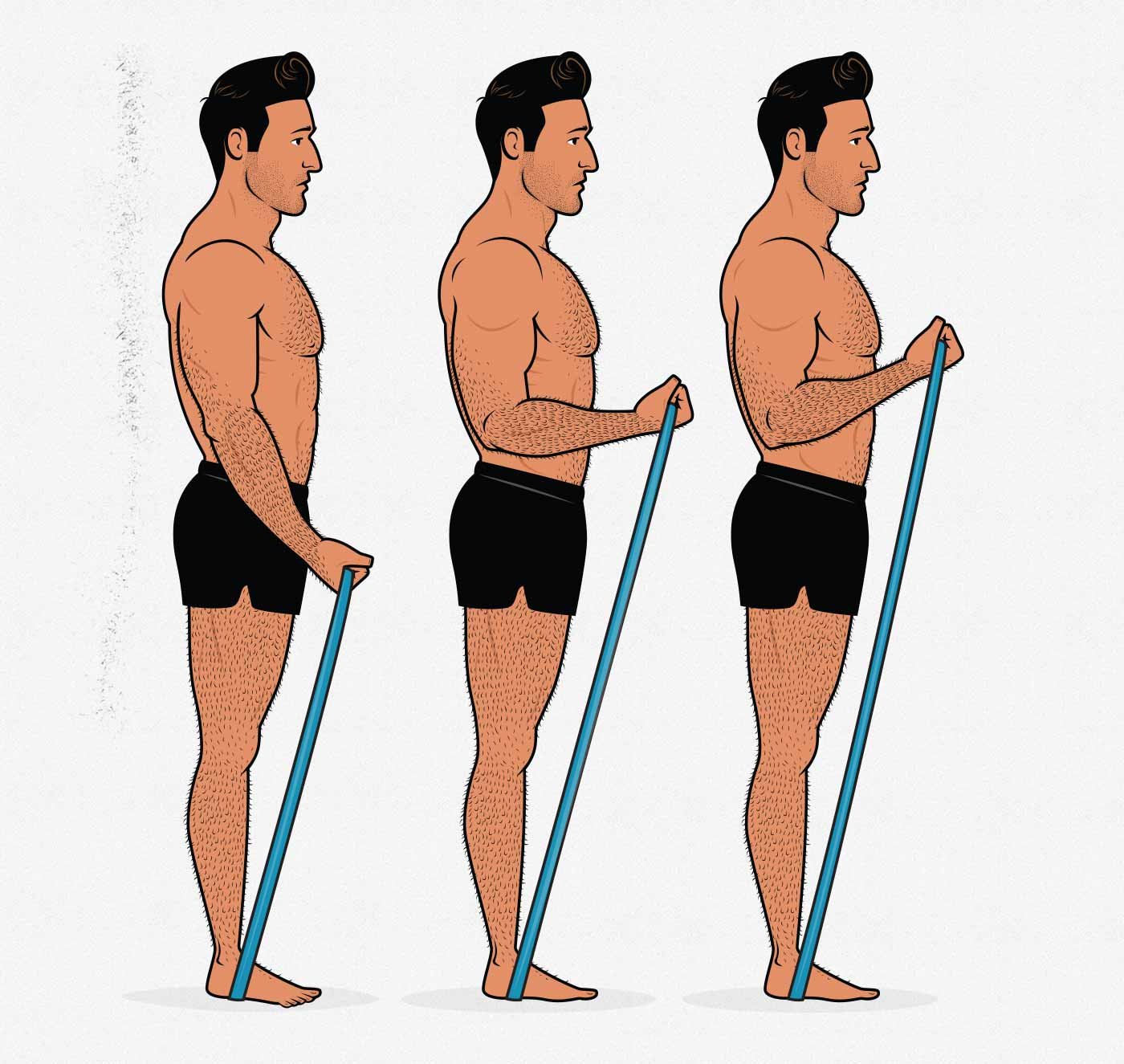
Standard bicep curls with weights provide uniform resistance throughout the range of motion. With bands, you can create varied resistance patterns by changing your foot position on the band. Begin with a traditional curl, feet shoulder-width apart. For the second set, place one foot forward to create an angled resistance pattern. For the third set, widen your stance to maximize tension at the top of the curl.
These position variations alter the resistance curve, challenging your biceps in ways that constant-weight curls cannot. The peak contraction at the top of the movement with bands forces maximal bicep recruitment precisely where most traditional curls fall short. Perform 3 sets of 12-15 reps with a 2-second hold at the top of each repetition to maximize the growth stimulus at peak contraction.
Sample 3-Day Split
- Day 1: Upper Body Focus (Banded Face Pulls, Variable Tension Pushups, Rotational Chest Press)
- Day 2: Lower Body Emphasis (Accommodating Resistance Squats, Single-Leg RDLs, Banded Hip Thrusts)
- Day 3: Core and Functional Patterns (Pallof Press, Banded Mountain Climbers, Multi-Plane Movements)
- Optional Day 4: Total Body Integration (Combining movements from all previous days)
The key to breaking plateaus isn’t just about what exercises you do, but how you structure your weekly training. This 3-day split maximizes recovery while providing sufficient stimulus for adaptation. Each day focuses on different movement patterns and muscle groups to create balanced development while preventing overtraining specific areas.
Rest days between training sessions aren’t wasted time—they’re when your body adapts and grows stronger. With band training, the novel stimulus often requires additional recovery compared to familiar movement patterns. Listen to your body and add a fourth rest day if needed, especially in the first two weeks of this new training style.
For optimal results, cycle this band-focused program for 3-4 weeks before returning to your traditional training. This creates a strategic deload from heavy weights while still maintaining tension on the muscles, allowing connective tissues to recover while stimulating new growth through different resistance patterns.
Progressive Overload with Bands
“Using Resistance Bands: Why Heavier Isn …” from www.strengthzonetraining.com
Progressive overload remains the fundamental principle for continued growth, regardless of the training tool. With bands, you can progress by increasing tension (using thicker bands), adjusting stance (stepping further from the anchor point), manipulating tempo (slowing down the eccentric phase), or increasing volume (sets and reps). For a comprehensive approach to your fitness journey, consider exploring compact home gym kits to complement your resistance band workouts. Track these variables systematically to ensure continued progression.
Unlike weights, where adding 5 pounds provides a uniform increase in resistance, bands create a more nuanced progression. Moving just 2-3 inches further from the anchor point can significantly increase the peak resistance while maintaining a manageable starting resistance. This allows for micro-progressions that are often impossible with traditional weights.
“The beauty of band training for breaking plateaus is the ability to make micro-adjustments to resistance. With weights, the smallest increment might be 2.5 pounds, but with bands, you can increase resistance by tiny amounts just by adjusting your position or stance. This allows for continuous progression without overwhelming the system.” — Dr. John Rusin, Physical Therapist and Strength Coach
FitBandz resistance training systems offer color-coded bands with precise resistance ratings, allowing for systematic progression tracking. Begin with a resistance that allows 12-15 controlled reps, then progress to thicker bands or adjusted positions once you can complete 15-20 reps with perfect form.
Tracking Metrics Beyond Weight
Breaking through plateaus requires measuring progress beyond simple weight lifted. With band training, focus on range of motion, time under tension, movement quality, and recovery capacity. These metrics often improve before traditional strength measurements, indicating successful adaptation that will transfer back to weight training.
Range of motion improvements signal increased tissue extensibility and joint function—fundamental elements for long-term progress. Measure this by recording landmarks during exercises: how deep you can squat, how far you can reach in a stretch position, or how completely you can lock out a pressing movement.
Time under tension represents the total duration muscles spend working during each set. With band training, this often increases dramatically compared to weight training, as the constant tension eliminates rest points. Track this by timing your sets or counting tempo (e.g., 4-second lowering, 1-second lift equals 5 seconds per rep). For those looking to enhance their home workout setup, consider exploring compact home gym kits to complement your band training.
Recovery capacity improvements may be the most overlooked progress indicator. Note how quickly your heart rate returns to baseline after sets, how much soreness you experience the following day, and your perceived readiness for the next training session. As these metrics improve, your body is building the foundation for breaking through plateaus.
| Progress Metric | How to Measure | Target Improvement |
|---|---|---|
| Range of Motion | Video analysis or landmark measurements | 5-10% increase in 2 weeks |
| Time Under Tension | Seconds per set (reps × tempo) | 40-60 seconds per set |
| Recovery Rate | Heart rate return to baseline | Return to within 10 BPM of resting in 2 minutes |
| Movement Quality | Stability and control rating (1-10) | Maintain 8+ rating at increased tensions |
What to Expect in the First 14 Days
The initial transition to band-focused training often produces surprising results within just two weeks. During the first 3-5 days, you’ll likely experience novel muscle soreness in areas that traditional training hasn’t targeted effectively. By days 6-10, this soreness diminishes as neural adaptation occurs, allowing for increased training intensity. The final days of this two-week period typically bring noticeable improvements in movement quality, pump during exercises, and recovery capacity between sessions—all precursors to breaking through your plateau when you return to traditional training with your newly enhanced muscle recruitment patterns and range of motion.
Frequently Asked Questions
Resistance band training represents a paradigm shift for many lifters accustomed to traditional weights. These frequently asked questions address common concerns and misconceptions about using bands to break through plateaus. While bands may seem like a step backward from heavy weights, their unique properties often make them the perfect tool for stimulating new progress in even the most advanced lifters.
The key to success with band training is approaching it with an open mind and focusing on the novel stimulus rather than comparing the “weight” to your traditional lifts. By embracing the unique properties of variable resistance, you can challenge your muscles in ways that even the most advanced weight training programs cannot replicate.
How many times per week should I use resistance bands to break a plateau?
For optimal results, dedicate 3-4 weeks to band-focused training, using bands 3-4 times weekly. This complete shift creates enough novel stimulus to break through plateaus without losing the strength adaptations from your previous training. The frequency allows for sufficient recovery while providing the consistent stimulus needed for new adaptations.
If completely replacing your routine with bands isn’t practical, start with two dedicated band workouts per week while reducing (but not eliminating) traditional weight training. This approach maintains your existing strength base while introducing enough variability to stimulate new progress. The key is ensuring the band sessions focus on quality movement patterns rather than just “getting through” another workout.
Can I combine resistance band exercises with my regular weight training?
Absolutely—in fact, this combined approach offers unique benefits. You can use bands to add accommodating resistance to barbell exercises (attaching bands to the bar for squats or bench press), as a warm-up to activate proper movement patterns before lifting, or as a finisher to create metabolic stress after heavy lifting. This integration allows for continued heavy loading while adding the variable resistance benefits of bands. For those interested in enhancing their workout routine, consider incorporating stackable plyometric boxes for additional training versatility.
For plateau-breaking, try this approach: begin workouts with band activation exercises targeting the primary muscles for that day, perform your main lifts with moderate weights (80-85% of normal), then finish with band-only exercises for metabolic stress. This sequence primes neural pathways, maintains strength, and adds novel stimulus for growth—three essential elements for breaking through plateaus.
What resistance level bands should beginners start with?
Beginners should start with light to medium resistance bands (typically providing 10-15 pounds of resistance at full extension) and focus on mastering form and full range of motion before progressing to heavier bands. This moderate approach allows for proper technique development while still providing enough resistance to stimulate adaptation. FitBandz color-coding system makes it easy to select appropriate resistance levels, with most beginners starting with red or black bands for upper body and green or blue for lower body exercises. For those interested in enhancing their workouts, incorporating stackable plyometric boxes can add an extra challenge to your routine.
How do I know if I’ve actually hit a plateau versus just having a bad week?
A true plateau persists for at least 2-3 weeks despite consistent training, proper nutrition, and adequate recovery. Track your performance across multiple sessions—if you see no progress in weight lifted, reps completed, or performance quality for three consecutive workouts targeting the same movement pattern, you’re likely experiencing a genuine plateau rather than normal performance fluctuation.
Look beyond single-session performance to identify plateaus. Examine your training log for patterns: are certain exercises consistently stalled while others progress? Are you hitting the same wall at specific weights or rep ranges? These patterns help differentiate between random bad sessions and true plateaus requiring intervention. Remember that progress isn’t always linear—even elite athletes experience performance waves rather than consistent weekly improvements.
Will resistance bands build muscle as effectively as free weights?
“Do Resistance Bands Build Muscle? Yes …” from bonytobeastly.com and used with no modifications.
Research shows that resistance bands can build muscle comparably to free weights when used with sufficient intensity and progressive overload principles. The key factor for hypertrophy is mechanical tension, which bands provide effectively—just in a different pattern than weights. Studies have found similar EMG activation when comparing band and free weight versions of the same exercises when matched for perceived exertion.
Where bands excel is creating constant tension throughout the range of motion, eliminating the “resting points” that occur with free weights. This continuous tension increases time under tension—a critical factor for muscle growth that’s often underdeveloped with traditional training. Additionally, the peak resistance at end ranges with bands can stimulate new growth in positions where weights might not provide sufficient stimulus.
BestProductsForMen.org participates in affiliate programs, which means we may earn a commission if you click on a link and make a purchase. This comes at no additional cost to you. We only recommend products we personally trust, use, or believe will provide value to our readers.
Our goal is to provide honest, helpful reviews and recommendations so you can make informed decisions.
Leave a Reply to Affordable Aromatherapy Kits for Men (No Overpricing) Cancel reply