BestProductsForMen.org participates in affiliate programs, which means we may earn a commission if you click on a link and make a purchase. This comes at no additional cost to you. We only recommend products we personally trust, use, or believe will provide value to our readers.
Our goal is to provide honest, helpful reviews and recommendations so you can make informed decisions.
Key Takeaways
- Compact home gym kits typically cost $100-$500 and require under 50 square feet, while complete systems range from $500-$3,000+ and need 100+ square feet of dedicated space.
- Resistance bands, suspension trainers, and adjustable dumbbells offer the best balance of affordability, versatility, and space efficiency for most home fitness enthusiasts.
- Strength Warehouse USA offers expertly curated home gym equipment that balances space efficiency with workout effectiveness for various fitness goals.
- The hybrid approach—starting with core pieces and expanding strategically—provides the best value for those serious about long-term fitness results.
- Proper equipment maintenance can extend the lifespan of your home gym investment by up to 10 years, saving thousands in replacement costs.
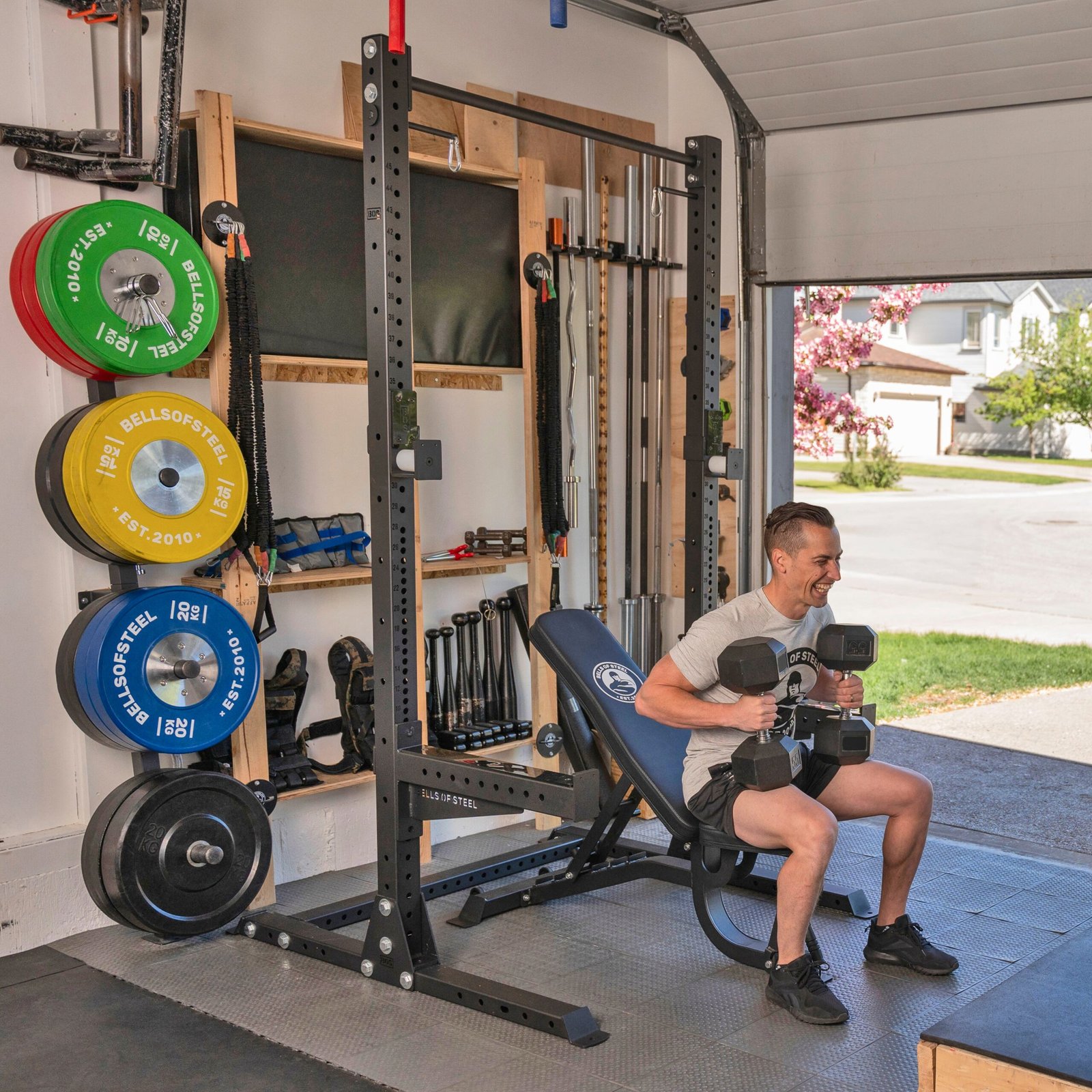
If you’re like me and usually start on Amazon, these are two solid options worth checking out: a compact all-in-one home gym and a full smart gym system, depending on your space and goals.
The home fitness revolution isn’t slowing down. As more people prioritize health without sacrificing convenience, the debate between compact gym kits and complete home systems has never been more relevant. Your fitness journey deserves equipment that matches both your goals and living situation. Strength Warehouse USA has been helping fitness enthusiasts make these crucial decisions for years, providing guidance on creating effective home workout spaces regardless of size constraints.
Making the right choice now can save you thousands of dollars and countless hours of frustration. Let’s break down exactly what you need to know about these two distinct approaches to home fitness.
Home Fitness Revolution: Compact Kits or Complete Systems?
The pandemic permanently changed how we approach fitness, with 76% of Americans adopting home workouts and many planning to never return to traditional gyms. This shift created explosive demand for home fitness solutions that work in real-world living spaces. The question isn’t whether to build a home gym anymore—it’s what type best fits your specific situation.
The home gym market has essentially split into two categories: compact modular kits designed for versatility and minimal space requirements, and comprehensive all-in-one systems that replicate commercial gym experiences. Each approach offers distinct advantages depending on your fitness goals, available space, and budget constraints.
Understanding these differences is crucial before investing your hard-earned money. Let’s examine both options in detail so you can make an informed decision that supports your fitness journey for years to come.
Compact Home Gym Kits: The Space-Saving Solution
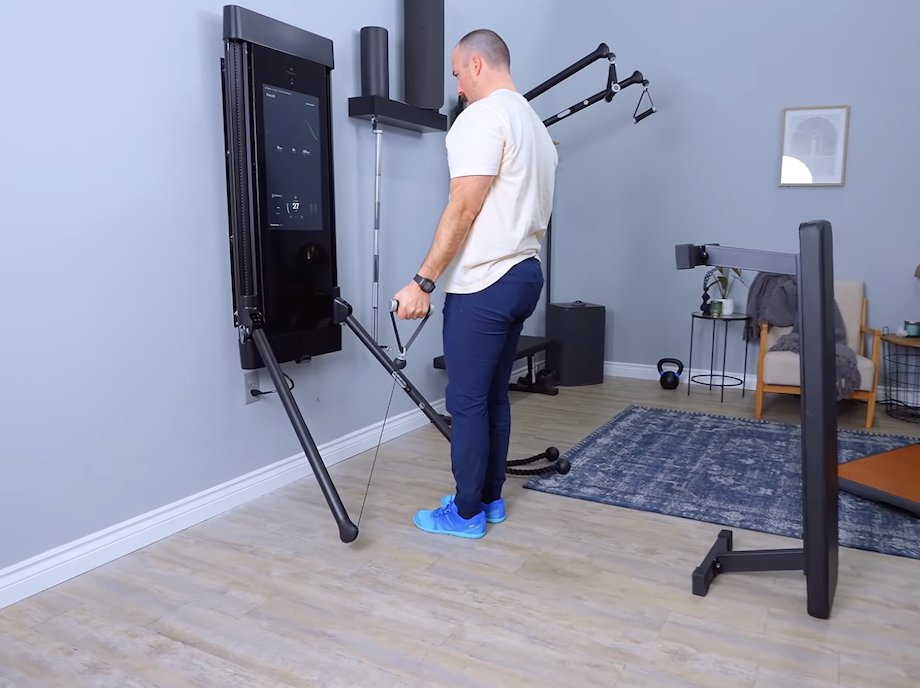
Compact home gym kits represent the minimalist approach to fitness—high functionality with minimal spatial footprint. These systems typically weigh under 50 pounds collectively and can be stored in a closet or under a bed when not in use. The beauty of these kits lies in their adaptability to virtually any living situation, from studio apartments to small bedrooms.
What’s Typically Included in Compact Kits
Most quality compact kits include a strategic combination of resistance bands (ranging from light to heavy resistance), a suspension trainer system that leverages body weight, possibly a set of adjustable dumbbells, and sometimes a foldable bench. The most effective kits include door anchors, ankle straps, and handles to maximize exercise variety. Premium options might add a collapsible bar for pull-up exercises or a portable platform for step aerobics. For more insights on setting up your home gym, check out this article on building your home gym.
What makes these kits particularly effective is their modular nature—each component works independently or in combination with others to create hundreds of possible exercises. This versatility allows you to target every major muscle group without dedicated machines for each.
Price Points: $100-$500 Investment Range
Entry-level compact kits with basic resistance bands and minimal accessories typically start around $100-150, offering good value for beginners. Mid-range options ($200-350) significantly increase in quality, durability, and exercise variety, often including premium resistance bands, suspension trainers, and basic adjustable weights. Premium compact kits ($350-500) feature commercial-grade components, comprehensive exercise guides, and innovative space-saving designs that maximize workout effectiveness while minimizing storage requirements.
Space Requirements: Under 50 Square Feet
The primary advantage of compact kits is their minimal footprint during use—typically requiring just a 6×7 foot area (42 square feet) for full-body exercises. This modest space requirement makes them ideal for apartments, condos, or homes without dedicated fitness rooms. Most exercises can be performed with just enough room to lie down and extend your arms overhead, plus some additional clearance for lateral movements.
Portability and Storage Benefits
The true genius of compact home gym kits lies in their portability. Unlike bulky traditional equipment, these systems can travel with you anywhere—from business trips to vacations or even outdoor workouts. Most quality kits come with dedicated carrying cases or bags that organize all components for easy transport and storage.
When not in use, a properly designed compact kit requires minimal storage space—often as little as a 24″ x 18″ x 12″ area in a closet or under a bed. This eliminates one of the biggest objections to home fitness equipment: “I don’t have room for it.” With a compact kit, even studio apartment dwellers can maintain consistent workouts without sacrificing valuable living space.
This portability creates workout consistency that’s nearly impossible with traditional gym setups. Bad weather, travel schedules, and time constraints become non-issues when your complete gym fits into a duffel bag.
I tend to sanity-check gear on Amazon first, and these are two home gym setups I consistently point people to—one compact, one full-system.
Complete Home Gym Systems: All-in-One Workout Centers
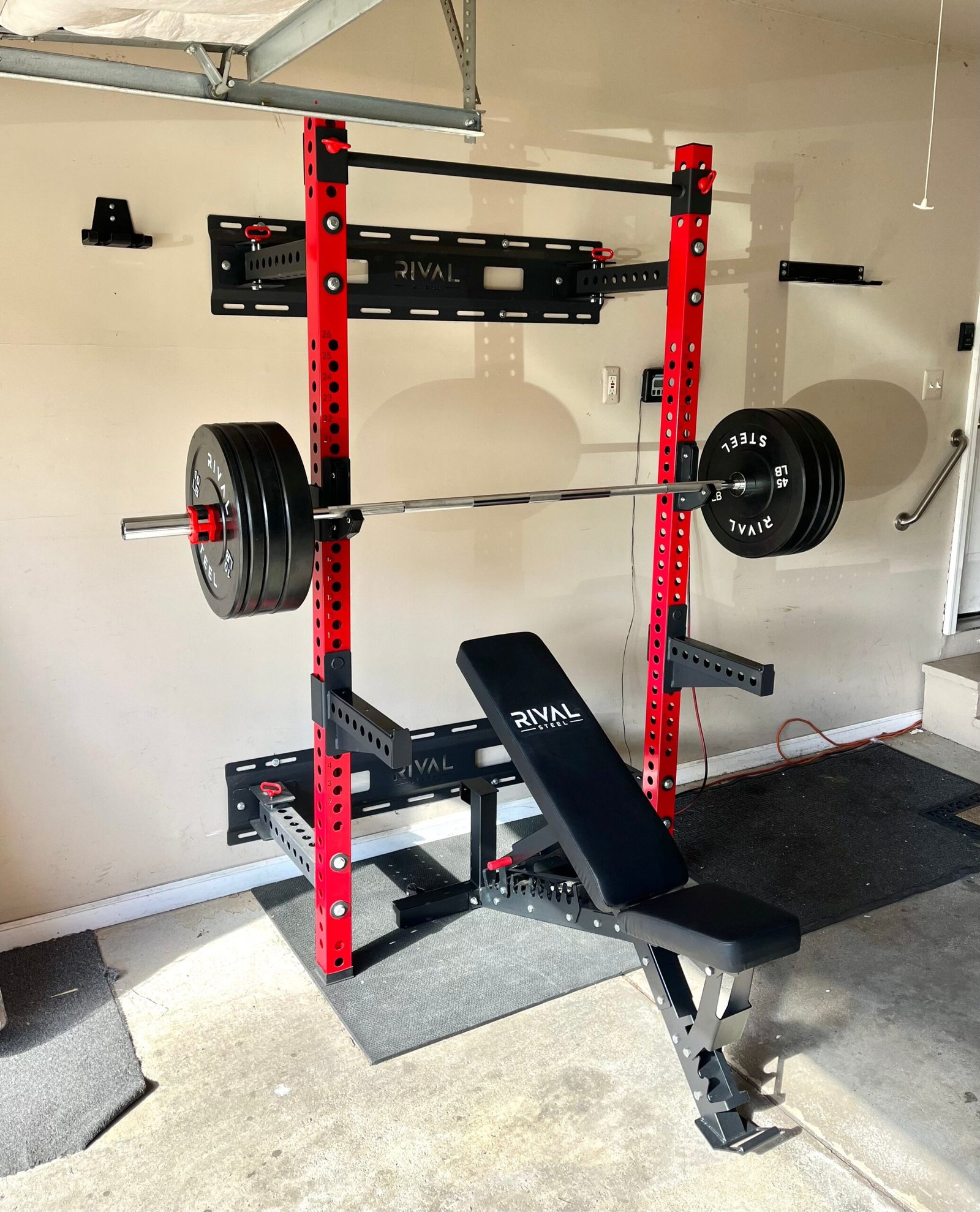
“RIVAL STEEL Foldable Wall-Mounted Home …” from www.rivalsteelfitness.com
Complete home gym systems represent the other end of the spectrum—permanent installations that replicate commercial gym experiences in your home. These systems typically feature weight stacks, multiple exercise stations, and dedicated functions for targeting specific muscle groups. They’re designed for those with dedicated workout spaces who want comprehensive functionality without gym memberships.
Main Components and Station Types
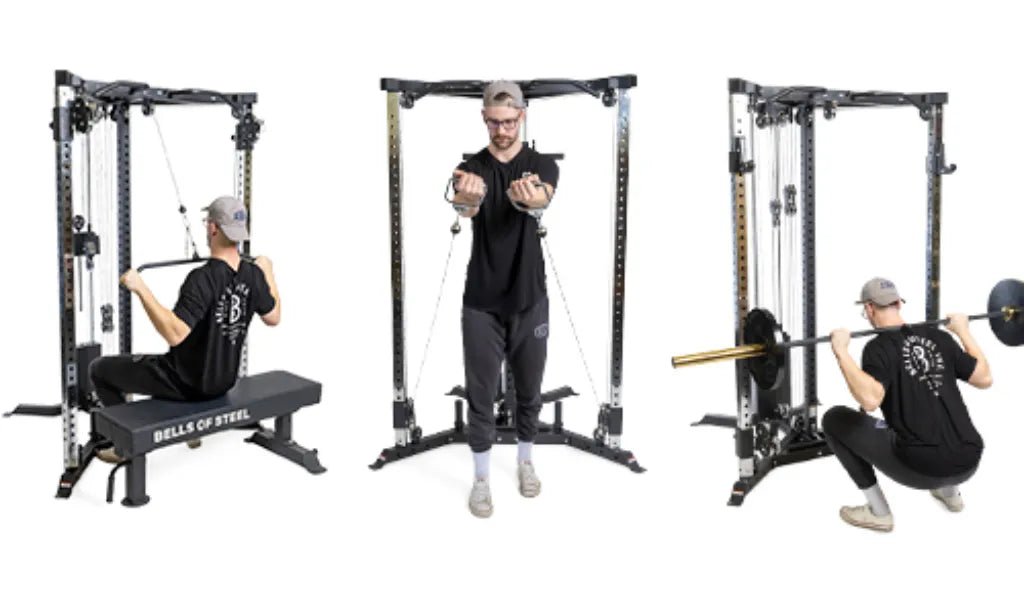
A complete home gym system typically centers around a main frame with multiple workout stations attached. Standard configurations include a press station for chest exercises, a lat pulldown for back training, leg developer attachments for lower body workouts, and various cable pulley positions for versatility. Premium systems add Smith machine functionality, squat rack capabilities, and dedicated areas for accessories like weight plates and dumbbells.
The defining characteristic of these systems is their integrated design—everything works together as a cohesive unit rather than as separate pieces. This integration creates a seamless workout experience where transitions between exercises take seconds rather than minutes.
Price Comparison: $500-$3,000+ Investment
Entry-level complete systems typically start around $500-800, offering basic functionality with limited weight capacity and fewer exercise options. These budget systems usually support about 150-200 pounds of resistance and include 15-25 possible exercise variations. Mid-range systems ($1,000-2,000) significantly increase build quality, weight capacity (typically 200-300 pounds), and exercise options (30-50 variations).
Premium complete systems ($2,000-3,000+) feature commercial-grade construction, weight capacities exceeding 300 pounds, and 50+ exercise variations. These high-end systems often include features like independent motion arms, upgraded upholstery, and lifetime warranties on frames and welds. For serious fitness enthusiasts, these systems represent long-term investments that may last decades with proper maintenance.
Complete Home Gym System Price Tiers
Entry-Level: $500-800 (15-25 exercises, 150-200 lb capacity)
Mid-Range: $1,000-2,000 (30-50 exercises, 200-300 lb capacity)
Premium: $2,000-3,000+ (50+ exercises, 300+ lb capacity, commercial components)
Space Needs: 100+ Square Feet Dedicated Area
Complete home gym systems demand significant dedicated space. Most full systems require a minimum area of 8′ x 10′ (80 square feet) for the equipment footprint alone, plus additional clearance space for exercises requiring extended range of motion. With proper clearance, most complete systems require 100-150 square feet of dedicated space that cannot be easily repurposed when the equipment isn’t in use.
Ceiling height becomes a critical factor with complete systems as well. Most require minimum ceiling clearance of 7 feet, with 8+ feet recommended for comfortable use with overhead exercises. This spatial commitment represents one of the biggest hurdles for many potential buyers, often requiring dedication of a spare bedroom, finished basement, or garage area exclusively for fitness purposes.
Weight Capacity and Durability Factors
Complete systems distinguish themselves through significantly higher weight capacities and durability ratings compared to compact alternatives. Quality complete systems feature heavy-gauge steel frames designed to handle hundreds of pounds of dynamic force during intense workouts. This robust construction translates to stability during heavy lifts and longevity that can span decades rather than years.
The weight stacks in complete systems typically range from 150-300+ pounds, allowing for significant progressive overload as strength increases. This higher capacity becomes critical for intermediate to advanced lifters who might quickly outgrow the resistance levels available in compact kits. For serious strength athletes, this higher ceiling on resistance represents the primary advantage of complete systems despite their higher costs and space requirements.
Multiple-User Advantages
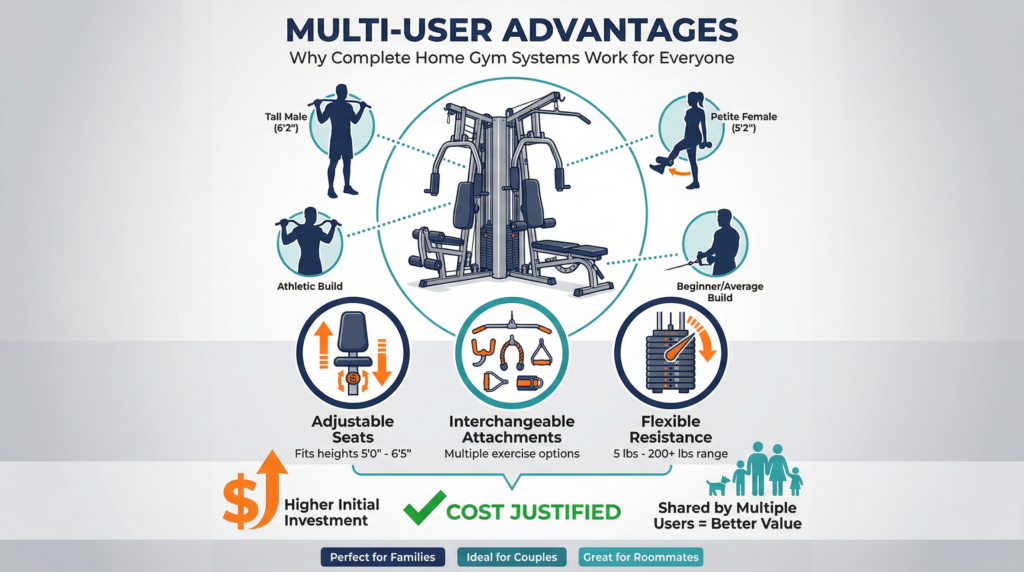
Complete home gym systems shine in multi-user households where different people with varying fitness levels share the equipment. The adjustability of seats, attachments, and resistance levels allows users of different heights, weights, and strength levels to use the same equipment effectively. This multi-user capability often justifies the higher investment for families or couples who work out together.
The durability of complete systems also makes them ideal for high-frequency use by multiple people—a scenario that might quickly wear out less robust compact equipment. When calculating cost-effectiveness for households with multiple fitness enthusiasts, the per-user investment of complete systems becomes more reasonable despite the higher initial price tag.
Workout Effectiveness: What Results Can You Expect?
The ultimate question for any fitness equipment isn’t about features or price—it’s about results. Both compact kits and complete systems can deliver impressive transformations when used consistently with proper programming. The differences lie in specific adaptations each system optimizes for and the progression pathways they enable. For instance, incorporating smart compact rowing machines into your workout routine can enhance cardiovascular endurance and strength.
Muscle Building Potential
Complete systems generally offer superior muscle-building potential for intermediate to advanced lifters due to higher maximum resistance levels and more stable platforms for compound movements. The fixed movement paths of machine-based exercises also allow for safer training to failure—a key stimulus for hypertrophy. For serious bodybuilding goals, complete systems provide mechanical advantages that compact kits can’t match.
Supersets and Circuit Training
The compact nature of home gym kits makes them ideal for superset and circuit training protocols that maximize results in minimal time. By arranging your equipment strategically, you can transition between exercises in seconds rather than minutes, keeping your heart rate elevated throughout your session. This approach transforms strength training into cardiovascular conditioning simultaneously.
A simple yet effective circuit might include resistance band rows, suspension trainer pushups, dumbbell squats, and core exercises performed back-to-back with minimal rest. This type of training can burn up to 30% more calories than traditional strength training while developing functional muscle. The key is minimizing transition time between movements.
For those using complete systems, supersets become even more efficient by utilizing different stations in sequence. For example, moving directly from a chest press to a lat pulldown creates opposing muscle group supersets that enhance recovery while maintaining workout intensity. This approach makes 30-minute workouts as effective as hour-long traditional sessions.
Progressive Overload Techniques
Progressive overload—gradually increasing workout difficulty—remains essential regardless of equipment type. With compact kits, this progression comes through adding resistance bands, adjusting leverage, slowing tempo, or increasing volume. Complete systems offer more straightforward progression through weight stack adjustments, but both approaches can deliver continuous improvement when properly programmed. For those with limited time, incorporating micro workouts can also be an effective strategy.
The Hybrid Approach: Building Your Perfect Setup
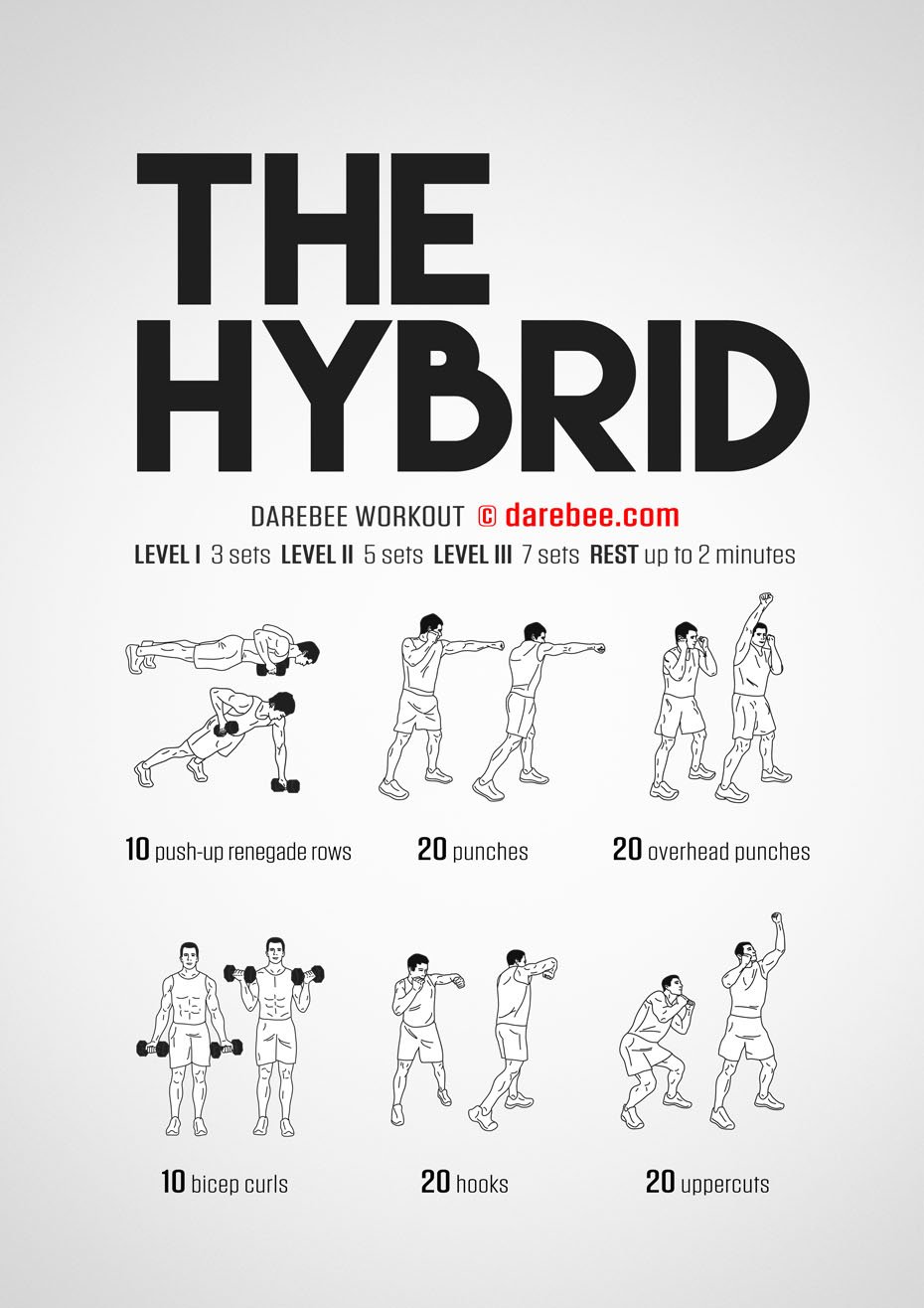
“The Hybrid Workout” from darebee.com
Many home fitness enthusiasts find the sweet spot isn’t choosing between compact kits or complete systems, but rather creating a hybrid setup that evolves with their needs. This approach starts with foundational pieces that deliver maximum versatility per square foot and dollar spent, then strategically adds complementary equipment as space and budget allow. Strength Warehouse USA has observed this hybrid approach delivers the highest satisfaction rates among long-term customers.
Core Pieces to Start With
The ideal foundation combines an adjustable bench, quality resistance bands, a suspension trainer, and adjustable dumbbells. This core setup requires minimal space (approximately 50 square feet during use) while enabling hundreds of exercise variations targeting all major muscle groups. The initial investment typically ranges from $300-700 depending on quality level, but delivers approximately 80% of possible results from a much more expensive complete system.
Smart Expansion Strategy
As fitness progresses and budget allows, strategic additions might include a power rack with cable attachment, specialized bars, or functional trainers that complement rather than replace your foundational equipment. This modular approach allows your home gym to evolve alongside your fitness journey rather than requiring a complete replacement when you outgrow initial capabilities.
Many successful home gym enthusiasts report greater satisfaction with this gradual expansion approach compared to those who immediately invested in expensive complete systems. The learning process of determining which equipment delivers the best results for your specific goals creates a more personalized and effective workout environment.
Maintenance Requirements: Keep Your Investment Working
Regardless of which approach you choose, proper maintenance dramatically extends equipment lifespan while ensuring safe, effective workouts. Complete systems typically require more regular maintenance due to their multiple moving parts, cables, and bearings, while compact kits need primarily inspection for wear and proper storage procedures.
Daily and Weekly Care Tips
Wipe down equipment after use to prevent sweat corrosion, inspect cables and connections weekly for fraying or looseness, and periodically tighten any bolts or fasteners that may loosen with regular use. For resistance bands, store away from direct sunlight and extreme temperatures to prevent degradation. Lubricate moving parts on complete systems monthly using silicone-based products rather than WD-40, which can attract dust and create sticky residue.
Signs Your Equipment Needs Attention
Watch for uneven resistance during cable movements, unusual noises during exercise, visible fraying of bands or cables, or excessive movement in what should be stable components. Address these issues immediately rather than waiting for complete failure, as preventative maintenance costs a fraction of replacement and prevents potential injuries from equipment malfunction. For those interested in alternative workouts, consider exploring Boogie Bounce Fitness options.
Most quality equipment manufacturers provide detailed maintenance schedules and instructions. Following these recommendations can extend the lifespan of your investment by 5-10 years or more, dramatically improving the long-term value proposition of either system type.
Your Home Gym Journey Starts Now
Whether you choose a space-efficient compact kit, invest in a comprehensive complete system, or build a hybrid setup, the most important factor remains consistency of use. The perfect equipment sitting unused delivers zero results, while even basic equipment used regularly can transform your fitness. Begin with honest assessment of your space constraints, budget limitations, and fitness goals, then choose the option that balances these factors in your specific situation.
Remember that Strength Warehouse USA offers equipment consultation services to help you navigate these decisions based on your unique circumstances. Our experts can help determine the most efficient way to create an effective home workout space that fits your lifestyle and delivers the results you seek. For additional insights, consider exploring micro workouts for busy men to complement your home gym setup.
Frequently Asked Questions
Home gym decisions come with many questions. Here are straightforward answers to the most common concerns we hear from customers considering their options, including insights on smart compact rowing machines.
Can I build muscle effectively with just a compact home gym kit?
Yes, you can absolutely build significant muscle using only compact equipment. While the resistance mechanism differs from traditional weights, your muscles respond to tension regardless of its source. Research shows resistance band training can produce comparable hypertrophy to free weights when intensity and volume are properly managed. For most recreational fitness enthusiasts, compact kits provide more than enough resistance to build impressive physiques when used consistently with progressive overload principles.
How long does it take to assemble a complete home gym system?
Assembly time varies significantly based on system complexity and your experience level. Entry-level complete systems typically require 2-4 hours with basic tools, while premium multi-station systems may take 6-8 hours even for experienced builders. Many manufacturers offer professional assembly services for $200-400, which often represents good value considering the complexity and weight of components.
Compact kits typically require minimal or no assembly, with most components ready to use immediately after unboxing. This represents a significant advantage for those who want to begin workouts immediately without construction delays. For those interested in exploring more options, consider checking out smart compact rowing machines that offer similar convenience and efficiency.
If assembling yourself, we recommend carefully inventorying all parts before beginning and following manufacturer instructions exactly rather than improvising. Having a second person assist with holding components during assembly can significantly reduce frustration and assembly time.
Some complex systems ship on multiple pallets arriving on different days, which can extend the total setup time if you wait for all components before beginning assembly. Check shipping details before planning your assembly timeline.
- Entry-level systems: 2-4 hours assembly time
- Mid-range systems: 4-6 hours assembly time
- Premium multi-station systems: 6-8+ hours assembly time
- Professional assembly service: $200-400 typical cost
- Compact kits: 0-30 minutes setup time
Do I need to bolt my home gym to the floor?
Most complete home gym systems don’t require floor bolting if placed on flat, level surfaces and used within their specified weight capacities. However, power racks and squat stands used for heavy free weight exercises should ideally be secured to the floor or platform for safety during maximal lifts. Manufacturers typically provide specific anchoring recommendations in their installation guides.
For apartment dwellers or those unable to modify floors, certain stable complete systems with wider bases can be used safely without anchoring if maximum weights are kept reasonable. Some manufacturers offer specific apartment-friendly versions designed with larger footprints that remain stable without permanent installation. When in doubt, prioritize safety and follow manufacturer guidelines explicitly.
What’s the minimum ceiling height needed for a complete system?
Standard complete home gym systems require minimum ceiling clearance of 7 feet, with 8 feet recommended for comfortable use. Certain exercises like standing shoulder presses or pull-ups may require additional height clearance. Low-profile systems designed specifically for basements exist but may limit certain exercise variations. For more insights on setting up your home gym, check out this article on building your home gym.
Measure your available ceiling height at the lowest point, accounting for any overhead obstructions like lighting fixtures, ceiling fans, or ductwork. Remember that your own height plus overhead reach must be accommodated within available clearance. Some manufacturers list “required ceiling height” specifications that factor in standard user heights performing typical exercises on their equipment.
Are financing options available for higher-end home gym systems?
Yes, most reputable fitness equipment retailers offer financing options that make premium systems more accessible. Typical arrangements include 0% interest for 12-18 months on qualified purchases over $1,000, or extended payment plans of 24-60 months with interest rates typically ranging from 9.99-17.99% depending on credit approval.
- Short-term financing (12-18 months): Often 0% interest if paid in full during promotional period
- Medium-term financing (24-36 months): Typically 9.99-14.99% interest rates
- Long-term financing (48-60 months): Usually 14.99-17.99% interest rates
- Minimum purchase requirements: Typically $1,000+ for financing eligibility
- Credit approval: Most require 640+ credit scores for best rates
When considering financing, calculate the total cost including interest rather than focusing solely on monthly payment amounts. While financing makes equipment more immediately accessible, paying cash typically represents the best long-term value when possible. Some retailers also offer layaway programs that allow you to secure current pricing while saving for your purchase.
Whatever your budget constraints, there’s likely a financing option that can make quality equipment accessible while building your credit responsibly. Strength Warehouse USA works with multiple financing partners to provide flexible options for customers at various credit levels.
Remember that home gym equipment represents an investment in your health that pays dividends far beyond financial considerations. Whether financed or purchased outright, quality equipment used consistently delivers returns through healthcare savings, improved quality of life, and enhanced longevity that far exceed the initial cost.
Compact Home Gym Kit (Amazon):
Mikolo Home Gym, Workout Station
https://amzn.to/4kduVGP
Complete Smart Home Gym System (Amazon):
Speediance Gym Monster Smart Home Gym, Multifunctional Strength Training Machine
https://amzn.to/46509di
BestProductsForMen.org participates in affiliate programs, which means we may earn a commission if you click on a link and make a purchase. This comes at no additional cost to you. We only recommend products we personally trust, use, or believe will provide value to our readers.
Our goal is to provide honest, helpful reviews and recommendations so you can make informed decisions.
Leave a Reply to Stackable Plyometric Boxes Guide: Beginner to Pro Progression – Best Products for Men Cancel reply