BestProductsForMen.org participates in affiliate programs, which means we may earn a commission if you click on a link and make a purchase. This comes at no additional cost to you. We only recommend products we personally trust, use, or believe will provide value to our readers.
Our goal is to provide honest, helpful reviews and recommendations so you can make informed decisions.
Article-At-A-Glance
- Micro-workouts provide substantial fitness benefits in as little as 1-15 minutes, making them ideal for busy men juggling career and personal commitments
- Research shows that multiple short exercise sessions throughout the day can increase overall fitness by up to 15% compared to single longer workouts
- Strategic placement of micro-workouts around natural daily transitions (morning, lunch breaks, evening) maximizes adherence and results
- Compound movements that engage multiple muscle groups simultaneously deliver the most efficient strength and metabolic benefits in minimal time
- Pliability offers specialized micro-workout routines that can transform your fitness even when traditional gym sessions aren’t possible
No time for the gym? You’re not alone. The modern man’s schedule leaves little room for hour-long workouts, but that doesn’t mean fitness has to take a backseat. Micro-workouts are revolutionizing how busy professionals approach exercise, delivering impressive results in minimal time.
Micro-workouts for busy men are: short, focused exercise sessions lasting 1-15 minutes—fit seamlessly into packed schedules while still delivering substantial fitness benefits. Forget the outdated “go hard or go home” mentality. Pliability has pioneered accessible fitness approaches that work with your schedule rather than against it, helping men maintain strength, energy, and health despite demanding careers.
Transform Your Fitness in Minutes: Why Micro-Workouts Actually Work
The effectiveness of micro-workouts lies in their cumulative effect and intensity. When properly executed, brief exercise sessions trigger significant physiological responses that boost metabolism, build muscle, and improve cardiovascular fitness. Research suggests that multiple short bursts of activity throughout the day can actually be more beneficial than a single longer session, particularly for maintaining energy levels and mental clarity.
The key is quality over quantity—intense, purposeful movements that maximize every second. Think compound exercises that engage multiple muscle groups simultaneously, short but challenging HIIT protocols, and functional movements that translate to real-world strength. This approach allows you to stimulate muscle growth and cardiovascular adaptation without requiring extended time commitments.
The psychological advantage is equally powerful. Knowing you only need to commit to a few minutes makes starting infinitely easier, eliminating the most common barrier to consistent exercise: perceived lack of time. This reduced friction leads to greater adherence and, ultimately, better results.
The Science Behind Short-Duration Exercise Benefits
Multiple studies confirm that brief, intense workouts provide remarkable health benefits. According to research published in the American Heart Association journal, accumulated short bouts of exercise throughout the day are comparable to continuous sessions in improving cardiovascular health markers. The physiological reason is straightforward: even short bursts of moderate to high-intensity exercise trigger a cascade of positive adaptations, from increased heart stroke volume to improved insulin sensitivity. A 5-minute micro-workout can burn up to 50 calories, with the metabolic boost continuing for hours afterward. Even more impressive, performing distributed micro-workouts three times daily has been associated with approximately 15% greater overall fitness improvements compared to single longer sessions.
How Micro-Workouts Fit Into a Busy Man’s Schedule
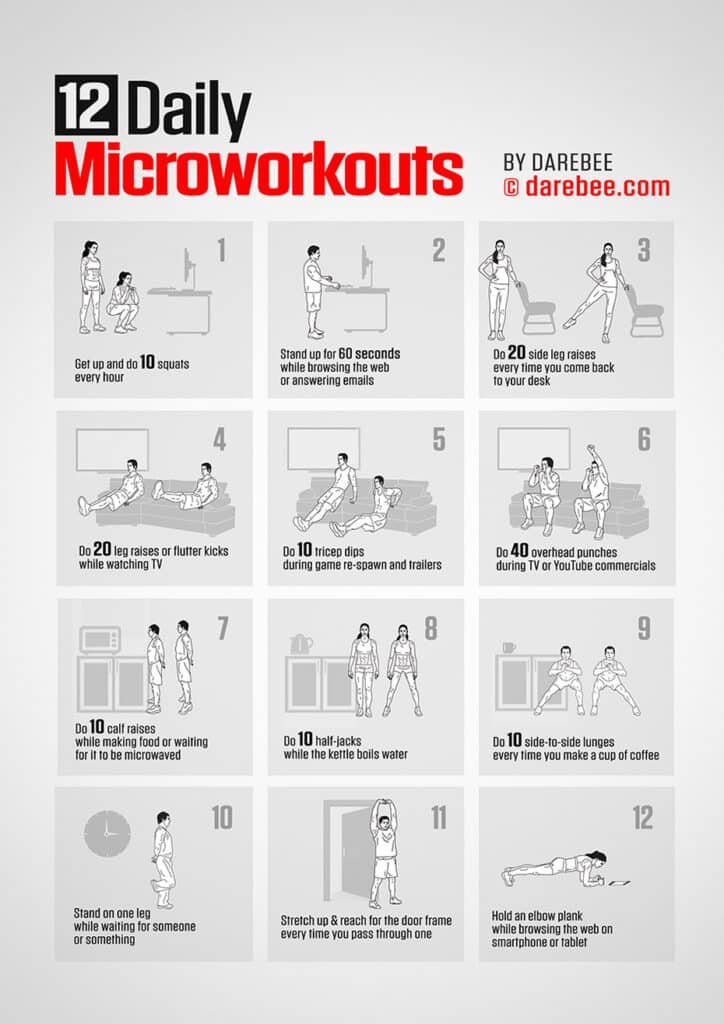
The brilliance of micro-workouts lies in their adaptability to natural transition points in your day. Rather than requiring a significant time block, these short sessions can be strategically inserted during moments already built into your schedule: while the coffee brews, between meetings, waiting for dinner to cook, or even during commercial breaks. The key is identifying these micro-opportunities and preparing simple, equipment-optional routines you can execute anywhere. Many successful professionals stack their micro-workouts around meal times—morning energizer before breakfast, midday strength session before lunch, and an evening mobility routine before dinner—creating natural triggers that boost adherence. This approach transforms otherwise wasted minutes into productive fitness opportunities, accumulating into substantial exercise volume by day’s end.
7 High-Impact Micro-Workouts You Can Do Anywhere
These seven micro-workout protocols deliver maximum results with minimal time investment. Each targets specific fitness components while requiring little to no equipment, making them perfect for busy professionals. The beauty of these routines lies in their versatility—they can be performed individually as time permits or combined for more comprehensive training effects. Focus on quality movement and appropriate intensity rather than duration, and you’ll be surprised by how effective these brief sessions can be at maintaining and even building fitness.
1. The 4-Minute Morning Energizer
This metabolism-igniting routine takes just four minutes but sets a powerful tone for your entire day. Perform 20 seconds of jumping jacks, followed by 20 seconds of push-ups, 20 seconds of mountain climbers, and 20 seconds of bodyweight squats. Rest for 10 seconds between exercises, then repeat for a total of two rounds. This simple sequence activates all major muscle groups while providing enough cardiovascular stimulation to wake up your system and boost energy levels. The beauty of this routine is its simplicity—no equipment needed, just roll out of bed and get moving. Performing this consistently before your morning shower can increase daily calorie burn by up to 100 calories while priming your mind for greater productivity. For more tips on optimizing your morning routine, check out our ultimate guide for urban professionals.
2. Desk-Based Power Moves
Transform your workstation into a fitness station with these discrete yet effective exercises. Start with 15 desk push-ups (hands on desk edge, feet back), followed by 20 seated leg raises, 15 chair squats (stand up and sit down without using hands), and finish with 20 seated torso twists. This sequence targets upper body, core, and lower body without requiring you to leave your workspace. The entire routine takes just 3-5 minutes but counters the negative effects of prolonged sitting while maintaining muscle activation throughout your workday. For more tips on maintaining a healthy lifestyle, check out our ultimate guide for urban professionals.
3. Bodyweight Strength Circuit
This portable strength builder requires zero equipment but delivers serious muscle-building stimulus. Perform 12 push-ups, 15 bodyweight squats, 10 reverse lunges per leg, 30-second plank hold, and 10 burpees. Move from one exercise to the next with minimal rest, completing the circuit in roughly 5-7 minutes. This micro-workout hits every major muscle group with sufficient intensity to maintain and even build strength. For added challenge, perform each movement more slowly, increasing time under tension and muscle fiber recruitment.
4. The Staircase Sprint Challenge
Turn an ordinary staircase into a powerful fitness tool with this quick cardio and lower body blaster. Sprint up a flight of stairs as fast as safely possible, then walk down. Repeat for 5 total rounds. The entire workout takes only 3-5 minutes but delivers tremendous cardiovascular benefits while strengthening quads, hamstrings, and calves. Studies show that stair-climbing specifically burns calories at a rate nearly triple that of walking, making this one of the most time-efficient fat-burning protocols available. For added intensity, take two stairs at once during your ascent or add a bodyweight squat at the top of each climb.
5. Resistance Band Muscle Activator
A single resistance band unlocks this portable strength routine. Perform 15 band pull-aparts, 12 overhead presses, 15 rows, and 20 banded squats. This sequence takes about 4 minutes but effectively targets all major muscle groups while being gentle on joints. The beauty of band training is the variable resistance throughout each movement, creating tension when traditional exercises would be easiest and making this micro-workout particularly effective for muscle stimulation despite its short duration.
6. 5-Minute Metabolic Burner
The 5-Minute Metabolic Burner Protocol
• 30 sec: Jump Squats
• 30 sec: Mountain Climbers
• 30 sec: Push-up to Side Plank (alternate sides)
• 30 sec: Hollow Body Holds
• 30 sec: Burpees
Rest 30 seconds, repeat once
This high-intensity interval sequence delivers maximum caloric burn in minimal time. The combination of full-body movements performed at high intensity creates a substantial oxygen debt, leading to elevated metabolism for hours after completion. Research shows this style of training can increase calorie burn by up to 15% for 24 hours following the workout, making it particularly valuable for busy men focused on body composition improvement.
7. Hotel Room Travel Workout
Business travel doesn’t have to derail your fitness. This equipment-free routine requires only the space of a standard hotel room. Perform 20 bodyweight squats, 15 incline push-ups (hands on bed or desk), 20 split lunges per side, 30-second plank, and 15 hip bridges. This 5-minute sequence maintains muscle activation and joint mobility even when travel disrupts your normal routine. The movements specifically target areas that suffer during long flights or car rides—hips, shoulders, and core—making this not just a fitness protocol but a recovery tool for frequent travelers.
Building a Micro-Workout Habit That Sticks
“The key to success with micro-workouts isn’t motivation—it’s removing barriers. When exercise takes just minutes and requires minimal setup, consistency becomes automatic rather than aspirational.”
Habit formation research shows that consistency trumps duration when building sustainable fitness routines. The power of micro-workouts lies in their repeatability—they’re short enough to do every day, removing the common “not enough time” excuse. Start with a single 5-minute session daily for two weeks before adding additional micro-workouts. This gradual approach builds neural pathways that make exercise automatic rather than requiring willpower.
Link your micro-workouts to existing daily habits—what behavior scientists call “habit stacking.” This could mean performing desk push-ups after every conference call, doing kettlebell swings while your coffee brews, or completing a quick bodyweight circuit immediately after brushing your teeth. These natural triggers create automatic reminders that bypass the decision-making process where motivation typically fails.
Track your consistency rather than performance metrics initially. A simple wall calendar with X marks for completed days creates a visual chain you’ll become psychologically resistant to breaking. This focus on consistency rather than intensity builds the foundation of a sustainable fitness habit that can later be optimized for specific goals. For more tips on staying fit when busy, check out these mini-workouts.
Remember that micro-workouts succeed precisely because they’re sustainable. If you find yourself skipping sessions, they’re likely too long or complex. Scale back to an absolute minimum effective dose—even just 60 seconds—until the habit locks in, then gradually extend duration as the behavior becomes automatic.
Trigger-Based Exercise Implementation
Trigger-based implementation is the secret weapon for micro-workout success. Identify 3-5 consistent daily events that can serve as workout triggers—your morning alarm, coffee breaks, commute arrival, or evening news. Assign specific micro-routines to each trigger, creating automatic cues that eliminate decision fatigue. This system transforms existing habits into fitness opportunities, making exercise integration nearly effortless while accumulating significant training volume throughout your day.
Strategic Workout Placement Throughout Your Day
Optimal micro-workout programming distributes effort strategically across your day rather than clustering all activity into a single block. Morning sessions should emphasize movement preparation and activation—think mobility work, light cardio, and core stabilization. Midday workouts are ideally suited for strength development when your body temperature is naturally elevated. Evening sessions work best for recovery-focused movements that downregulate your nervous system and prepare your body for quality sleep.
Try segmenting your fitness goals across three daily micro-sessions: morning for mobility and activation, lunch break for strength or power development, and evening for metabolic work or recovery. This approach not only fits more naturally into a busy schedule but also takes advantage of your body’s natural circadian rhythms and energy fluctuations throughout the day.
Progressive Overload With Limited Time
Even with short-duration workouts, the principle of progressive overload remains essential for continued improvement. Rather than adding more time to your micro-workouts, focus on increasing density—completing more work within the same brief window. Add one rep to each set weekly, reduce rest periods by five seconds, or increase movement complexity by incorporating more challenging variations. These subtle progressions maintain the time-efficient nature of micro-workouts while ensuring continued adaptation and improvement.
Another effective progression strategy is to alternate between volume-focused days (more sets/reps) and intensity-focused days (more challenging variations) even while maintaining the same brief workout duration. This approach provides the stimulus variation necessary for continued progress without extending your time commitment.
Equipment That Maximizes Micro-Workout Efficiency
The right tools can dramatically increase the effectiveness of brief training sessions by enabling greater resistance, more movement variability, and better targeted stimulus. Portable, versatile equipment that requires minimal setup time is essential for maintaining the “micro” nature of these workouts while maximizing their impact.
Investing in a few strategic pieces can transform what’s possible in 5-10 minute sessions, especially for strength development where bodyweight options may eventually become insufficient for continued progress. The goal is equipment that offers significant training stimulus while remaining convenient enough to use during brief windows of opportunity.
Minimal Investment, Maximum Results Tools
A carefully selected equipment arsenal enables high-efficiency training in minimal space. Resistance bands are perhaps the most versatile option, offering progressive resistance for virtually any movement pattern while weighing ounces and fitting in a desk drawer. A single adjustable kettlebell (or pair for more options) provides enough resistance for comprehensive strength development in a footprint smaller than a shoebox. For those with slightly more space, a TRX or similar suspension trainer creates unlimited movement possibilities by leveraging bodyweight and instability, all while hanging from a single anchor point. For more inspiration, check out these micro-workouts that fit into any schedule.
For the home office, consider a loadable weighted vest that can instantly transform ordinary movements into challenging strength work without requiring you to hold anything. Door-mounted pull-up bars install in seconds and create vertical pulling options essential for balanced development. Even something as simple as a basketball-sized stability ball can transform desk breaks into core-strengthening opportunities while improving posture. For more tips on selecting the right gear for your home office workouts, check out our ultimate guide for urban professionals.
Apps and Timers That Keep You Accountable
Technology amplifies micro-workout effectiveness through improved timing, tracking, and accountability. Interval timer apps like Tabata Timer or Seconds Pro eliminate the need to watch the clock, allowing full focus on movement quality. More sophisticated fitness trackers like WHOOP or Oura Ring quantify the accumulated training load from multiple short sessions, providing objective feedback on whether your distributed approach is delivering sufficient stimulus for your goals.
Habit-tracking apps like Streaks or Habitica add gamification elements that reinforce consistency, while workout-specific applications like the Pliability app provide guided micro-routines optimized for different contexts and goals. The key is selecting tools that reduce friction rather than adding complexity—technology should make micro-workouts easier to execute, not create additional barriers to getting started. For those looking to boost their confidence and motivation, exploring ways to build Peter Parker confidence for men can be an inspiring addition to your routine.
Nutrition Strategies That Complement Quick Workouts
Nutrition strategies for micro-workout practitioners differ from conventional approaches. Since you’re training multiple times throughout the day rather than in a single session, nutrient timing and distribution become more important than total quantity alone. This distributed approach actually offers metabolic advantages when implemented correctly.
The goal is maintaining a consistent energy state that supports multiple daily training sessions while optimizing recovery between these brief but frequent stimuli. This requires a more nuanced approach to meal timing and composition than traditional pre/post workout nutrition protocols designed around single, longer training sessions.
Pre and Post Micro-Workout Fuel
Since micro-workouts are brief, elaborate pre-workout nutrition protocols become unnecessary and potentially counterproductive. Instead, focus on staying generally well-fueled throughout the day with an emphasis on steady blood glucose levels. Small, protein-rich meals or snacks every 3-4 hours provide a constant supply of amino acids for recovery without the digestive burden of larger meals. Approximately 15-25g of protein per feeding is sufficient to optimize muscle protein synthesis while remaining digestible enough to support training shortly after consumption.
Carbohydrate timing becomes more strategic with multiple daily sessions. Place your highest carbohydrate intake in the meals surrounding your most intense micro-workout of the day, while keeping carbohydrates moderate during other meals to maintain energy without promoting lethargy. This approach maximizes performance fuel when needed most while avoiding the energy fluctuations that can undermine productivity between sessions. For more tips on optimizing your daily routine, check out the ultimate guide for urban professionals.
Hydration Tactics for Busy Professionals
Hydration status dramatically impacts performance even during brief exercise bouts, with research showing that just 2% dehydration can reduce power output by up to 10%. For busy professionals performing multiple micro-sessions daily, consistent hydration throughout the day proves more effective than attempting to hydrate specifically around workouts. Aim for approximately 0.5-1 ounce of water per pound of bodyweight daily, with slightly more on days with multiple high-intensity micro-sessions.
Consider adding electrolytes to at least one hydration session daily, particularly if your micro-workouts are intense enough to generate significant sweat. A simple combination of water with a pinch of sea salt and squeeze of lemon provides sufficient electrolyte replacement for most micro-workout protocols without unnecessary additives or sugars.
Combining Micro-Workouts for Complete Fitness
The true power of micro-workouts emerges when they’re strategically combined to create comprehensive fitness development rather than treated as isolated training snippets. By thoughtfully distributing different fitness components throughout your week and even within each day, you can construct a complete training system that rivals traditional programs in effectiveness while maintaining the time-efficiency that makes micro-workouts appealing.
This systematic approach transforms micro-workouts from mere “better than nothing” options into a legitimate training methodology that can support impressive fitness development. The key is ensuring balanced stimulus across all fitness components rather than gravitating solely toward workouts you enjoy or find convenient. For those looking to enhance their overall lifestyle, exploring professional man essentials can provide a holistic approach to personal development.
Creating a Weekly Pattern That Hits All Muscle Groups
Effective micro-workout programming requires deliberate organization to ensure balanced development. Create a simple weekly template that guarantees attention to all major movement patterns: pushing, pulling, squatting, hinging, carrying/core stability, and rotational movements. Assign specific movement patterns to specific days or daily sessions, ensuring no critical movement is neglected. This systematic rotation prevents the common pitfall of overemphasizing convenient movements (usually push-ups and squats) while neglecting equally important patterns like pulling and hinging.
Consider a push/pull/lower body rotation for strength-focused micro-sessions, while maintaining daily movement practice through mobility work. This creates a sustainable framework where each major muscle group receives direct attention 2-3 times weekly through focused micro-sessions while still benefiting from the daily movement practice that keeps joints healthy and movement patterns sharp.
Balancing Strength, Cardio and Mobility
Complete fitness requires development across multiple domains: strength, cardiovascular capacity, and mobility/movement quality. Rather than attempting to address all components in each micro-workout, assign specific components to specific sessions throughout your day or week. Morning sessions might emphasize mobility and movement preparation, midday sessions could focus on strength development, and evening sessions might target cardiovascular stimulus or recovery-focused mobility.
This specialization allows each brief session to deliver more focused stimulus while still ensuring balanced development across all fitness domains when viewed across the complete program. The cumulative effect of these specialized micro-sessions creates comprehensive fitness development without requiring any single workout to be lengthy or exhausting.
What Science Says: Results You Can Expect
Research increasingly supports the efficacy of distributed exercise protocols like micro-workouts, particularly for busy populations. Studies comparing accumulated short bouts versus single longer sessions consistently find comparable or even superior results from the accumulated approach for many health and fitness markers. This scientific validation confirms what many micro-workout practitioners discover through experience: brief, frequent exercise sessions can build impressive fitness when implemented consistently.
Understanding the realistic timeline and expected outcomes from micro-workout protocols helps maintain motivation during the early stages when visible changes might not yet be apparent. The compound effect of consistent short sessions ultimately produces remarkable results, but this accumulation requires patience and perspective. For more on building confidence through consistent effort, check out our article on confidence through experiences.
Realistic Timeframes for Visible Changes
Expected Timeline for Micro-Workout Results
• 2 weeks: Improved energy, mood, and cognitive function
• 4-6 weeks: Noticeable strength increases and work capacity
• 8-12 weeks: Visible changes in muscle tone and body composition
• 16+ weeks: Significant transformative changes comparable to traditional training
Physical adaptation follows predictable timelines regardless of workout duration. Neurological adaptations come first, with strength and coordination improvements noticeable within 2-4 weeks of consistent training, even with micro-sessions. These performance improvements precede visible physical changes, which typically become apparent after 8-12 weeks of consistent practice. The key factor is total work volume accumulated over time, not the duration of individual sessions.
Metabolic improvements occur even more rapidly, with insulin sensitivity and glucose management showing measurable improvements after just 7-10 days of regular micro-workouts. Blood pressure reductions typically follow a similar timeline, making these brief sessions particularly valuable for health management even before aesthetic changes become apparent.
Body composition changes require patience but follow reliably with consistency. Research shows that accumulated daily activity correlates more strongly with body composition improvement than isolated exercise sessions, giving micro-workout practitioners an advantage when sessions are distributed throughout the day. Expect subtle changes after 4-6 weeks and more pronounced visual differences after 12+ weeks of consistent practice.
Mental Performance Benefits Beyond Physical Gains
The cognitive benefits of micro-workouts may actually exceed their physical impact for busy professionals. Research demonstrates that brief movement sessions improve concentration and cognitive function for up to 2 hours following completion. This makes strategically placed micro-workouts a powerful productivity tool, not just a fitness strategy.
The neurological mechanisms are well-established: even 5 minutes of moderate activity increases cerebral blood flow by up to 15%, delivering more oxygen and glucose to brain tissue. This improved circulation triggers the release of BDNF (brain-derived neurotrophic factor) and other neurochemicals that enhance neural plasticity and cognitive processing. Regular micro-workout practitioners report enhanced creativity, improved problem-solving capability, and greater stress resilience throughout their workday.
Perhaps most significantly, micro-workouts disrupt extended sitting periods that research associates with cognitive decline and reduced productivity. Breaking up sedentary work with movement snacks every 30-50 minutes maintains cognitive sharpness that typically diminishes during extended focus sessions. This cognitive reset effect makes micro-workouts valuable even on days when physical training isn’t the primary goal.
- Improved focus and attention for 90-120 minutes post-workout
- Reduced mental fatigue during extended cognitive tasks
- Enhanced problem-solving capability, especially for complex issues
- Better stress management and emotional regulation
- Improved memory consolidation and learning capacity
Start Today: Your First Micro-Workout Plan
Begin with a single 5-minute morning session for your first week, focusing on full-body movement rather than specific fitness components. Try this simple routine: 30 seconds each of bodyweight squats, push-ups (regular or modified), reverse lunges, plank hold, and mountain climbers, repeated twice. Perform this immediately after waking, before your morning shower, for seven consecutive days before adding additional sessions. This gradual approach builds consistency first, then volume—the proven path to sustainable habit formation and lasting results. Remember, the most effective workout is the one you’ll actually do consistently, so start small but commit completely to your daily practice.
Frequently Asked Questions
Micro-workouts generate many questions, particularly from those accustomed to traditional training approaches. These questions reflect natural skepticism about whether such brief sessions can truly deliver meaningful results. Research and practical experience increasingly confirm that micro-workouts represent a legitimate training methodology rather than merely a compromise approach. For those seeking to build confidence through new experiences, micro-workouts can be an effective and time-efficient option.
Understanding the science and principles behind effective micro-workout programming helps clarify their proper role in a complete fitness approach. While they may not replace all traditional training for all goals, they offer remarkable efficiency for busy individuals seeking to maintain or build fitness despite demanding schedules.
How many micro-workouts should I do per day?
Start with just one daily 5-minute session and establish consistency before adding more. Once this becomes habitual (typically 2-3 weeks), add a second daily session at a different time, then eventually a third if your schedule permits. Three well-distributed micro-workouts—morning, midday, and evening—represent an ideal framework for most busy professionals, accumulating 15-20 minutes of quality training daily while maintaining the convenience that makes this approach sustainable.
Quality always trumps quantity with micro-workouts. Three focused, high-quality sessions typically deliver better results than numerous half-hearted efforts scattered throughout your day. The exception would be very brief movement “snacks” (30-60 seconds) specifically designed to break up extended sitting periods, which can be beneficial even when performed frequently throughout your workday.
Can I build significant muscle with micro-workouts?
Yes, muscle development is possible through micro-workouts when they include sufficient resistance and progressive overload principles. Research shows that total training volume accumulated throughout the day stimulates comparable hypertrophy to equivalent volume performed in a single session. The key factors are reaching momentary muscular fatigue within your brief sessions, ensuring adequate protein intake (1.6-2.2g per kg of bodyweight daily), and implementing progressive overload by gradually increasing resistance or decreasing rest periods even within your time constraints.
Are micro-workouts better than one longer gym session?
The answer depends on your specific goals and constraints. For general fitness, fat loss, and moderate strength development, distributed micro-workouts often prove superior to single longer sessions, particularly for busy professionals who frequently miss scheduled gym time. The consistency advantage of micro-workouts typically outweighs any theoretical benefits of longer sessions, simply because they’re more likely to be completed consistently.
For specialized goals like maximal strength development or sport-specific training, longer dedicated sessions still hold certain advantages that micro-workouts cannot fully replace. The optimal approach for many is combining both methodologies—using micro-workouts for daily movement practice and general fitness maintenance while adding 1-2 longer weekly sessions for focused development of specific fitness qualities requiring more dedicated training time.
Do I need to warm up before a micro-workout?
Traditional extended warm-up protocols become impractical for 5-minute workouts, but some preparation remains important, particularly for high-intensity sessions. The solution is integrating the warm-up into the workout itself through movement progression. Begin each micro-session with 30-60 seconds of less intense versions of the movements you’ll perform, gradually increasing range and intensity. For more tips on staying fit when busy, check out these mini-workouts.
Morning sessions generally require more extensive preparation than midday or afternoon workouts when your body temperature is naturally elevated. Consider your first round of any micro-circuit as primarily preparatory, focusing on movement quality and joint preparation rather than maximum intensity. This integrated approach maintains the time-efficiency of micro-workouts while still ensuring safe, effective training.
Certain movement patterns require more careful preparation than others. Jumping, sprinting, or heavy lifting movements demand more thorough warm-up than bodyweight or moderate resistance exercises. For higher-risk movements, consider brief activation drills targeting the relevant joint complexes before beginning your work sets—even 30 seconds of targeted mobility can significantly reduce injury risk. For a comprehensive guide on essential tools for men, check out these professional man essentials.
- Morning sessions: Add 60-90 seconds of general movement preparation
- Midday/afternoon sessions: 30-45 seconds of specific movement preparation
- High-intensity sessions: Include at least one preparatory round at reduced intensity
- Joint-intensive movements: Add 20-30 seconds of specific mobility for involved joints
Can micro-workouts help with weight loss?
Micro-workouts offer several mechanisms that support effective weight management. While the caloric burn of individual sessions may seem modest (typically 30-50 calories per 5-minute session), their cumulative effect becomes significant when performed multiple times daily. More importantly, brief, intense sessions elevate metabolism for up to 24 hours through excess post-exercise oxygen consumption (EPOC), creating a favorable environment for fat utilization throughout the day.
Research increasingly suggests that distributed activity throughout the day may actually optimize fat metabolism better than single longer sessions. This appears related to improved insulin sensitivity and glucose management that comes from breaking up sedentary periods with movement. For weight management specifically, three 10-minute sessions spread throughout the day have been shown to improve 24-hour fat oxidation rates more effectively than a single 30-minute session of equivalent intensity.
Perhaps most significantly, micro-workouts address the consistency challenge that undermines most weight management efforts. Their brief duration eliminates common barriers to regular exercise, making daily movement practically inevitable rather than aspirational. This consistency advantage often delivers superior real-world results compared to more intensive but less sustainable approaches that are frequently abandoned before producing meaningful changes.
Ready to transform your fitness in minutes a day? Pliability’s micro-workout platform delivers expert-designed routines that fit seamlessly into your busy schedule while delivering maximum results.
BestProductsForMen.org participates in affiliate programs, which means we may earn a commission if you click on a link and make a purchase. This comes at no additional cost to you. We only recommend products we personally trust, use, or believe will provide value to our readers.
Our goal is to provide honest, helpful reviews and recommendations so you can make informed decisions.
Leave a Reply to Anxiovita Review: Natural Anxiety Relief for Men Cancel reply