
Article-At-A-Glance: Men’s Recovery Equipment
- The right recovery equipment can cut muscle soreness by days, not just hours — but most men are using the wrong tools in the wrong order.
- Percussive therapy devices like the Theragun PRO Plus pack up to five recovery modalities into one tool, making them the highest-value single purchase for serious athletes.
- Cold water immersion, compression boots, and red light therapy each target different stages of the recovery process — knowing when to stack them is what separates smart training from burnout.
- You don’t need a $10,000 setup to recover like a professional athlete — a few well-chosen tools used consistently will outperform an expensive rack of gear used randomly.
- Keep reading to find out the exact order you should be using your recovery tools post-workout for maximum results.
Train harder than everyone else, but recover like an amateur, and you’ll always lose.
Recovery has become one of the most talked-about areas in men’s fitness — and for good reason. The gap between guys who make consistent progress and those who plateau or get injured usually isn’t how hard they train. It’s how well they recover. Tools and techniques that were once locked behind professional sports contracts are now available to anyone willing to invest in the process. Men’s Journal, a leading source for fitness gear testing, has sweat-tested everything from cold plunges to massage guns to identify what genuinely moves the needle.
This guide breaks down the best men’s recovery equipment available right now, how each tool actually works, and how to use them together to stay consistent without burning out.
Most Men Train Hard and Recover Terribly
The average guy treats recovery as whatever happens between workouts. Maybe a stretch, maybe a protein shake, maybe just sleep. That approach works until it doesn’t — and when it stops working, injuries, chronic soreness, and stalled progress are the result. The body doesn’t get stronger during training. It gets stronger during recovery. Ignoring that second half of the equation is like only doing half your reps.
Modern recovery equipment is specifically designed to accelerate the biological processes your body uses to repair muscle tissue, reduce inflammation, and restore range of motion. When you understand what each tool does at a physiological level, it becomes easy to build a recovery stack that actually fits your training load.
1. Massage Guns: The Fastest Way to Kill Muscle Soreness
Massage guns are the entry point for most men getting serious about recovery — and with good reason. They’re portable, fast to use, and effective on nearly every major muscle group. The best ones on the market right now do far more than just vibrate against tight muscles.
How Percussive Therapy Breaks Down Muscle Tension
Percussive therapy works by delivering rapid, concentrated pulses of pressure deep into muscle tissue and fascia. Unlike a standard massage that applies sustained pressure, percussive devices move fast enough to reach past surface-level tension and stimulate blood flow in the deeper layers. This increased circulation flushes out metabolic waste — lactic acid and inflammatory byproducts — while delivering fresh oxygen and nutrients to damaged fibers. The result is faster tissue repair and a measurable reduction in delayed onset muscle soreness (DOMS).
Best Times to Use a Massage Gun for Maximum Effect
Timing matters more than most people realize. Using a massage gun immediately post-workout for 2 minutes per muscle group helps reduce acute inflammation before it peaks. Using it 24 to 48 hours after training — when DOMS typically hits hardest — helps break up the adhesions forming in recovering tissue. A quick 60-second pass over a muscle before training also serves as a warm-up activator, improving neuromuscular response without fatiguing the fibers. For those just starting out, incorporating this into your routine can complement home workout equipment for beginners.
Theragun PRO Plus vs. Hypervolt 2 Pro: Which One Wins
The Therabody Theragun PRO Plus is the more feature-rich option of the two, packing five recovery therapies into a single device: deep muscle percussive massage, near-infrared LED therapy, vibration, heated percussive, and cold therapy (sold separately). It includes seven attachments and is the go-to for users who want a clinical-grade tool at home. The Hyperice Hypervolt 2 Pro is quieter, lighter at 1.8 lbs, and delivers 90 minutes of battery life with Bluetooth app connectivity for guided routines. Both are best-in-class, but the Theragun PRO Plus wins on versatility while the Hypervolt 2 Pro wins on portability and noise level. For those interested in a complete workout setup, you might also consider compact home gym equipment to complement your recovery tools.
| Feature | Theragun PRO Plus | Hypervolt 2 Pro |
|---|---|---|
| Percussive Speed Settings | 5 built-in + customizable | 5 speed settings |
| Extra Therapies | LED, heat, vibration, cold (add-on) | Pressure sensor only |
| Weight | 2.9 lbs | 1.8 lbs |
| Battery Life | 150 minutes | 90 minutes |
| App Integration | Therabody app | Hyperice app |
| Best For | Multi-modal home recovery | Travel & gym use |
2. Cold Plunge Tubs: The Hardest Tool With the Biggest Payoff
Cold water immersion is one of the most researched recovery methods available. Studies consistently show that immersion in water between 50–59°F (10–15°C) for 10 to 15 minutes post-exercise significantly reduces muscle soreness, perceived fatigue, and inflammation markers compared to passive rest.
Getting into a cold plunge after a brutal training session is genuinely uncomfortable. That discomfort is also exactly why it works so well. The physiological response your body has to cold water immersion is one of the most powerful natural recovery mechanisms you can trigger.
What Cold Water Immersion Actually Does to Sore Muscles
When your body hits cold water, blood vessels constrict immediately — a process called vasoconstriction. This reduces localized inflammation in the muscles you just trained. When you exit the water, those vessels dilate rapidly, flushing oxygenated blood back into the tissue at an accelerated rate. This flush cycle is what drives the recovery benefit. Cold immersion also activates the nervous system, reducing perceived soreness and improving mood through norepinephrine release — sometimes by as much as 300% according to research on cold exposure protocols.
The Plunge vs. Ice Barrel: Side-by-Side Breakdown
The two most popular standalone cold plunge units for home use right now are The Plunge and the Ice Barrel 400. The Plunge uses an active chilling system to maintain water temperature between 39–103°F without needing ice, making it the most convenient long-term option despite the higher upfront cost. The Ice Barrel 400 is a vertical soak design made from UV-resistant polyethylene, costs significantly less, and relies on ice to cool — which means ongoing supply costs. For men who plunge daily, The Plunge pays for itself in convenience. For men who recover two to three times per week, the Ice Barrel 400 is a smarter budget entry point.
3. Compression Boots: Upgrade From Foam Rolling Your Legs
- Compression therapy uses pneumatic pressure to simulate the lymphatic pumping action your leg muscles perform during movement
- Sequential compression pushes fluid from the feet upward through the calves, quads, and hips — clearing inflammatory byproducts from fatigued tissue
- Unlike foam rolling, compression boots work passively — you sit back and let the device do the work
- Most sessions run between 20 and 60 minutes, making them easy to stack with other passive recovery like red light therapy or sleep prep
Leg recovery is where most men fall short. Heavy training days destroy the lower body, and the default response — sitting on the couch — does almost nothing to accelerate the repair process. Compression boots change that completely, offering a compact solution for home use.
Why Compression Works Better Than Static Stretching for Leg Recovery
Static stretching after training has its place, but it doesn’t move fluid. Compression therapy actively displaces inflammatory fluid from the lower extremities, reducing swelling and soreness at a physiological level that passive stretching simply can’t reach. Research on pneumatic compression consistently shows reduced DOMS and faster return-to-performance times compared to stretching or rest alone. For men running high training volumes — five or more sessions per week — compression boots are not optional. They’re essential.
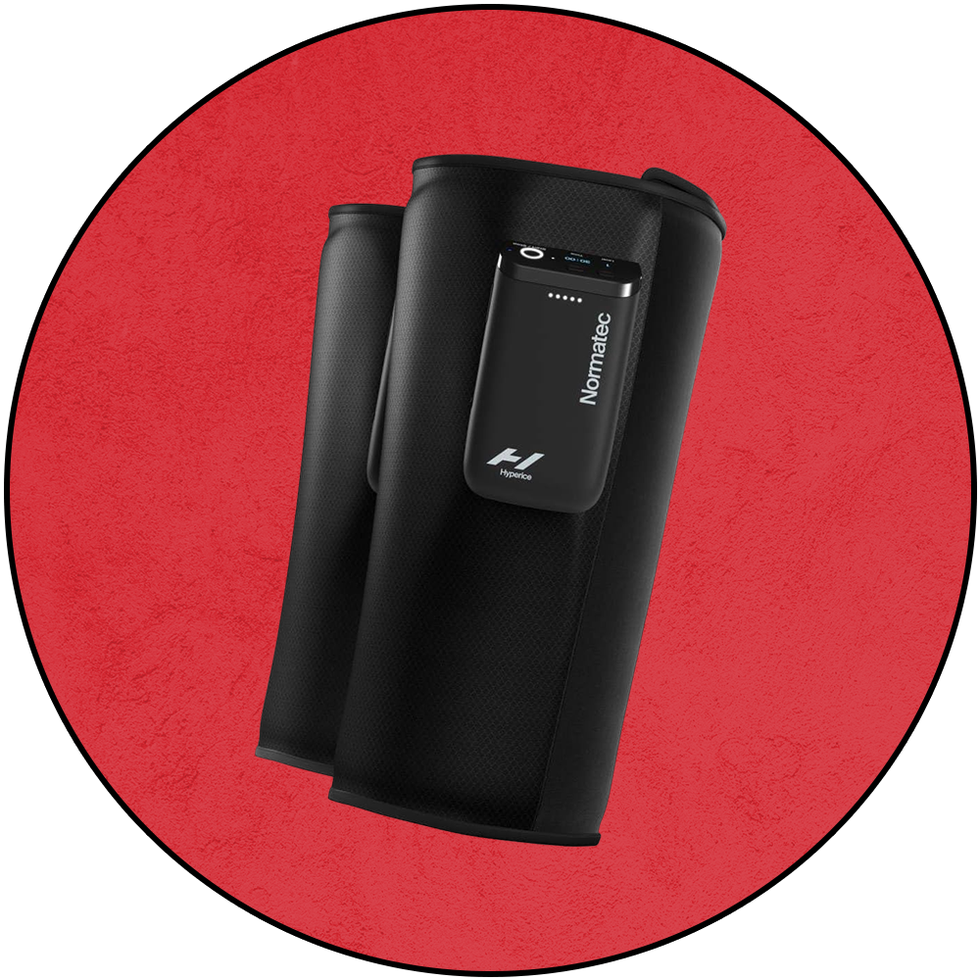
Normatec 3 Legs: What Makes It the Industry Standard
The Hyperice Normatec 3 Legs remains the benchmark in compression therapy for a reason. It uses patented Pulse technology that mimics the natural muscle pump of the leg, applying dynamic compression in a precise sequence from foot to hip. The Normatec 3 connects to the Hyperice app, which lets you control zone intensity, session length, and even sync recovery data with wearables like Garmin and Apple Watch. At seven zone levels of customizable compression, it covers everything from light recovery sessions to aggressive post-race treatment. For those interested in enhancing their home gym setup, consider exploring compact home gym equipment to complement your recovery routine.
Who Gets the Most Benefit From Compression Therapy
Compression boots deliver the biggest return for men with high training volume — runners, cyclists, and anyone doing leg-dominant strength work four or more days per week. They’re also particularly effective for men over 35, where circulation efficiency naturally starts to decline and recovery windows get longer. If your legs feel heavy, stiff, or slow to bounce back between sessions, compression therapy addresses the exact physiological bottleneck responsible. For those interested in enhancing their recovery routine, exploring compact strength equipment for men might also be beneficial.
4. Red Light Therapy Devices: Recovery While You Rest
Red light therapy is the recovery tool most men haven’t tried yet — and the one they’re most skeptical about until they actually use it consistently. It works while you’re completely still, requires zero physical effort, and targets recovery at the cellular level. That combination makes it one of the most efficient tools in any recovery stack.
Red light therapy (also called photobiomodulation) uses wavelengths of 630–850nm to penetrate skin and muscle tissue. At the cellular level, it stimulates mitochondrial activity — specifically the cytochrome c oxidase enzyme — which accelerates ATP production. More ATP means faster cellular repair, reduced oxidative stress, and lower levels of inflammatory cytokines in treated tissue.
The practical result of that cellular activity is reduced muscle soreness, faster tissue repair, and improved joint comfort after training. Unlike most recovery tools that work on fluid and circulation, red light operates at the energy production level of your cells — which is why it stacks so well with everything else on this list.
Sessions typically run 10 to 20 minutes, and the device does all the work. Lay under a panel, strap on a targeted device, and let the wavelengths do what they’re designed to do. Most users report noticeable differences in soreness and sleep quality within two to three weeks of consistent use.
The Science Behind Red Light and Muscle Tissue Repair
When near-infrared and red light wavelengths hit muscle tissue, they reduce the concentration of reactive oxygen species — the cellular byproducts of intense exercise that cause oxidative damage and delayed soreness. Research published in journals covering sports medicine and photobiomodulation has consistently shown that pre- and post-exercise red light application reduces markers of muscle damage including creatine kinase levels. The 830nm near-infrared wavelength penetrates deepest, reaching muscle tissue below the skin surface, while the 630–660nm red wavelength works on surface tissue and has strong anti-inflammatory effects.
FlexBeam vs. Joovv Go 2.0: Portable vs. Full Panel
The Recharge Health FlexBeam is a targeted, wearable red light device that wraps directly around the muscle group you’re treating — quads, hamstrings, lower back, shoulders. It delivers 630nm red and 850nm near-infrared light directly to the treatment site and runs on a rechargeable battery, making it genuinely portable for gym bags or travel. It’s the better option for men who want pinpoint treatment on specific problem areas.
The Joovv Go 2.0 is a compact panel device that delivers full-body adjacent coverage when positioned correctly, using both 660nm red and 850nm near-infrared wavelengths simultaneously. It’s more efficient for full lower body or back treatment and integrates with the Joovv app for protocol tracking. For men who want broader coverage in a home setup, the Joovv Go 2.0 is the stronger performer. For targeted recovery on the go, the FlexBeam wins on practicality.
5. Foam Rollers: The Entry-Level Tool That Still Delivers
Foam rolling has been around long enough that some guys have written it off as basic. That’s a mistake. Self-myofascial release through foam rolling remains one of the most effective ways to improve tissue quality, restore range of motion, and reduce tension between training sessions — especially when done correctly and consistently.
The mechanics are straightforward: sustained pressure on a trigger point causes the Golgi tendon organ to signal the muscle to relax, releasing the knot. Moving slowly — about one inch per second — over tight tissue is far more effective than rapid rolling, which mostly just adds friction without triggering the relaxation response. Spend 90 seconds on each major muscle group post-workout and the difference in next-day mobility is significant.
Trigger Point GRID vs. Hyperice Vyper 3: Vibration vs. Standard
The Trigger Point GRID Foam Roller is the gold standard for static myofascial release. Its multi-density exterior — with flat, grooved, and raised sections — replicates the feel of different massage techniques and gets into tissue more effectively than a single-density roller. It’s firm enough to work deep tissue but won’t cause bruising on sensitive areas. At under $50, it’s the highest-value recovery tool on this entire list.
The Hyperice Vyper 3 adds three-speed vibration to the rolling motion, and that addition genuinely changes how the tool performs. Vibration at 53Hz during rolling has been shown to increase the depth of muscle relaxation and reduce the discomfort of working through tight tissue — making it easier to actually roll correctly rather than tensing up against the pressure. For those looking for additional equipment to enhance their home workouts, check out this guide on home workout equipment for beginners.
- Trigger Point GRID: Best for beginners, travel, and budget-conscious setups — delivers consistent, proven results without complexity
- Hyperice Vyper 3: Best for advanced users, high-volume training days, and anyone with chronic tightness in major muscle groups
- Vibration rollers reduce perceived pain during rolling by up to 30%, which means users are more likely to apply adequate pressure and actually complete their session
- Standard rollers require no charging, have zero mechanical failure risk, and remain effective indefinitely
For most men, owning both makes sense — the GRID for daily maintenance work and the Vyper 3 for post-heavy-training sessions when tissue is particularly resistant. The cost difference is significant, but the use cases genuinely don’t overlap.
One critical rolling technique most men skip: always roll toward the heart. Moving from ankle to knee, knee to hip follows the direction of lymphatic drainage and actively assists fluid clearance rather than working against it. It’s a small adjustment that amplifies every rolling session you do.
6. Recovery Footwear: What Your Feet Do After Training Matters
The moment training ends, what you put on your feet either supports recovery or extends the damage. Standing or walking on hard surfaces in regular shoes after an intense session adds compressive stress to joints and connective tissue that are already in repair mode. Recovery footwear is specifically engineered to absorb that impact and redistribute pressure away from fatigued structures.
OOFOS OOFoam vs. Hoka Ora Recovery Slide: Comfort and Support Compared
The OOFOS OOCloog uses proprietary OOFoam technology that absorbs 37% more impact than traditional EVA foam, with an arched footbed that reduces stress on the ankles, knees, and lower back. The closed-toe design makes it practical for everyday post-workout use, not just locker room wear. The Hoka Ora Recovery Slide 3 uses Hoka’s signature oversized midsole with a dual-density construction — a softer top layer for immediate comfort and a denser base for structural support. Both are legitimate recovery tools, not just comfortable sandals. The OOFOS wins on joint offloading technology; the Hoka wins on structured arch support for men with higher arches or plantar fascia sensitivity. For more information on recovery tools, check out this guide on the best recovery tools for athletes.
7. Sleep and Wearable Trackers: Measure What You Can’t Feel
You can own every tool on this list and still under-recover if your sleep quality is poor. Sleep is when the majority of muscle protein synthesis occurs, when growth hormone peaks, and when the nervous system resets after training stress. Without objective data on your sleep, you’re guessing at the most important variable in your recovery equation.
Wearable trackers have become accurate enough to give men actionable data on sleep stages, heart rate variability, resting heart rate trends, and recovery readiness scores. That data changes behavior in ways that subjective feel simply can’t. Most men significantly overestimate how well they’re sleeping until they see the numbers.
The metrics that matter most for recovery-focused tracking are:
- Heart Rate Variability (HRV): The single best daily indicator of how recovered your nervous system is — higher is better, and a downward trend signals accumulated fatigue
- Resting Heart Rate: Elevated resting HR the morning after training indicates incomplete recovery or emerging illness
- Sleep Stages: Deep sleep (slow-wave) is where physical repair happens; REM is where cognitive restoration occurs — you need both
- Respiratory Rate: Elevated overnight respiratory rate often precedes overtraining symptoms by 24–48 hours
Whoop 4.0 and Garmin HRV Tracking: What the Data Tells You
The Whoop 4.0 is built specifically around recovery quantification. Its daily Recovery Score integrates HRV, resting heart rate, sleep performance, and respiratory rate into a single percentage that tells you how ready your body is to handle training load. It’s screenless, worn 24/7, and samples biometric data continuously — giving it significantly more data points than devices that only track during sleep. The Garmin Fenix 7 and Forerunner series offer robust HRV tracking with Body Battery scores that function similarly, with the added benefit of GPS sport tracking built in. Both platforms are legitimate; Whoop goes deeper on recovery science while Garmin covers more athletic use cases in a single device.
How Sleep Tracking Changes Your Recovery Decisions
Once you have 30 days of HRV and sleep data, patterns become impossible to ignore. Men consistently discover that alcohol — even one drink — tanks their deep sleep by 20% or more. They find that late training sessions push their resting heart rate up for hours, shortening the recovery window before sleep. That data makes hard decisions easy: skip the late workout, cut the nightcap, add 30 minutes to your sleep window before a heavy training day. The tracker doesn’t change your recovery. Your response to the data does.
8. Percussion and Vibration Foam Roller Combos: Two Tools in One
For men who want to consolidate their recovery toolkit without sacrificing effectiveness, percussion-vibration hybrid rollers offer a compelling middle ground. Devices like the Therabody Wave Roller combine the myofascial release mechanics of a traditional foam roller with five-speed vibration up to 53Hz — delivering the same tissue relaxation benefits as the Hyperice Vyper 3 while adding Bluetooth connectivity and guided recovery routines through the Therabody app. The wave surface pattern also provides multi-density contact similar to the Trigger Point GRID, making it genuinely capable of replacing both a standard roller and a basic massage gun for large muscle group work. It’s not a perfect substitute for a full-size massage gun on targeted areas, but for post-workout leg and back recovery in a single tool, it punches well above its price point.
How to Build a Recovery Routine That Actually Sticks
The reason most men abandon recovery routines isn’t laziness — it’s that the routine is too complicated to maintain when life gets busy. A recovery stack that requires 90 minutes every night is going to get skipped on the nights you need it most. The goal is building a minimum viable routine that delivers 80% of the results in a fraction of the time, with higher-effort protocols reserved for the days your training demands them.
The Minimum Effective Dose: What to Use on Busy Days
On days where time is the limiting factor, three things cover the essentials: two minutes of massage gun work on the muscles you trained, five minutes of targeted foam rolling on your highest-tension areas, and getting to bed 30 minutes earlier than usual. That’s it. Those three actions — done consistently — will outperform an elaborate recovery protocol done sporadically. Don’t let perfect be the enemy of consistent.
Stack Your Tools: The Right Order for Post-Workout Recovery
Sequence matters when you’re using multiple recovery tools. Using them in the wrong order reduces the effectiveness of each individual tool. The right post-workout recovery sequence follows the body’s natural physiological response to exercise stress.
- Cold plunge or cold shower (10–15 minutes): Use immediately post-training to trigger vasoconstriction and reduce acute inflammation before it peaks
- Compression boots (20–30 minutes): Follow cold therapy with compression to assist the vasodilation rebound — the flush effect is amplified when tissue is transitioning from cold-constricted back to normal temperature
- Massage gun (2–3 minutes per muscle group): With circulation already elevated from the cold-compression sequence, percussive therapy now penetrates more effectively into warmed, pliable tissue
- Foam rolling (60–90 seconds per major group): Use this as a finishing step to clear surface-level tension and restore range of motion across joints
- Red light therapy (10–20 minutes): Cap the session with red light — this is passive, requires no physical effort, and works best when tissue is already in an active repair state from the previous steps
This full sequence runs about 60 to 75 minutes. Use it on your hardest training days. On moderate days, drop the cold plunge and compression and work through steps three to five. On easy days, foam rolling alone is enough.
When More Recovery Gear Is Not the Answer
There’s a point where adding more recovery tools becomes a way of avoiding the real problem: training volume that exceeds what your life can support. If you’re consistently wrecked after every session, the answer isn’t a better cold plunge or a more expensive massage gun. The answer is reducing training intensity, adding a rest day, or fixing sleep. Recovery equipment accelerates a process your body is already capable of — it doesn’t replace the biological foundation of adequate sleep, proper nutrition, and appropriate training load.
Watch for these signs that your recovery gap isn’t an equipment problem: persistent elevated resting heart rate, declining HRV trends over two or more weeks, motivation loss, joint pain that doesn’t resolve between sessions, and performance regression despite consistent training. Those are overtraining signals. No amount of recovery gear fixes a programming problem.
The Best Recovery Setup Depends on How Hard You Train
A man training three days a week at moderate intensity has completely different recovery needs than someone running five to six sessions per week at high output. Matching your recovery investment to your actual training load is what separates smart spending from buying equipment that collects dust. If you’re training three days or fewer per week, a quality massage gun and a foam roller covers most of what you need. Add compression boots and a wearable tracker when you push to four or five days. Cold plunge and red light therapy become essential infrastructure at five-plus sessions, high-intensity training, or any time your sport demands peak performance on a schedule.
Budget matters too. Here’s a practical tiered approach to finding the best recovery tools for athletes that suit your financial plan.
- Entry level ($50–$200): Trigger Point GRID foam roller, OOFOS OOCloog recovery slides, resistance bands for mobility — covers the basics with tools that genuinely work
- Mid-tier ($200–$600): Add a Hypervolt 2 Pro or Theragun Elite massage gun and a Whoop 4.0 subscription — this is where recovery starts to meaningfully accelerate
- Performance level ($600–$2,000+): Hyperice Normatec 3 Legs compression boots, Joovv Go 2.0 red light panel, and an Ice Barrel 400 cold plunge — a complete professional-grade home recovery setup
Frequently Asked Questions
Here are the most common questions men have when building out their recovery toolkit.
What Is the Most Effective Recovery Tool for Sore Muscles After Heavy Lifting?
For acute post-lifting soreness, percussive therapy with a device like the Theragun PRO Plus combined with cold water immersion delivers the fastest relief. The cold reduces inflammation at the tissue level while the massage gun improves circulation and breaks up tension in the specific muscles you loaded. Used together within 30 minutes of finishing training, this combination consistently outperforms either tool used alone.
If you can only choose one, the massage gun wins on versatility — it works on any muscle group, takes two minutes to use, and requires no setup. Cold plunges are more powerful but demand more commitment. Start with percussive therapy and add cold immersion when you’re ready to invest in both the equipment and the discomfort.
How Long Should You Spend in a Cold Plunge After a Workout?
The research-supported sweet spot is 10 to 15 minutes in water between 50–59°F (10–15°C). Going shorter than 10 minutes reduces the vasoconstriction-vasodilation cycle benefit. Going longer doesn’t meaningfully increase the recovery effect and adds unnecessary cold stress, particularly in men new to the practice. Start with 5 minutes if you’re cold plunge-naive and build to the full protocol over two to three weeks.
Is Red Light Therapy Actually Proven to Speed Up Muscle Recovery?
Yes — with an important qualifier. Red light therapy is well-supported by research in the context of photobiomodulation, with studies consistently showing reductions in creatine kinase levels (a key muscle damage marker), decreased DOMS, and improved cellular energy production via mitochondrial stimulation. The 830nm near-infrared wavelength and 660nm red light wavelengths are the most researched and effective for muscle tissue applications.
The qualifier is consistency. Red light therapy is not a one-session fix. Users who see the most benefit use it four to five times per week for a minimum of eight to twelve weeks. The cumulative cellular adaptation is what drives results — not individual sessions. If you’re evaluating it after two or three uses and feeling nothing, you’re judging too early.
Can You Use a Massage Gun Every Day Without Causing Damage?
Yes, daily massage gun use is safe when applied correctly. The key is intensity and duration — not frequency. Keep sessions to two to three minutes per muscle group, avoid bony prominences, joints, the spine, and any area with acute injury or inflammation, and use lighter attachment heads on sensitive or recently-trained muscle groups. Deeper attachments and higher speeds are reserved for large, healthy muscle groups like quads, hamstrings, and glutes.
One important distinction: using a massage gun on severely DOMS-affected tissue in the first 24 hours after training should be done at low intensity only. Aggressive percussive therapy on acutely damaged muscle tissue can temporarily worsen inflammation. Gentle passes at the lowest speed setting help flush the area without adding mechanical stress to fibers that are actively repairing.
What Recovery Equipment Is Worth Buying on a Tight Budget?
Start with a Trigger Point GRID foam roller at under $50. It’s the highest return-on-investment recovery tool available — proven effective, requires no charging or maintenance, and never becomes obsolete. Pair it with a decent resistance band set for mobility work and you have the foundation of an effective recovery routine for under $75.
The next smart upgrade is recovery footwear — the OOFOS OOCloog is around $60 to $70 and you’ll use it every single day. After that, a mid-range massage gun like the Theragun Relief or Hyperice Hypervolt Go 2 gets you into percussive therapy without the premium device price tag. These three purchases together cost under $250 and cover the most impactful recovery bases available at any price point.
The expensive tools — cold plunges, compression boots, red light panels — deliver real results, but they amplify a foundation that has to exist first. Build the basics, use them consistently, and add premium tools only when your training volume actually demands them.
Ready to take your recovery seriously? Men’s Journal provides expert-tested, real-world reviews of the latest men’s recovery equipment to help you train harder, recover smarter, and stay in the game longer.
Leave a Reply