
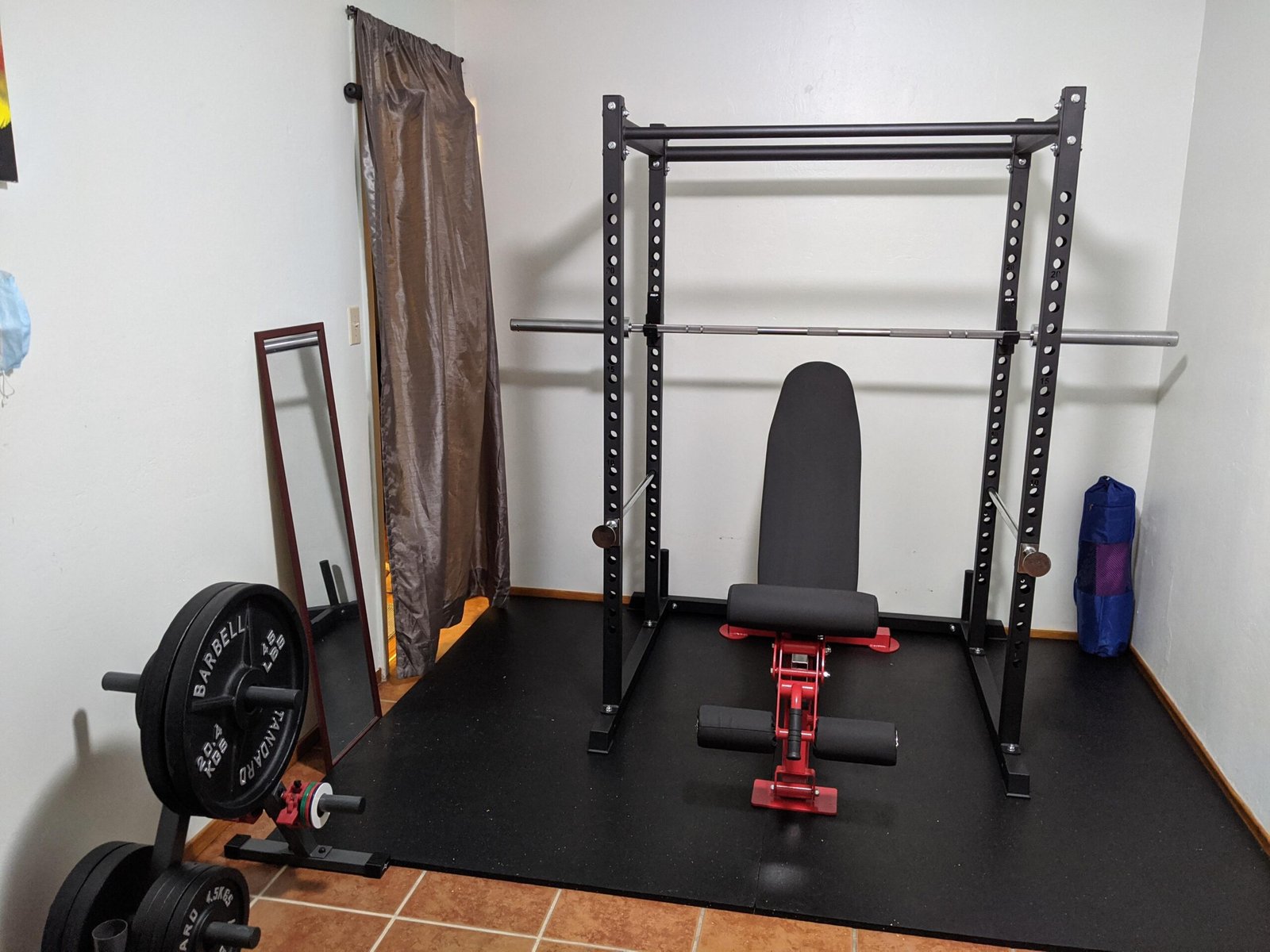
Small Space Home Gym Setup: At-A-Glance
- You only need a minimum of 35–50 square feet to build a fully functional home gym that supports strength, cardio, and recovery training.
- Adjustable dumbbells, resistance bands, and wall-mounted storage are the three non-negotiables for any compact gym setup.
- Flooring choice isn’t optional — the wrong surface can damage joints, equipment, and your subfloor simultaneously.
- REP Fitness offers one of the most space-efficient compact gym packages available, purpose-built for smaller training environments.
- Keep reading to discover a weekly workout plan specifically designed around small-space equipment — no excuses, no wasted square footage.
Most men overcomplicate this — you don’t need 500 square feet and a squat rack the size of a school bus to get seriously strong at home.
The truth is, a well-planned small space home gym setup can deliver everything a commercial gym offers, just without the crowds, commute, or monthly fees. Whether you’re working with a spare bedroom corner, a garage alcove, or a dedicated 8×8 section of your basement, the strategy is the same: measure smart, buy intentionally, and build around what you’ll actually use. For men looking to dial in their home setup without wasting money on gear that eats space, REP Fitness has engineered compact packages specifically designed for this challenge.
You Don’t Need a Big Space to Build Serious Strength
The biggest myth in home fitness is that results scale with square footage. They don’t. Some of the most effective training programs in the world — from Soviet weightlifting blocks to modern HIIT protocols — were designed for minimal equipment in minimal space. What actually matters is intentional equipment selection, consistent layout, and a training plan matched to what you have.
A 6×6 foot area gives you enough room to deadlift, press, row, squat, and perform full-body circuits. A 10×10 space opens up everything from kettlebell swings to pull-up bars to cable movements. The goal of this guide is to help you maximize every square inch, regardless of which category you fall into.
Step 1: Measure Your Space Before Buying Anything
Before spending a single dollar, grab a tape measure. This step alone will save you from the most common mistake men make when setting up a home gym — buying equipment that physically doesn’t fit the way they expected. Measure length, width, and ceiling height. That ceiling height matters more than most people think, especially if you plan to use a pull-up bar, do overhead pressing, or swing a kettlebell. For more ideas on space-efficient equipment, check out this compact guide on home gym equipment.
The Minimum Space You Actually Need to Train Effectively
The absolute minimum for a functional single-person training space is approximately 35 square feet — that’s a 5×7 foot zone. This fits a mat, a pair of adjustable dumbbells, and enough clearance for floor-based movements, rows, and pressing. Step up to 50–64 square feet (roughly 7×8 or 8×8) and you can add a kettlebell, a resistance band station, and a foldable bench without the space feeling cramped. For more tips on optimizing your space, check out this guide to building a home gym in a small space.
Quick Space Reference Guide:
📏 35 sq ft (5×7): Mat + adjustable dumbbells + bodyweight movements
📏 50 sq ft (7×8): Above + kettlebell + foldable bench + bands
📏 100 sq ft (10×10): Above + pull-up bar + cable system + storage rack
📏 150+ sq ft: Full compact gym with cardio equipment and dedicated storage
How to Map Out Your Workout Zone
Use painter’s tape on the floor to map the exact footprint of every piece of equipment you’re considering before buying it. This low-tech trick prevents expensive returns and awkward reconfiguration. Mark your primary lifting zone, your movement corridor (you need at least 18–24 inches of clearance on all active sides), and your storage wall. Think of it as a floor plan — because that’s exactly what it is.
Step 2: Pick the Right Flooring First
Flooring is the foundation of your entire setup, and most men skip it entirely or treat it as an afterthought. That’s a mistake. Bare concrete is unforgiving on joints during long sessions and offers zero vibration dampening when you set down weights. Hardwood floors, on the other hand, are easily scratched and gouged by even light dumbbells. Carpet holds moisture, compresses unpredictably under load, and creates instability during heavy lifts. For a comprehensive guide on choosing the best flooring, check out this compact guide on home gym equipment.
The right gym flooring does three jobs simultaneously: it protects your body, protects your equipment, and protects the subfloor underneath. For a small space, you want something that accomplishes all three without adding unnecessary height or complexity to the setup process.
Why Rubber Mats Beat Bare Floors for Home Gyms
High-density rubber flooring — typically sold in 3/8-inch or 3/4-inch thickness — is the gold standard for home gym surfaces. The 3/8-inch option works well for light-to-moderate lifting and bodyweight training, while the 3/4-inch thickness is necessary if you’re dropping weights or using a barbell. Rubber absorbs impact, reduces noise transmission to floors below, and provides the grip you need for deadlifts and heavy pressing movements. Interlocking rubber tiles are particularly well-suited for small spaces because you can configure them to fit any room shape without cutting or waste. For more ideas on optimizing your space, check out our compact home gym equipment guide.
Best Flooring Options for Small Spaces
For most small home gym setups, interlocking rubber tiles in the 3/8-inch to 3/4-inch range hit the best balance of protection, cost, and installation simplicity. Budget-conscious options like stall mats from farm supply stores (typically 4×6 feet at 3/4-inch thickness) offer similar density at a fraction of specialty gym flooring prices. EVA foam tiles are a soft-training alternative useful for yoga or bodyweight work but don’t hold up well under heavy iron.
Step 3: Choose One Core Strength Tool
Here’s where most people go wrong — they buy too much at once and end up with an overcrowded, inefficient space they stop using within three months. The smarter approach is to anchor your entire gym around one primary strength tool, such as an adjustable kettlebell, then build outward from there only when you’ve confirmed you’re using it consistently.
Your core strength tool should be able to train your upper body push, upper body pull, lower body, and core — ideally within a small footprint. That narrows the field considerably. The three main contenders for a small space home gym are:
- Adjustable dumbbells — highest exercise variety, smallest footprint, best for most men
- Wall-mounted cable systems — unmatched for functional movement patterns, require wall anchoring
- Resistance bands with anchor points — ultra-portable, zero footprint, lower ceiling for heavy loading
Adjustable Dumbbells: The Best All-Around Option for Small Gyms
A single pair of adjustable dumbbells can replace an entire rack of fixed weights that would otherwise consume 20–30 square feet of floor space. The PowerBlock Elite EXP, for example, adjusts from 5 to 90 pounds per hand in increments as small as 2.5 pounds, all within a footprint smaller than a shoebox. The Bowflex SelectTech 552 is another widely trusted option, covering 5 to 52.5 pounds and fitting on a compact two-dumbbell stand that takes up less than 3 square feet. For men who want to do everything from shoulder isolation to heavy Romanian deadlifts without changing equipment, adjustable dumbbells are the single best investment in a small space gym.
Wall-Mounted Racks and Cable Systems for Tight Spaces
If you have the wall space and the willingness to drill, a wall-mounted cable system is a game-changer for small gyms. Systems like the REP Fitness FT-100 Functional Trainer mount flush against the wall and give you a full cable column with adjustable pulleys — capable of lat pulldowns, cable rows, chest flys, tricep pushdowns, and dozens of other movements — all without occupying any permanent floor space during non-use. The trade-off is installation complexity and a higher upfront cost, typically $500–$1,000 for a quality unit, but the exercise variety per square foot is unmatched.
Resistance Bands as a Backup Option
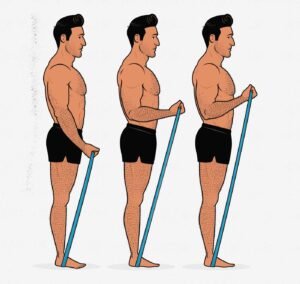
Resistance bands are the most underestimated tool in a compact gym. A full set of loop bands — such as the Fit Simplify Resistance Loop Exercise Bands or Rogue Monster Bands — covers resistance levels from 5 pounds all the way past 200 pounds when bands are doubled or stacked. They take up zero floor space, cost under $50 for a complete set, and can be anchored to a door frame, a pull-up bar, or a wall-mounted hook. They’re not a replacement for heavy iron, but as a supplemental or travel-proof system within a small gym, they pull serious weight — literally.
Step 4: Add Functional Movement Equipment
Once your core strength tool is locked in, the next layer of your small gym is functional movement equipment — the tools that fill in the gaps your primary piece can’t cover. This is where you add explosive power training, pulling movements, and multi-plane exercises that keep your body athletic rather than just strong in isolated patterns.
The key rule here is the same as before: every piece you add must earn its floor space. If it only does one thing and you can replicate that movement with something you already own, skip it. Prioritize equipment that unlocks multiple movement patterns within a compact footprint, like some of the best fitness gear essentials for small spaces.
Kettlebells for Full-Body Training in Minimal Space
A single kettlebell is arguably the most space-efficient training tool ever designed. One 35-pound kettlebell — roughly the size of a cantaloupe with a handle — can fuel an entire workout covering swings, goblet squats, single-arm presses, rows, Turkish get-ups, and loaded carries. If budget allows, a three-kettlebell setup covering light, medium, and heavy loads (such as 26 lb / 35 lb / 53 lb) gives you enough range to program full progressive overload cycles for months without needing anything else. Dragon Door and Rogue both produce competition-style kettlebells with consistent dimensions across weights, which matters in a small space because you always know exactly how much clearance you need.
Pull-Up Bars That Don’t Require Permanent Installation
A pull-up bar is one of the highest-return additions you can make to a small home gym. Doorframe-mounted options like the Iron Gym Total Upper Body Workout Bar require zero drilling, install in seconds, and support up to 300 pounds. If your ceiling height allows it, a free-standing pull-up station like the Rogue Monster Lite Rig gives you more grip variation and pull-up angles — but for most small spaces, a doorframe bar handles chin-ups, pull-ups, and hanging core work without taking up a single square foot of floor space. Ceiling height is the only real limiter: you need at least 8 feet to perform a full pull-up without tucking your knees aggressively. For more tips on optimizing your home gym, check out this guide on building a home gym in a small space.
Step 5: Plan Your Gym Layout Strategically
Equipment selection is only half the battle. How you arrange that equipment inside your space determines whether your gym feels functional or frustrating every single time you walk in. A poorly laid out small gym creates bottlenecks, safety hazards, and the kind of low-grade annoyance that quietly kills training consistency over time.
The goal of your layout is to create three distinct zones within whatever square footage you have: a lifting zone (your primary training area with at least 18 inches of clearance on all active sides), a storage zone (equipment not currently in use goes here — ideally off the floor), and a movement corridor (a clear path you never block, used for lunges, carries, and transitions between exercises). Even in a 7×8 space, these three zones can coexist if you plan deliberately.
Use Vertical Space with Wall-Mounted Storage
The floor is prime real estate in a small gym — stop storing things on it. Wall-mounted storage solutions move your equipment off the ground and onto vertical surfaces that would otherwise just be painted drywall. A simple wall-mounted dumbbell rack, pegboard with hooks, or a dedicated kettlebell shelf can free up 6–10 square feet of floor space that immediately becomes usable training area.
Options worth installing include: compact home gym equipment.
- Pegboard panels — versatile, inexpensive, customizable with hooks for bands, jump ropes, and accessories
- Wall-mounted dumbbell racks — keep dumbbells at arm level and off the floor entirely
- Folding wall-mounted benches — such as the Valor Fitness CB-12, which folds flat against the wall when not in use
- Horizontal bar mounts — hold barbells, foam rollers, and bands horizontally along the wall
- Over-door organizers — ideal for resistance bands, jump ropes, and small accessories
Keep Your Pathways Clear for Safe Movement
This sounds obvious until you’re mid-set on a kettlebell swing and your heel clips a dumbbell you forgot to put away. In a small gym, clutter doesn’t just look bad — it’s a legitimate injury risk. Make a non-negotiable rule: every piece of equipment returns to its designated storage spot after every set.
Design your layout so the most-used equipment is the most accessible. Your primary strength tool should be within arm’s reach of your primary training zone. Secondary and supplemental equipment — bands, foam rollers, ab wheels — goes on the wall or in a bin on the perimeter.
Movement flows to plan for in your corridor zone include:
- Walking lunges requiring at least 8–10 feet of linear clearance
- Kettlebell swings needing roughly 3 feet in front and 3 feet behind the standing position
- Lateral shuffles and band walks requiring 6–8 feet of side-to-side clearance
- Bear crawls and Turkish get-ups needing a full body-length of open floor (approximately 6–7 feet)
How Mirrors Make a Small Gym Feel Bigger
Mirrors do double duty in a small training space. Functionally, they let you monitor your form on every rep — catching issues with knee tracking, spine alignment, and shoulder positioning that you’d otherwise miss entirely. Visually, a full-length mirror or a row of mirror tiles on one wall creates the illusion of double the space, which makes a genuinely cramped environment feel significantly more open. For more tips on optimizing small spaces, check out this guide to building a home gym in a small space.
You don’t need custom gym mirrors to make this work. Large frameless mirror panels from home improvement stores — typically sold in 12×12 inch tiles or 16×48 inch sections — cost under $50 for enough coverage to line an entire accent wall. Mount them at eye level and extend down toward the floor to capture your full movement pattern during lifts. For more ideas on setting up your gym, check out our compact guide to home gym equipment.
Step 6: Don’t Skip Recovery Tools
Recovery is where adaptation actually happens, and in a small home gym it’s also one of the easiest categories to accommodate because the best recovery tools have almost no footprint. A high-density foam roller like the TriggerPoint GRID takes up 13 inches of floor space when standing upright. A Theragun Prime or Hypervolt Go 2 percussive therapy device fits in a drawer. Resistance band stretching requires nothing more than floor space you’re already using for training. Add a recovery corner to your storage wall — a hook for your foam roller, a small shelf for your massage gun, and a designated mat zone — and you’ve got a complete recovery station that costs you zero additional square footage.
The Best Compact Home Gym Packages Worth Buying
If you want to skip the piecemeal approach and get a curated setup in one purchase, compact gym packages are worth serious consideration. The advantage isn’t just convenience — it’s that the equipment is pre-selected to work together within a defined space, which removes the guesswork from layout planning and compatibility. The trade-off is slightly less customization, but for most men building their first serious home gym, that’s a worthwhile exchange for speed and simplicity.
REP Fitness Compact Home Gym Package
The REP Fitness Compact Home Gym Package is purpose-built for exactly this kind of setup. It bundles adjustable dumbbells, a compact bench, and optional add-ons into a cohesive system designed to work within a limited footprint. REP Fitness equipment is widely regarded in the home gym community for commercial-grade build quality at significantly lower price points than brands like Rogue or Time Under Tension. The adjustable dumbbell options within their lineup go up to 90 pounds per hand, which is more than enough loading for most men’s complete upper and lower body programming without a barbell in the mix.
What to Look for in a Space-Saving Gym Bundle
Not all compact gym packages are created equal. When evaluating any bundle, check for these non-negotiables before clicking purchase:
- Combined footprint under 25 square feet when all equipment is in use simultaneously
- Adjustable resistance range spanning at least 5 to 50 pounds for dumbbells or equivalent band tension
- A foldable or wall-mounted bench option rather than a fixed flat bench that occupies permanent floor space
- Included or compatible storage solution so equipment stays off the floor between sessions
- Weight capacity ratings that exceed your current maximums by at least 20% for long-term usability
A Simple Weekly Workout Plan Built for Small Spaces
You’ve built the gym — now here’s how to actually use it. This three-day-per-week structure is designed around the equipment outlined in this guide: adjustable dumbbells, a kettlebell, resistance bands, and a pull-up bar. It hits every major movement pattern across the week, builds progressive overload through rep and load manipulation, and fits entirely within the footprint of a 7×8 space. Run this as a Monday/Wednesday/Friday split or any three non-consecutive days that work with your schedule.
Day 1: Upper Body Strength
| Exercise | Sets | Reps | Equipment |
|---|---|---|---|
| Dumbbell Bench Press | 4 | 8–10 | Adjustable Dumbbells + Bench |
| Pull-Ups | 4 | 6–8 | Doorframe Pull-Up Bar |
| Single-Arm Dumbbell Row | 3 | 10–12 each | Adjustable Dumbbells |
| Dumbbell Overhead Press | 3 | 10–12 | Adjustable Dumbbells |
| Resistance Band Face Pull | 3 | 15–20 | Resistance Band + Door Anchor |
| Dumbbell Curl + Hammer Curl | 2 | 12 each | Adjustable Dumbbells |
Day 1 is built around the push-pull principle — for every pressing movement, there’s a corresponding pulling movement of equal or greater volume. This balance is critical for shoulder health and long-term joint integrity, especially in a home setting where you don’t have a coach watching your posture between sets. For more tips on creating an efficient workout space, check out our guide on the best home gym equipment for men.
The resistance band face pull at the end of the session isn’t filler. It directly targets the rear deltoids and external rotators — the muscles most chronically underdeveloped in men who press heavy — and it takes about 90 seconds to complete. Don’t skip it.
Progress this workout by adding 2.5 pounds to each dumbbell movement every 1–2 weeks when you can complete all prescribed reps with clean form on every set. For pull-ups, add reps before adding load. Once you can hit 10 clean pull-ups across all four sets, consider adding a light dumbbell held between your feet or a resistance band looped through a weight plate for added resistance.
Rest periods should sit between 60 and 90 seconds for isolation work like curls and face pulls, and between 2 and 3 minutes for compound movements like bench press and pull-ups. Shorter rest on the accessory work keeps total session time under 45 minutes, which is realistic and sustainable for a home training schedule.
Day 2: Lower Body and Core
| Exercise | Sets | Reps | Equipment |
|---|---|---|---|
| Goblet Squat | 4 | 10–12 | Kettlebell or Dumbbell |
| Romanian Deadlift | 4 | 10–12 | Adjustable Dumbbells |
| Reverse Lunge | 3 | 10 each leg | Adjustable Dumbbells |
| Single-Leg Hip Thrust | 3 | 12 each | Bodyweight + Bench |
| Resistance Band Lateral Walk | 3 | 15 steps each way | Loop Band |
| Hanging Knee Raise | 3 | 12–15 | Pull-Up Bar |
| Ab Wheel Rollout | 3 | 8–10 | Ab Wheel |
Reverse lunges are prioritized over forward lunges here because they require less forward clearance — critical in a small training space — while delivering the same quad, glute, and hamstring stimulus. In a 7×8 foot zone, a reverse lunge keeps you in place rather than traveling forward, which is a genuinely practical layout consideration that most training templates ignore entirely.
The hanging knee raise and ab wheel rollout at the end of Day 2 serve double duty as both core training and grip-and-shoulder endurance work, which carries over directly into your upper body session two days later. This isn’t accidental programming — it’s how you build cumulative training effect with minimal equipment variety.
Day 3: Full-Body Functional Training
| Exercise | Sets | Reps / Duration | Equipment |
|---|---|---|---|
| Kettlebell Swing | 5 | 15 reps | Kettlebell |
| Dumbbell Thruster | 4 | 10 reps | Adjustable Dumbbells |
| Chin-Up | 3 | Max reps | Pull-Up Bar |
| Single-Arm Kettlebell Press | 3 | 8 each side | Kettlebell |
| Band Pull-Apart | 3 | 20 reps | Resistance Band |
| Farmer’s Carry | 3 | 30 seconds | Adjustable Dumbbells |
Day 3 is your conditioning and athleticism session. The kettlebell swing alone — when loaded correctly and performed with hip-hinge mechanics — trains the posterior chain with an intensity that rivals barbell deadlifts in terms of muscle activation and cardiovascular demand. The farmer’s carry at the end taxes your grip, traps, core, and mental toughness simultaneously. Walk in place if your space won’t allow a straight-line path — the loading effect is the same.
Small Space, Zero Excuses
Every section of this guide points to the same conclusion: space is almost never the real obstacle. The men who actually build strong, consistent home gym habits aren’t the ones with the biggest basements — they’re the ones who committed to a plan, bought intentionally, and stopped waiting for perfect conditions that were never coming anyway.
A 7×8 foot corner with rubber flooring, a pair of adjustable dumbbells, a kettlebell, a pull-up bar, and a resistance band set is enough to build more muscle, lose more fat, and move better than 90% of the population. That’s not motivation-poster talk — that’s the logical result of progressive overload applied consistently to compound movements over time. The gym you’ll actually use beats the gym you’re still designing in your head every single time. For those seeking guidance on the best equipment, check out this compact guide on home gym equipment.
Frequently Asked Questions
Here are the most common questions men have when planning their first small space home gym setup, answered directly and without fluff.
What is the minimum space needed for a home gym?
The minimum space needed for a home gym is approximately 35 square feet — roughly a 5×7 foot area. This is enough to accommodate a mat, a pair of adjustable dumbbells, and enough clearance for floor-based movements, pressing, and rowing exercises performed from a standing or kneeling position. For more details on creating an efficient workout area, check out this guide on building an amazing home gym in a small space.
If you want to add a foldable bench, kettlebell, and pull-up bar, you’ll want to step up to at least 50–64 square feet (7×8 or 8×8). That size allows for a complete strength and conditioning setup without the space feeling dangerously tight during dynamic movements like swings or lateral work. Ceiling height is the second measurement that matters — aim for a minimum of 8 feet if you plan to use a pull-up bar or perform overhead pressing. For those interested in portable equipment, check out these portable bench press reviews to find the best options for your home gym setup.
What is the single best piece of equipment for a small home gym?
Top Space-Efficient Equipment Ranked by Versatility per Square Foot:
🥇 1. Adjustable Dumbbells — Replaces an entire rack, fits in under 2 sq ft, covers 5–90 lbs
🥈 2. Kettlebell (single or set of 3) — Full-body conditioning, explosive training, minimal footprint
🥉 3. Resistance Bands (full set) — Zero floor space, 5–200+ lbs of resistance, door-anchor compatible
🏅 4. Doorframe Pull-Up Bar — Zero floor space, trains entire upper back and core
🏅 5. Foldable Bench — Unlocks pressing and rowing variations, stores flat against the wall
The single best piece of equipment for a small home gym is a quality pair of adjustable dumbbells. No other piece of equipment matches their combination of exercise variety, load range, and minimal footprint.
Options like the PowerBlock Elite EXP (5–90 lbs per hand) or the Bowflex SelectTech 552 (5–52.5 lbs) sit in a footprint roughly the size of a single fixed dumbbell while replacing an entire 20-dumbbell rack. They allow you to train every major muscle group across every movement pattern — press, pull, hinge, squat, carry, and rotate — without adding a second piece of equipment to your floor.
That said, the “best” piece of equipment is always the one matched to your specific goals. If pure conditioning and explosive power are the priority, a 53-pound kettlebell used for swings, presses, and Turkish get-ups might edge out adjustable dumbbells for your specific setup. The framework above helps you evaluate your own situation rather than blindly following a one-size-fits-all recommendation.
Can you build real muscle with a small home gym setup?
What Research Tells Us About Muscle Growth and Equipment:
✅ Progressive overload — not equipment type — is the primary driver of hypertrophy
✅ Dumbbell training produces equivalent muscle growth to barbell training when load and volume are matched
✅ Resistance band training has been shown to produce similar strength gains to free weight training at equivalent tensions
✅ Training frequency (2–4x per week per muscle group) matters more than the specific implement used
❌ Machine-based isolation work offers no proven hypertrophy advantage over free weight equivalents
Yes — you can absolutely build real, significant muscle with a small home gym setup. The physiological driver of muscle growth is mechanical tension applied progressively over time, and that has nothing to do with how large your gym is or whether you own a cable stack. What it requires is a load that challenges you within the 6–30 rep range, applied consistently to the major muscle groups 2–4 times per week.
Adjustable dumbbells covering 5 to 90 pounds per hand provide more than enough resistance for complete upper and lower body hypertrophy for the vast majority of men — including advanced trainees. Pair that with a kettlebell for posterior chain loading and a pull-up bar for back and bicep development, and you have a training system capable of building a genuinely impressive physique without setting foot in a commercial gym.
The honest caveat: if your goal is elite-level powerlifting or Olympic weightlifting, you will eventually hit the ceiling of what a small home gym can support. But for building substantial muscle mass, maintaining athletic performance, and staying strong and healthy long-term, a well-equipped compact home gym is not a compromise — it’s a completely legitimate and often superior alternative to gym membership.
How much does it cost to set up a compact home gym?
A functional small space home gym can be built for as little as $200–$400 at the budget level using resistance bands, a doorframe pull-up bar, and a single kettlebell. A mid-range setup with adjustable dumbbells, rubber flooring tiles, a foldable bench, and a pull-up bar typically runs $600–$1,200. A fully equipped compact gym with a wall-mounted cable system, quality adjustable dumbbells like the PowerBlock Elite EXP, rubber flooring, a kettlebell set, and storage solutions will land in the $1,500–$3,000 range — still a fraction of multi-year gym membership costs, which average $500–$800 per year in most U.S. cities.
Do I need to bolt equipment to the wall for a small home gym?
No — the majority of effective small home gym setups require zero permanent wall modifications. Adjustable dumbbells, kettlebells, resistance bands, foldable benches, and doorframe pull-up bars all work without drilling a single hole. This makes compact home gym setups equally viable for apartment renters and homeowners alike.
The exception is wall-mounted storage and cable systems. If you want a wall-mounted dumbbell rack, pegboard storage, or a functional trainer like the REP Fitness FT-100, those require wall anchoring into studs for safety and stability. If you’re renting, check your lease terms — many landlords allow stud-mounted fixtures that can be removed and patched without penalty, especially in a dedicated room.
The bottom line: start with freestanding and door-mounted equipment, confirm you’ll actually use the space consistently, and then invest in wall-mounted upgrades if and when the setup warrants them. There’s no reason to commit to permanent installation before you’ve validated the habit.
Leave a Reply