
BestProductsForMen.org participates in affiliate programs, which means we may earn a commission if you click on a link and make a purchase. This comes at no additional cost to you. We only recommend products we personally trust, use, or believe will provide value to our readers.
Our goal is to provide honest, helpful reviews and recommendations so you can make informed decisions.
This New Zealand 7 day itinerary for singles is designed for solo travelers who want adventure, connection, and unforgettable experiences without the stress of planning everything alone.
- New Zealand’s mix of group tours, high-energy activities, and easy transport makes it one of the best destinations in the world for singles traveling solo.
- A 7-day itinerary covering Auckland, Rotorua, Queenstown, and Milford Sound hits the perfect balance of adventure, culture, and social connection.
- Joining guided group tours — like those offered through New Zealand Trails — instantly solves the loneliness problem most solo travelers dread.
- Shared adrenaline experiences like bungee jumping at Kawarau Bridge and jet boating through the Shotover Canyon create real connections faster than any icebreaker.
- Keep reading to find out which single day on this itinerary solo travelers say changes everything — and it’s not the one most people expect.
Article-At-A-Glance: What This 7-Day New Zealand Adventure Delivers
Solo travel in New Zealand doesn’t feel lonely — it feels like the best decision you’ve ever made.
New Zealand is tailor-made for singles who want more than a beach vacation. The country’s natural landscape forces you off the couch and into experiences that are almost impossible to do quietly and alone. Volcanoes, glaciers, bungee jumps, fiords — these things demand company, and the country delivers it naturally through its thriving group tour culture and backpacker-friendly infrastructure. Whether you’re 25 or 55, traveling solo here means you’re never truly on your own unless you want to be.
New Zealand Is Built for Solo Travelers
Why This New Zealand 7 Day Itinerary for Singles Works
Most countries tolerate solo travelers. New Zealand actively rewards them. The infrastructure here — from well-marked Great Walks to a dense network of hostels, shuttle buses, and guided adventure tours — is designed for people moving independently. You don’t need a car, a partner, or a pre-built social circle to have an extraordinary trip.
Why Group Tours Solve the Loneliness Problem Instantly
The single biggest fear for singles heading overseas is arriving somewhere new and spending dinner alone every night. New Zealand’s guided group tour industry eliminates that problem on day one. Companies like New Zealand Trails run small-group adventures — typically 5 to 21 days — where everything from meals to activities to accommodation is arranged for you. You show up, and your temporary travel family is already there waiting.
How High-Energy Activities Create Natural Social Connections
There’s a reason solo travelers rave about New Zealand’s activity scene. When you’re dangling off a bungee cord or crammed into a jet boat rocketing through a canyon, conversation happens automatically. Adrenaline breaks down social walls faster than any cocktail hour. You don’t need an opener — the experience is the opener.
Safety and Ease of Getting Around as a Solo Traveler
New Zealand consistently ranks among the safest countries in the world for tourists. The transport links between major stops — Auckland, Rotorua, Queenstown — are well-serviced by domestic flights, intercity buses, and rental options. InterCity buses connect most major hubs, and Air New Zealand operates frequent, affordable domestic routes. The country’s small size also works in your favor: you can cover a remarkable amount of ground in just seven days.
Best Activities for Solo Travelers in New Zealand
Day 1: Auckland — Your Gateway to Adventure

“Auckland – Wikipedia” from en.wikipedia.org
Land in Auckland, shake off the jet lag, and start easy. Auckland is New Zealand’s largest city, sitting on a narrow isthmus between two harbours, and it’s genuinely worth a day of exploration before you head south. Start with a walk up One Tree Hill (Maungawhau/Mount Eden is the better climb — 196 metres above sea level with panoramic views across the city and both coastlines). From the summit, you get your first real sense of just how dramatically beautiful this country is.
In the afternoon, head to the Viaduct Harbour waterfront. It’s busy, social, and lined with restaurants and bars where solo travelers naturally congregate. If you’ve booked a guided group tour, this is often where your group meets for the first time. If you’re independent, consider booking an evening sailing experience on the Waitemata Harbour — small group, instant social setting, zero awkwardness.
Day 2: Rotorua — Volcanoes, Mud Pools, and Māori Culture
“Rotorua Attractions | Rotorua, New Zealand” from www.newzealand.com
Drive or take a bus three hours south from Auckland to Rotorua — you’ll smell it before you see it. The sulphur in the air is unmistakable, and it signals that you’ve arrived somewhere genuinely unlike anywhere else on earth. Rotorua sits on one of the world’s most active geothermal fields, and the landscape here feels more like a sci-fi set than a real place.
The Geothermal Wonders You Can’t Miss
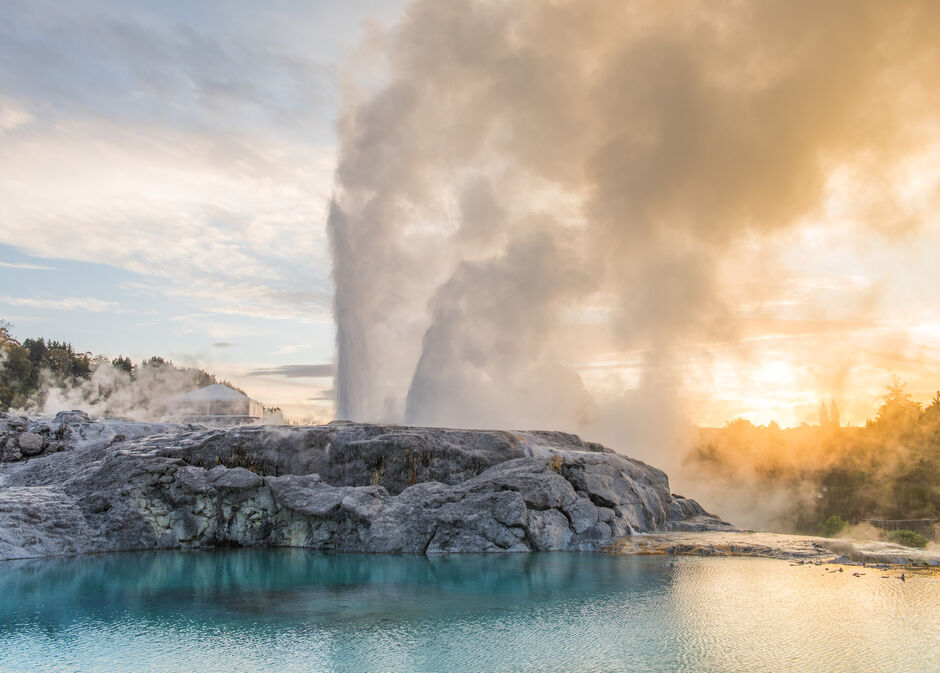
Te Puia is the crown jewel of Rotorua’s geothermal attractions. The Pōhutu Geyser — the largest active geyser in the Southern Hemisphere — erupts up to 20 times a day, shooting boiling water up to 30 metres into the air. Wai-O-Tapu Thermal Wonderland is another must, famous for its vivid colour palette of turquoise, orange, and yellow mineral pools. Budget around three to four hours between the two sites.
Hell’s Gate is worth a mention for the more adventurous — it’s Rotorua’s most active geothermal reserve and offers a unique mud spa experience. Soaking in a natural sulphur pool at the end of a long travel day is a surprisingly social experience. For more information on planning your adventure, check out this New Zealand Trails guide.
Why a Māori Cultural Evening Is Perfect for Singles
Book the Mitai Māori Village experience for your evening in Rotorua. It runs nightly and includes a hāngī feast (food cooked underground in an earth oven), traditional Māori performances including the haka, and a guided walk through native bush with glow worms. It’s structured, engaging, and shared — exactly the kind of group experience that makes solo travel feel electric rather than isolating. You’ll leave with a full stomach and at least a few new contacts in your phone.
Day 3: Fly to Queenstown — The World’s Adventure Capital
Catch an early flight from Rotorua to Queenstown — Air New Zealand operates this route regularly, with flight times around 1.5 hours. The moment you descend into Queenstown Basin, surrounded by the Remarkables mountain range and the glittering expanse of Lake Wakatipu, you’ll understand why this city has a reputation that precedes it globally.
What Makes Queenstown Unlike Any Other City
Queenstown is purpose-built for people who want to feel alive. It’s a small city — population under 50,000 — but it punches far above its weight in energy, options, and sheer visual drama. The waterfront on Lake Wakatipu is the social heartbeat of the city. Restaurants, bars, and tour booking offices line every street, and the crowd is overwhelmingly made up of travelers from every corner of the world. As a single traveler, you are absolutely in your element here.
How to Settle In and Meet Fellow Travelers on Night One
Check into your accommodation and then head straight to the Queenstown waterfront. Grab a seat at one of the outdoor bars overlooking the lake and let the atmosphere do the work. The Pub on Wharf and Zephyr Bar are both reliably social spots with a mixed crowd of locals and international visitors. If you’re on a guided group tour, your operator will typically arrange a group dinner on the first Queenstown night — don’t skip it.
Day 4: Adrenaline Day — Skip Small Talk, Make Real Connections
Today is the day the itinerary earns its reputation. Queenstown is the undisputed adventure capital of the world, and day four is where you commit to that fully. The activities below aren’t just thrill-seeking checkboxes — they’re genuine social accelerators. Pick one, pick two, or go all in.
Most operators run small group bookings as standard, which means you’ll be doing these activities alongside a handful of other travelers in the same boat — literally and figuratively. The shared pre-jump nerves, the post-landing euphoria, the group photos afterward — this is how strangers become travel companions.
1. Bungee Jumping at Kawarau Bridge
“Original Kawarau Bridge Bungy Jump …” from www.tripadvisor.com
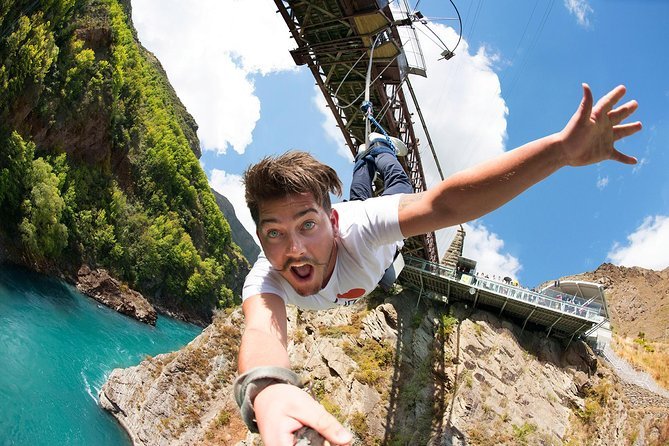
The Kawarau Bridge Bungy is operated by AJ Hackett Bungy New Zealand — the company that invented commercial bungee jumping on this exact bridge in 1988. It’s a 43-metre free fall over the turquoise Kawarau River, and you can opt to be dunked in the water at the bottom. There’s a viewing platform where your group watches each jump, which turns the whole experience into a collective event rather than a solo act of courage.
2. Skydiving Over Lake Wakatipu
“Tandem Skydiving in Queenstown – Up to …” from www.newzealand.com.au
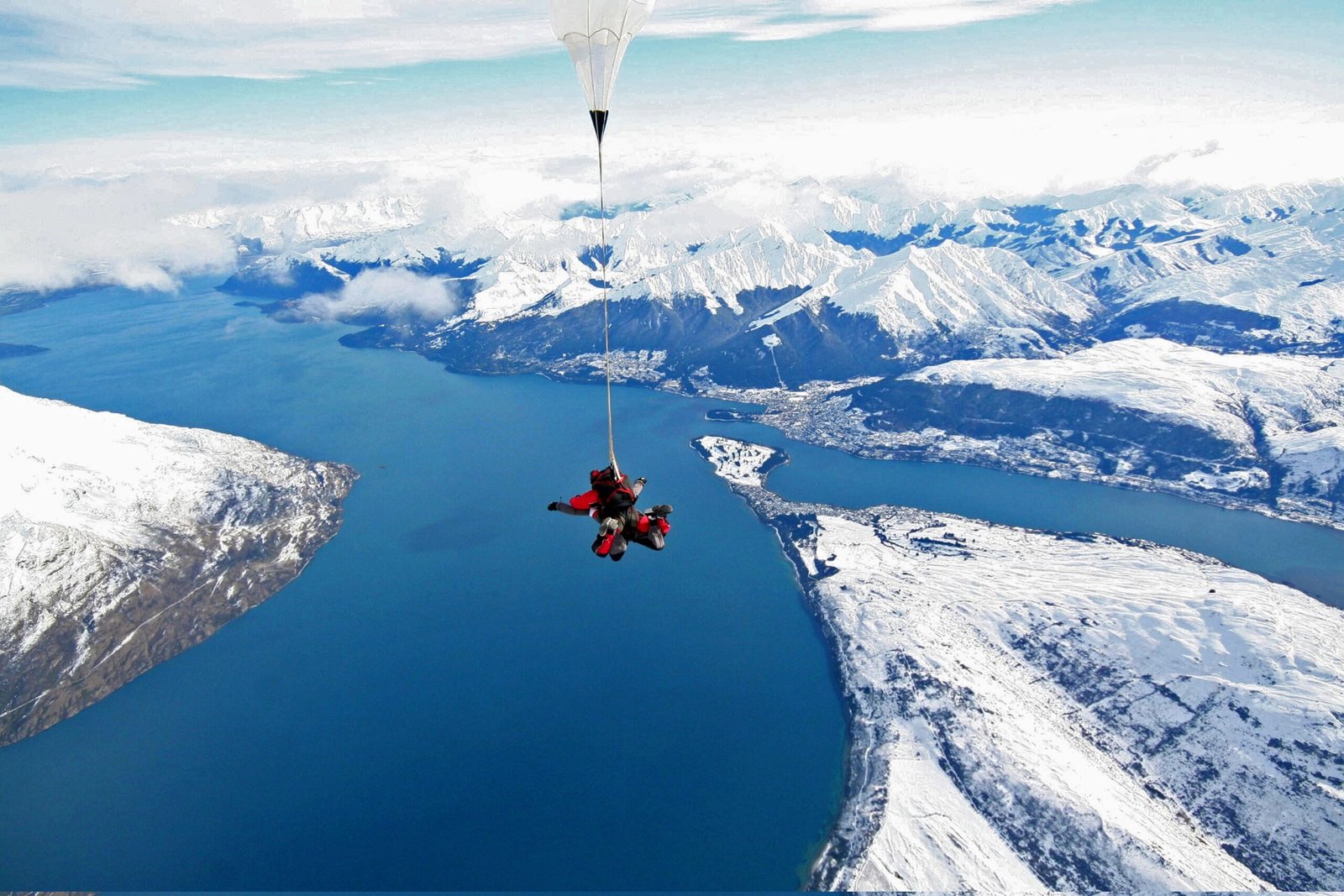
NZONE Skydive operates tandem jumps over Queenstown from altitudes up to 15,000 feet, giving you roughly 60 seconds of freefall above one of the most photogenic landscapes on the planet. The Remarkables, Lake Wakatipu, and the Southern Alps all spread out beneath you in a way that genuinely stops your brain mid-thought. The pre-jump briefing and gear-up process is inherently social — by the time you’re on the plane, you’ll know everyone’s name.
3. Jet Boating Through the Shotover Canyon
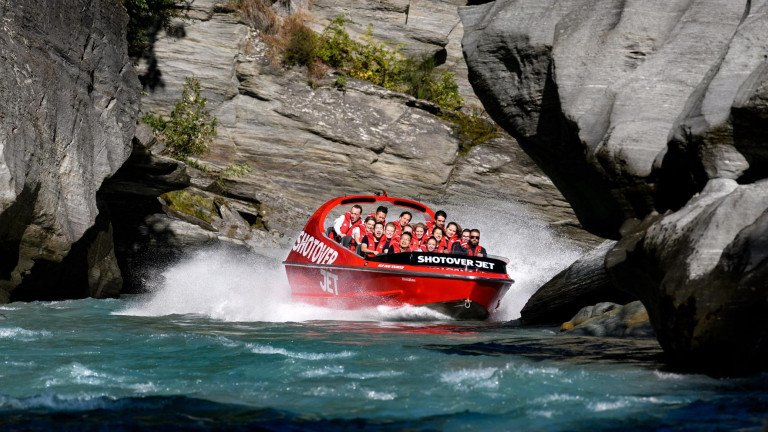
“Jet Boat Ride in Queenstown | Shotover Jet” from www.shotoverjet.com
Shotover Jet operates the only commercial jet boat rides through the Shotover River Canyons — a series of tight, dramatic gorges just outside Queenstown. The boats reach speeds of 85 km/h and execute 360-degree spins within metres of sheer canyon walls. It’s 25 minutes of pure controlled chaos, and the collective screaming and laughing on board makes it one of the most reliably fun group experiences in New Zealand.
Booking tip: Queenstown Combos packages from operators like AJ Hackett bundle multiple activities at a reduced rate. The Triple Challenge — Kawarau Bungy, Ledge Bungy, and Nevis Swing — is a full day of back-to-back adrenaline with the same group each time.
Why Shared Adrenaline Bonds People Faster Than Conversation
There’s actual psychology behind this. High-arousal shared experiences trigger the release of oxytocin and adrenaline simultaneously, which accelerates social bonding in ways that normal interaction simply can’t match. In plain terms: doing something terrifying together fast-tracks friendship. It’s why people who travel together through New Zealand’s adventure circuit consistently describe meeting some of their closest friends on the road.
Day 5: South Island Wilderness — Aoraki/Mt Cook or Glenorchy
After the adrenaline of day four, day five shifts gears into something more meditative — but no less stunning. You have two outstanding options depending on your pace preference: the alpine grandeur of Aoraki/Mt Cook National Park, or the cinematic backcountry landscapes around Glenorchy at the northern tip of Lake Wakatipu.
Day Walking in Aoraki/Mt Cook National Park
The drive from Queenstown to Aoraki/Mt Cook takes approximately 2.5 hours along State Highway 8, passing through the Mackenzie Basin with its impossibly blue Lake Pukaki reflecting the snow-capped peak of Aoraki ahead of you. At 3,724 metres, Aoraki/Mt Cook is New Zealand’s highest mountain, and even from the valley floor it commands the landscape completely.
The Hooker Valley Track is the standout day walk — a 10-kilometre return trail that crosses three swing bridges and delivers you to a glacial lake with floating icebergs and Aoraki filling the entire horizon. It’s rated easy to moderate and takes around three hours return. Go early to beat the crowds and catch the morning light on the glacier face.
Jet Boating Into Mt Aspiring National Park’s Backcountry
If you choose Glenorchy instead, you’re choosing Lord of the Rings country — this valley was used for multiple filming locations including Isengard and Lothlórien. But the real drawcard for adventurous singles is the Dart River Wilderness Jet experience, operated by Dart River Adventures.
The journey takes you 35 kilometres up the Dart River into the remote heart of Mt Aspiring National Park — a UNESCO World Heritage Site — through braided river channels flanked by ancient beech forest and glacier-carved valleys. It’s genuinely remote, genuinely breathtaking, and genuinely social. Groups are small, guides are knowledgeable, and the scenery makes conversation effortless. For a detailed itinerary, check out this New Zealand 7-Day Adventure.
The Dart River Safari combines jet boating with a guided bush walk through the native forest, giving you a multi-sensory experience of one of New Zealand’s most pristine wilderness areas. Full day, fully guided, fully worth it.
Day 6: Milford Sound — The Day That Changes Everything
Ask any solo traveler who has done this itinerary which day stopped them in their tracks, and the answer is almost always day six. Milford Sound — or Piopiotahi in te reo Māori — is the kind of place that makes you reconsider your life choices in the best possible way. It’s raw, overwhelming, and completely unlike anything most people have ever seen.
What to Expect on the Drive Through Fiordland
The drive from Queenstown to Milford Sound takes approximately four hours each way, and the journey itself is part of the experience. The road passes through the Eglinton Valley, the Avenue of the Disappearing Mountain (where the mountain ahead appears to shrink as you approach), and the Homer Tunnel — a single-lane tunnel carved directly through the mountain at 945 metres above sea level. Budget the full day and leave Queenstown no later than 7am to make the most of it. Most guided tours depart early for exactly this reason.
Kayaking and Cruising Milford Sound
Milford Sound receives an average of 182 rain days per year — and the waterfalls that pour down its 1,200-metre cliff faces are at their most dramatic after rain. Rosco’s Milford Kayaks operates guided kayak tours that take small groups right to the base of Stirling Falls (a 151-metre waterfall you paddle directly under) and along the fiord walls covered in moss and ferns. For a more relaxed experience, Real Journeys operates overnight cruises on the Sound where you wake up to mist rolling off the peaks at dawn — one of the most requested solo travel experiences in New Zealand, and one of the most social overnight options on the entire South Island.
Day 7: Final Night in Queenstown — Solo Trip Becomes Shared Memory
Your last night in New Zealand deserves to be celebrated, not spent alone in your room scrolling through photos. By day seven, something has shifted. The strangers you met on day one — on the Kawarau Bridge viewing platform, in the jet boat, over a hāngī feast in Rotorua — are no longer strangers. That’s the quiet magic of this itinerary.
- Head back to the Queenstown waterfront for a final group dinner — most guided tour operators build a farewell meal into the last night
- The Stratosfare Restaurant at the top of the Bob’s Peak gondola offers panoramic night views over Lake Wakatipu and the city — worth every cent for a memorable final evening
- Fergburger on Shotover Street is a Queenstown institution — the queue is part of the experience and practically guarantees you’ll end up talking to someone new
- Vinyl Underground and Atlas Beer Cafe are two of the best late-night spots for a relaxed drink with the people you’ve spent the week with
- If your flight is the following morning, consider a sunrise walk up Queenstown Hill — a 300-metre climb through pine forest that ends with a 360-degree view of the entire basin in golden morning light
The best solo trips don’t end when you board the plane home — they end when you realize you’ve collected a group of people from across the world who genuinely want to stay in touch. New Zealand has a way of making that happen in seven days in a way that a two-week resort stay in some places never manages.
Book your departure flight out of Queenstown or connect back through Christchurch. If you have an extra half-day, the Queenstown Gardens peninsula is a quiet, beautiful spot for a final morning walk before you head to the airport — free, peaceful, and the kind of low-key ending that lets the week settle properly before real life resumes.
What to Pack for 7 Days in New Zealand
New Zealand’s weather is famously unpredictable — locals have a saying: if you don’t like the weather, wait five minutes. The South Island in particular can deliver four seasons in a single afternoon. Packing smart means packing light but layered, with gear that works equally well on a glacier trail and a Queenstown bar crawl.
The key principle here is versatility. You’re moving between climates — Auckland is subtropical, Rotorua is temperate, Queenstown and Milford Sound can be cold and wet year-round. Everything in your bag should earn its place by working across multiple environments and activities.
Clothing and Gear Essentials
Build your clothing around a three-layer system: a moisture-wicking base layer for hiking, a mid-layer fleece for warmth, and a waterproof shell jacket as your outer layer. The Kathmandu Flinders Rain Jacket and the Macpac Sabre Hooded Softshell are both popular choices among New Zealand hikers for good reason — packable, durable, and genuinely waterproof. Add a pair of trail runners or light hiking boots (Salomon X Ultra 4 GTX is a widely trusted option), and you’re equipped for everything from the Hooker Valley Track to a wet Milford Sound kayak.
Tech and Travel Basics
New Zealand uses Type I power outlets at 230V — the same as Australia. Pack a universal travel adapter if you’re coming from North America or Europe. A portable power bank (Anker PowerCore 26800mAh handles multiple device charges) is essential for long activity days when you’re away from outlets for 8-10 hours at a stretch.
Item Recommended Option Why You Need It Waterproof jacket Kathmandu Flinders Rain Jacket Milford Sound averages 182 rain days/year Hiking footwear Salomon X Ultra 4 GTX Handles Hooker Valley Track and wet terrain Power adapter Universal Type I adapter NZ uses 230V Type I outlets Power bank Anker PowerCore 26800mAh Long activity days away from outlets Daypack Osprey Daylite Plus 20L Lightweight, fits carry-on, works for all day hikes Reusable water bottle Hydro Flask 32oz Wide Mouth NZ tap water is among the cleanest in the world Merino base layer Icebreaker 200 Oasis Crew Temperature regulation across all NZ climates
One item that consistently gets overlooked: a lightweight dry bag. When you’re kayaking under Stirling Falls at Milford Sound or sitting in a jet boat at 85 km/h, your phone, camera, and wallet need protection. A 10L Sea to Summit Ultra-Sil Dry Bag weighs next to nothing and has saved countless electronics on this exact itinerary.
Travel insurance is non-negotiable for an itinerary built around bungee jumping, skydiving, and jet boating. World Nomads is the most widely used option among adventure travelers in New Zealand — their Standard and Explorer plans both cover the extreme activities on this itinerary, which many standard travel insurance policies explicitly exclude. Check the fine print before you book anything.
This Itinerary Is Just the Beginning
Seven days in New Zealand gives you a taste — a genuinely remarkable taste — but the country has layers that reward longer stays. If this itinerary lights something up in you, the 14-day Kiwi Classic and Grand Explorer tours from New Zealand Trails add the North Island’s Coromandel Peninsula, Tongariro Alpine Crossing, and the Marlborough Sounds to the mix. The Pure South Island Adventure (7 days, fully guided) is the closest structured equivalent to the itinerary in this article for travelers who want everything arranged without the logistics.
What this week ultimately proves is that solo travel isn’t a compromise — it’s a specific kind of freedom that group travel can’t replicate. You choose the pace. You choose the depth. And in New Zealand, the country does most of the social heavy lifting for you. The landscape is so dramatic, the activities so inherently communal, and the traveler community so open that arriving alone and leaving with lifelong connections isn’t a best-case scenario. It’s the standard outcome.
Frequently Asked Questions
Solo travelers planning a New Zealand trip tend to have the same core questions. Here are the honest, direct answers — no fluff.
Is New Zealand Safe for Solo Travelers?
Yes. New Zealand is one of the safest travel destinations in the world for solo travelers of all genders. The country consistently ranks in the top tier of global peace indexes, violent crime against tourists is rare, and the local culture is genuinely friendly and helpful toward visitors traveling independently.
Standard precautions apply in cities — don’t leave valuables visible in rental cars, be aware of your surroundings at night in busy areas like Queenstown’s bar strip — but the overall risk level is low. The bigger safety consideration is actually outdoor activity: New Zealand’s wilderness is beautiful and can be unforgiving in bad weather, so always register your intentions with the New Zealand Mountain Safety Council’s AdventureSmart system before any backcountry day walks.
What Is the Best Time of Year to Visit New Zealand?
New Zealand’s summer runs from December to February, which delivers the most reliable weather for outdoor activities, especially in the South Island. However, this is also peak tourist season — Queenstown and Milford Sound are at their busiest, and accommodation prices reflect that. The shoulder seasons of October to November and March to April offer excellent weather, fewer crowds, and better rates, making them the sweet spot for most solo travelers on this itinerary.
How Do I Get Between Auckland and Queenstown?
The fastest option is a direct domestic flight with Air New Zealand, which takes approximately 2 hours and runs multiple times daily. This itinerary routes you through Rotorua first (a 3-hour drive or bus from Auckland), then flies from Rotorua to Queenstown — a 1.5-hour flight. InterCity buses connect most major stops if you prefer a slower, more scenic overland journey, but for a 7-day itinerary, flying is the practical choice.
Do I Need to Book Activities in Advance?
Yes — especially for Queenstown’s flagship experiences. The Kawarau Bridge Bungy, NZONE Skydive, Shotover Jet, and Milford Sound cruise options regularly sell out days or weeks in advance during peak season. Book these before you leave home. For guided group tours like the New Zealand Trails packages, availability can be limited months in advance, particularly for the 7-day Pure South and 14-day Kiwi Classic departures.
Can I Do This Itinerary on a Budget?
Yes, with realistic expectations. New Zealand is not a cheap destination, but it’s very manageable with deliberate choices. Accommodation costs drop significantly if you choose hostel dorms over private rooms — Queenstown’s Base Backpackers and Nomads Queenstown both offer well-maintained social dorm options from around NZD $35-50 per night. Cooking your own meals at hostel kitchens saves considerably given New Zealand’s restaurant prices.
The biggest budget line item will be activities. The Kawarau Bridge Bungy runs around NZD $200, NZONE Skydive from NZD $299, and Shotover Jet around NZD $169. These are genuinely worth the cost — they’re world-class experiences — but if budget is tight, prioritize one or two adrenaline activities and supplement with free or low-cost options like the Hooker Valley Track, Queenstown Hill walk, and the Queenstown waterfront. For more ideas, consider exploring a guided adventure tour in New Zealand.
Domestic flights between Auckland, Rotorua, and Queenstown can be found for NZD $80-150 each way if booked in advance through Air New Zealand. Flexible date searches on the Air New Zealand website often reveal cheaper departure options within a day or two of your preferred travel dates.
All in, a solo traveler doing this 7-day itinerary with mid-range accommodation, two to three major activities, and a mix of self-catered and restaurant meals should budget approximately NZD $2,500-3,500 for in-country expenses, excluding international flights. That’s roughly USD $1,500-2,100 — competitive for a week of world-class adventure in one of the planet’s most spectacular settings.
BestProductsForMen.org participates in affiliate programs, which means we may earn a commission if you click on a link and make a purchase. This comes at no additional cost to you. We only recommend products we personally trust, use, or believe will provide value to our readers.
Our goal is to provide honest, helpful reviews and recommendations so you can make informed decisions.
Leave a Reply