
Article At A Glance
- Your environment is just as important as your equipment — a poorly planned space will kill your motivation before you even start.
- Choosing the right room, flooring, and lighting setup dramatically increases how often you actually show up to train.
- Building your equipment list around your specific fitness goals — not trends — saves money and prevents buyer’s remorse.
- A home gym pays for itself faster than most people expect when you factor in ongoing gym membership costs.
- There’s a specific order to setting up your home gym that most people get wrong — keep reading to get it right.
Your home gym will either be the best fitness decision you ever make, or an expensive storage room — and the difference comes down to setup.
Most people jump straight to equipment research. They spend hours comparing treadmills and weight racks before they’ve even figured out where everything is going to go. That backwards approach leads to cramped spaces, underused machines, and gyms that get abandoned within months. Fitness Equipment Brokers works with fitness enthusiasts at every level and sees this same pattern play out constantly — the people who plan their environment first are the ones who actually use their home gyms long-term.
The good news? Getting this right isn’t complicated. It just requires thinking through a few key decisions in the right order before spending a single dollar on equipment.
Your Home Gym Will Make or Break Your Fitness Routine
Most people focus on workouts. Very few focus on environment. But your environment is what determines whether you follow through on those workouts week after week. A space that feels cluttered, uncomfortable, or poorly lit creates subconscious resistance every time you walk past it.
- A well-planned gym pulls you in — even on low-motivation days.
- A poorly planned gym becomes a place you actively avoid.
- Consistency is built into the space itself, not just your willpower.
- Small environmental details — lighting, sound, smell, organization — compound over time into habits.
The investment in setting up your space thoughtfully pays dividends in every single workout you complete because of it. Think of your home gym environment as part of your training program, not an afterthought.
Pick the Right Space Before You Buy Any Equipment
The room you choose shapes every decision that follows — equipment size, flooring type, lighting options, and even what kind of workouts are realistic for your setup. Get this decision right first, and everything else becomes much easier to figure out.
Spare Bedroom vs. Basement vs. Garage: What Works Best
Each space comes with real trade-offs. A spare bedroom is convenient and climate-controlled, but ceiling height and floor load limits can restrict what equipment you bring in. Basements offer more square footage and better sound isolation from the rest of the house, making them ideal for heavier lifting setups. Garages are often the most spacious option and handle heavy equipment well, but temperature extremes in summer and winter can make training uncomfortable without proper ventilation or heating.
There’s no universally perfect space. The right choice is the one that matches your training style and that you’ll realistically use every day. A garage gym that’s freezing in January doesn’t work for someone who trains before sunrise. A basement gym with low ceilings doesn’t work for someone who does overhead pressing or pull-ups.
Quick Space Comparison
Space Best For Key Limitation Spare Bedroom Cardio, yoga, light lifting Floor load limits, smaller footprint Basement Heavy lifting, full gym setups Humidity, limited natural light Garage Large equipment, functional training Temperature extremes, concrete floors
How Much Space You Actually Need to Train Effectively
The minimum workable footprint for a basic home gym is around 50 square feet — enough for a mat, some free weights, and room to move. For a full setup with a cardio machine, rack, and bench, you’re looking at 150 to 200 square feet. Anything beyond that gives you the freedom to program more variety into your training.
Pro Tip: Measure your space before you look at a single equipment listing. Then measure the equipment dimensions and map them out on paper or using a free room planning tool. Equipment always looks smaller in a showroom than it does in your actual room.
Pay close attention to ceiling height if you plan on doing any overhead movements, pull-ups, or jump training. A standard 8-foot ceiling works for most setups, but tall athletes or anyone eyeing a pull-up bar needs to account for their full arm extension above their head — plus a few inches of clearance. For those setting up a gym in limited space, consider these small space home gym setup tips to maximize your workout area efficiently.
Plan Around Your Outlets Before You Place Anything
This is one of the most consistently overlooked steps in home gym planning, and it creates real headaches later. Treadmills, ellipticals, fans, TVs, and charging stations all need power — and running extension cords across a workout floor is both a tripping hazard and a fire risk.
Walk your space and note exactly where the electrical outlets are before you commit to any equipment placement. If your ideal treadmill location is on the opposite wall from your only outlet, you’ve got a problem that’s much easier to solve before the machine arrives than after.
- Treadmills typically require a dedicated 20-amp circuit.
- Most other cardio equipment runs on standard 15-amp household outlets.
- Plan your TV or speaker placement around outlet access as well.
- Consider adding outlets during setup if your space is limited — it’s a one-time cost that removes permanent friction.
Getting your electrical situation sorted before equipment arrives is the kind of detail that separates a gym you love using from one that constantly frustrates you.
Build Your Equipment List Around Your Goals, Not Trends
The fitness equipment industry is very good at making everything look essential. Cable machines, smart mirrors, high-tech rowing machines — all of it looks compelling in a showroom or an Instagram reel. But the right question isn’t “what’s impressive?” It’s “what do I actually need to hit my specific goals?”
Before buying anything, get clear on your answer to this: What does a successful workout look like for you? Someone training for a 5K needs completely different equipment than someone building muscle or someone focused on mobility and recovery. Your answer determines your list — not trends, not what your favorite fitness influencer uses.
Start With Dumbbells and Kettlebells Before Anything Else
Adjustable dumbbells and a set of kettlebells cover an enormous range of training — strength, conditioning, mobility, and metabolic work. They take up minimal space, require no power source, and scale with your fitness level over time. For most people building a home gym from scratch, this is the smartest first purchase. Options like the Bowflex SelectTech 552 adjustable dumbbells replace 15 separate sets of weights and take up the footprint of a single dumbbell stand. For those with limited room, consider exploring small space home gym setups to maximize your workout area.
When a Treadmill, Elliptical, or Cardio Machine Makes Sense
Cardio Machine Best Use Case Space Required Treadmill Running training, walking, HIIT ~30 sq ft (plus clearance) Elliptical Trainer Low-impact cardio, joint-friendly training ~20–25 sq ft Indoor Exercise Bike Cycling training, recovery cardio ~10 sq ft Rowing Machine Full-body conditioning ~20 sq ft (stores vertically) Stair Climber Lower body endurance, calorie burn ~15 sq ft
Cardio machines make the most sense when outdoor training isn’t consistently accessible — whether that’s due to weather, time of day, or safety. They’re also valuable for anyone following a structured cardio program where consistency of surface and pace matters. If you’re looking for fitness equipment for small spaces, treadmills carry the largest footprint of any common home gym machine, so confirm your space measurements twice before committing.
Indoor exercise bikes and rowing machines offer a compelling middle ground — smaller footprints, lower price points, and serious training capability. The Concept2 RowErg, for example, can be broken down and stored vertically when not in use, making it one of the most space-efficient full-body cardio options available.
If budget is a limiting factor, prioritize the cardio equipment that matches your preferred training style. A machine you genuinely enjoy using will always outperform the more expensive option that feels like a chore.
Add Equipment Gradually as Your Routine Takes Shape
One of the most common and costly mistakes in home gym setup is buying everything at once before you’ve had a chance to figure out how you actually train in the space. Start with the equipment that directly serves your primary goal, use it consistently for four to six weeks, and then identify the gaps in your training. That gap tells you exactly what to buy next — no guesswork, no expensive impulse purchases collecting dust in the corner. For those dealing with limited space, consider exploring fitness equipment for small spaces to ensure you make the most of your home gym area.
Flooring Is the Most Overlooked Part of a Home Gym
Most people spend hours comparing treadmills and zero minutes thinking about what goes under them. That’s a mistake. The right flooring protects your equipment, protects your joints, protects your floors, and dramatically reduces the noise that travels through your home — all at once.
Rubber flooring is the gold standard for home gyms. It’s durable, shock-absorbent, easy to clean, and works under virtually every type of equipment. The two most common formats are interlocking rubber tiles and rolled rubber mat systems. Interlocking tiles — typically 3/8 inch to 3/4 inch thick — are easier to install and replace section by section. Rolled rubber provides a seamless surface with no edges to trip over, making it ideal for larger dedicated spaces.
Foam tiles are a budget-friendly alternative, but they compress and degrade faster under heavy equipment and heavy lifting. For a cardio-only or yoga-focused space, they can work. For anything involving barbells, heavy dumbbells, or a weight rack, rubber is the right call every time.
Cardio-Only Setup vs. Heavy Weights: Different Flooring Needs
A cardio-only gym has different flooring demands than a strength-focused setup. For treadmills, ellipticals, and bikes, a 3/8-inch rubber equipment mat placed directly under the machine is often enough — it dampens vibration, prevents the machine from sliding, and protects the floor beneath. The Life Fitness Equipment Mat, for example, is specifically designed for this purpose and works under most commercial and residential cardio machines.
Strength training setups need full-coverage flooring, especially in any area where you’re deadlifting, doing Olympic lifts, or dropping weights. In these zones, thicker rubber — 3/4 inch minimum — absorbs the impact and protects both the floor underneath and the weights themselves. If you’re building a dedicated lifting platform, layering 3/4-inch plywood topped with horse stall mats from a farm supply store is a cost-effective solution that serious lifters have used for decades.
Noise Reduction and Floor Protection That Actually Works
If your gym is above a living space, noise and vibration become serious quality-of-life issues for everyone in the house. A double-layer flooring system — rubber tiles over a foam underlayment — significantly reduces impact noise transmission. Combined with bumper plates instead of iron plates for lifting, you can cut noise transfer dramatically without any structural changes to your home.
Anti-vibration pads placed under treadmill feet and elliptical bases add another layer of isolation. Small additions like these make a genuine difference in how livable your home gym setup is long-term — especially if you train early in the morning or late at night.
Lighting and Atmosphere Drive Consistency
Walk into any gym you love training in and pay attention to how it feels the second you step inside. Chances are the lighting plays a bigger role in that feeling than you’ve ever consciously registered. Lighting shapes your energy level, your focus, and your perception of the space — all of which directly impact how hard you train and how often you show up.
Natural light is the best starting point if your space has windows. It regulates your circadian rhythm, improves mood, and makes the room feel larger and more inviting. If natural light is limited — as it often is in basements and garages — you need to be intentional about the artificial lighting you bring in.
Overhead fluorescent lighting is the default in most garages and basements, and it tends to create a flat, harsh environment that’s functional but uninspiring. Upgrading to LED shop lights or adding track lighting gives you more control over brightness and color temperature. Lights in the 4000K to 5000K range produce a clean, energizing daylight-quality light that works well for most training styles.
How Lighting Intensity Changes the Feel of a Workout
Brighter, cooler lighting tends to increase alertness and energy output — it’s the better choice for high-intensity training, heavy lifting days, and morning sessions where you need to wake your body up fast. Dimmer, warmer lighting creates a more relaxed, focused atmosphere that suits stretching, yoga, or recovery work. The ability to shift between these modes is worth considering when planning your lighting setup.
Smart LED bulbs or dimmable LED strip lights give you that flexibility without rewiring anything. Mounting LED strips behind equipment or along the base of walls adds depth and visual interest to the space. Several athletes use color-changing LED systems — like the Govee LED Strip Lights — to shift the room’s energy for different training sessions, using cool white for strength work and a deeper red or blue tone for conditioning finishers.
Color, Mirrors, and Decor That Keep You Coming Back
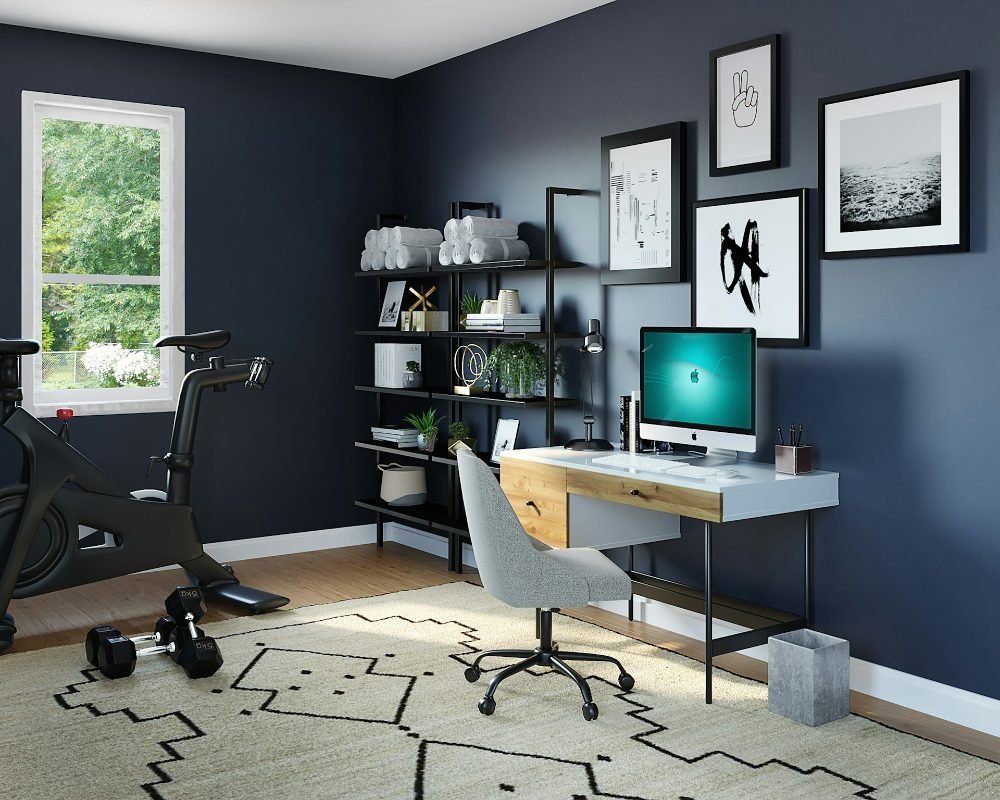
The visual environment of your gym matters more than most people admit. Bold colors on accent walls — deep grays, blacks, navy blues — create a focused, serious training atmosphere. Motivational quotes and imagery reinforce your identity as someone who trains hard. A full-length mirror on one wall serves double duty: it makes the space feel larger and lets you monitor your form during every exercise, which is genuinely useful for safety and technique improvement. For those looking to maximize their space, consider exploring compact strength systems that fit seamlessly into your home gym setup.
Why a Cluttered Space Kills Motivation Before You Even Start
Clutter creates friction. When your gym is disorganized — weights scattered across the floor, bands hanging off the treadmill, water bottles taking up bench space — your brain registers the chaos before you’ve even started warming up. That low-level stress is enough to make you shorten your session or skip it entirely on days when your motivation is already low.
Organization isn’t about aesthetics. It’s about removing every possible barrier between you and your workout. When your equipment is stored cleanly and accessibly, you eliminate the mental negotiation that clutter forces you into. The best home gyms are the ones where you can walk in, grab what you need immediately, and get to work.
- Use a wall-mounted dumbbell rack to keep free weights organized and off the floor.
- Install pegboards or wall hooks for resistance bands, jump ropes, and accessories.
- Keep a dedicated shelf or cabinet for smaller items — chalk, straps, foam rollers, and towels.
- Store equipment you use less frequently out of the main training area to reduce visual noise.
- Return every piece of equipment to its place immediately after use — make it a non-negotiable part of your session.
A five-minute cleanup at the end of every workout compounds into a permanently organized space. That organized space compounds into more consistent training. Consistency is where results come from.
Think of your gym organization system as part of your training infrastructure — not a housekeeping task, but a performance tool that directly supports your fitness outcomes.
Sound Sets the Tone for Every Session
Music has a measurable effect on athletic performance. Research consistently shows that synchronizing movement to music improves endurance, reduces perceived effort, and increases power output during training. This isn’t just motivational noise in the background — it’s a performance variable you can control in your home gym in ways you never could at a commercial facility.
A quality Bluetooth speaker positioned at ear level delivers a significantly better audio experience than phone speakers or earbuds that fall out mid-set. The JBL Xtreme 3, for example, is a popular choice for home gym setups — it’s loud enough to fill a garage-sized space, handles sweat and humidity well, and holds a charge through multiple training sessions before needing a plug.
Build playlists that match your training structure. Higher-tempo tracks with consistent beats-per-minute work well for conditioning and circuit work. Heavier, more aggressive music tends to drive better performance in max-effort strength work. The ability to cue specific playlists to specific training phases is a small but meaningful way to take full control of your home gym environment.
Mirrors Do More Than Make the Room Look Bigger
A full-length mirror is one of the highest-value additions you can make to a home gym, and it costs a fraction of what most people spend on equipment. The practical benefit is immediate — you can monitor your form on every rep of every exercise without needing a training partner or a camera propped up on a shelf. Catching a rounded lower back on a deadlift or a caving knee on a squat in real time prevents injuries that would otherwise sideline your training for weeks.
Beyond form feedback, mirrors reinforce the identity of the space. A wall-length mirror transforms a spare bedroom or unfinished basement into a space that looks and feels like a serious training environment. That psychological shift is real — when a space looks like a gym, your brain treats it like one. Wall-mounted gym mirrors are available in full panel sets starting around $80 to $150, making this one of the most cost-effective upgrades in the entire setup process.
A Well-Built Home Gym Pays for Itself Faster Than You Think
The average gym membership in the United States costs between $40 and $70 per month. Over five years, that’s $2,400 to $4,200 out of pocket — for access to equipment you share with hundreds of other people, during hours that may or may not align with your schedule. A well-planned home gym can be built for that same budget, and once it’s built, the ongoing cost drops to essentially zero. The break-even point for most home gym setups lands somewhere between one and two years, after which every workout you complete in that space is effectively free.
Frequently Asked Questions
Here are answers to the most common questions people have when planning a home gym for the first time.
How Much Does It Cost to Set Up a Basic Home Gym?
A functional entry-level home gym — adjustable dumbbells, a yoga mat, resistance bands, and rubber flooring — can be assembled for as little as $300 to $500. A mid-tier setup that adds a bench, a cardio machine, and a pull-up bar typically runs $1,500 to $3,000. A full home gym with a power rack, barbell and plate set, cardio machine, flooring, and mirrors can range from $4,000 to $8,000 depending on the brands and quality levels you choose.
Building incrementally is the smartest financial approach. Start with versatile free weights and flooring, then add larger equipment as your routine solidifies and your budget allows. Buying used equipment through platforms like Facebook Marketplace or Craigslist can cut costs by 40 to 60 percent on major items like treadmills, weight racks, and benches.
What Is the Minimum Space Required for a Home Gym?
The minimum practical space for a home gym is approximately 50 square feet — enough for a mat, a small set of dumbbells, and adequate room to move through bodyweight exercises. This is tight, but workable for someone focused on flexibility, mobility, or basic conditioning work. For more ideas on setting up a gym in a limited area, check out this guide on small space home gym setup.
For a setup that includes a single piece of cardio equipment plus free weights and a bench, plan for at least 100 to 150 square feet. A full home gym with a power rack, barbell, and cardio machine comfortably fits in 200 square feet, with enough clearance around each piece of equipment to train safely without feeling cramped.
Always measure your available space and the exact dimensions of any equipment you’re considering before purchasing. Equipment footprint measurements don’t include the safety clearance zones you need around each piece — add at least 24 to 36 inches of clearance on the sides and rear of cardio machines, and 36 to 48 inches of open space in front of any lifting platform or rack.
Do I Need Rubber Flooring if I Only Do Cardio?
For a cardio-only setup, you don’t need full-coverage rubber flooring — but you do need at minimum a dedicated equipment mat under each machine. Cardio equipment vibrates, shifts, and generates impact that can damage hardwood, tile, or carpet underneath over time. A purpose-built equipment mat like the SuperMats Heavy Duty Equipment Mat absorbs vibration, prevents machine movement, and protects your floor, all for under $50. If budget allows, extending rubber tile flooring across the full room adds comfort underfoot and makes the space feel more complete.
What Equipment Should a Beginner Buy First for a Home Gym?
Start with adjustable dumbbells and a high-density exercise mat. These two items alone unlock hundreds of effective workouts across strength training, cardio, core work, and flexibility — with zero wasted space. The Bowflex SelectTech 552 adjustable dumbbells (which adjust from 5 to 52.5 pounds in 2.5-pound increments) and a durable mat like the Lululemon The Reversible Mat 5mm give a beginner everything needed to build a consistent training habit before committing to larger purchases.
Once you’ve trained consistently in the space for four to six weeks, you’ll have a much clearer sense of what you actually need next. At that point, adding a resistance band set, a pull-up bar, and a simple adjustable bench expands your training options dramatically without a major additional investment.
Is a Home Gym Worth It If I Already Have a Gym Membership?
For many people, a home gym and a gym membership serve genuinely different purposes — and having both makes sense during the transition period. Your commercial gym gives you access to equipment variety, group classes, and the social environment that some people need to stay motivated. Your home gym gives you zero-commute access on busy days, early morning or late night sessions without worrying about hours, and complete control over your environment.
The real question is how often your gym membership is actually getting used. If you’re paying $50 per month but only making it to the gym eight times, you’re spending over $6 per visit for convenience that a basic home gym setup could replace entirely. Track your actual gym attendance for one month — that number will tell you everything you need to know about whether maintaining both still makes financial sense.
Leave a Reply