
BestProductsForMen.org participates in affiliate programs, which means we may earn a commission if you click on a link and make a purchase. This comes at no additional cost to you. We only recommend products we personally trust, use, or believe will provide value to our readers.
Our goal is to provide honest, helpful reviews and recommendations so you can make informed decisions.
A cruelty-free beard styling kit is one of the best ways to reduce irritation, allergens, and skin inflammation for men with sensitive skin.
- Most beard irritation comes from product ingredients, not the beard itself — synthetic fragrances, harsh alcohols, and parabens are the usual culprits hiding in conventional grooming products.
- Cruelty-free beard kits tend to use cleaner, plant-based formulas that are less likely to disrupt your skin barrier and trigger allergic reactions.
- Your skin barrier is the real key to comfort — when it’s intact, moisture stays in and irritants stay out. Keep reading to learn exactly how to protect it.
- Natural oils like jojoba and argan are scientifically backed for reducing inflammation and mimicking your skin’s own sebum production.
- A consistent, low-allergen grooming routine can dramatically reduce itching, redness, and flaking within weeks of switching products.
Most guys blame their beard for skin problems that are actually caused by what’s in the bottle on their bathroom shelf.
If you’ve been dealing with persistent itching, redness, or that dry flaking under your beard, the fix probably isn’t a new trimming technique. It’s a closer look at your ingredients list. For those navigating sensitive skin and grooming at the same time, resources like allergen-conscious beard kits have become a practical starting point for cleaner routines that actually work.
Your Beard Products Are Probably Irritating Your Skin
The grooming industry has spent decades optimizing for scent, texture, and shelf appeal — not necessarily for skin health. The result is that many mainstream beard products are loaded with compounds your skin simply doesn’t agree with. Understanding why starts with recognizing what conventional formulas of cruelty-free beard styling kits actually contain.
Beard care products share an established ingredient pool with broader hair and skin cosmetics. That’s a double-edged sword. While it means decades of formulation knowledge, it also means decades of synthetic additives, stabilizers, and fragrance compounds making their way into products marketed specifically to men who may not be reading labels closely.
Why Itching, Redness, and Flaking Are Product Problems, Not Beard Problems
Beard itch is one of the most common grooming complaints, and it’s almost never about the hair itself. The real issue is what happens at the skin level beneath the beard — a zone that’s easy to neglect and difficult to rinse thoroughly. When harsh ingredients accumulate there, your skin reacts. That reaction shows up as itching, micro-inflammation, and eventually visible flaking that gets mistaken for dandruff. For those seeking relief, consider using a paraben-free beard softener in a cruelty-free beard styling kit to minimize potential irritants.
The Most Common Irritants Hidden in Conventional Beard Products
Knowing what to avoid is half the battle. Here are the most common offenders found in standard beard grooming products:
- Synthetic fragrances — listed simply as “fragrance” or “parfum,” these can contain dozens of undisclosed chemical compounds, many of which are known skin sensitizers.
- Denatured alcohol (SD alcohol, alcohol denat.) — strips natural oils from both hair and skin, breaking down the protective barrier over time.
- Parabens (methylparaben, propylparaben) — preservatives linked to skin sensitivity and hormonal disruption with repeated exposure.
- Formaldehyde-releasing preservatives — found in some conditioners and balms, these slowly release formaldehyde as they break down.
- Animal-derived ingredients — lanolin, for example, is a common beard balm ingredient that causes contact dermatitis in a notable portion of users.
- PEGs (polyethylene glycols) — used as emulsifiers and penetration enhancers, PEGs can carry other irritants deeper into the skin.
What Cruelty-Free Actually Means for Your Skin
Why Choose a Cruelty-Free Beard Styling Kit?
The cruelty-free label gets a lot of attention for its ethical dimension, but it also carries a practical benefit that doesn’t get discussed nearly enough. Brands that commit to cruelty-free manufacturing tend to reformulate away from animal-derived compounds — and in doing so, they often land on cleaner, gentler ingredient profiles by default.
The Real Definition Behind the Cruelty-Free Label
Cruelty-free means a product and its ingredients were not tested on animals at any stage of development. This is verified by organizations like Leaping Bunny and PETA’s Beauty Without Bunnies program, which audit brand supply chains to confirm compliance. It does not automatically mean the product is vegan — some cruelty-free products still contain animal-derived ingredients like beeswax or honey. But the commitment to ethical sourcing often pushes brands toward plant-based alternatives that happen to be far gentler on human skin.
Why Cruelty-Free Formulas Tend to Have Cleaner Ingredient Lists
Brands pursuing cruelty-free certification are typically more ingredient-conscious overall. They tend to avoid synthetic compounds that would require extensive safety testing — which historically involved animal trials — in favor of plant-based ingredients with well-established safety profiles. The result is a formula that’s not just ethically cleaner, but often biochemically simpler and less likely to trigger a reaction.
How Modern Safety Testing Works Without Animal Trials
The cosmetics industry has made significant strides in alternative safety testing methods. In vitro (cell culture) testing, reconstructed human skin models, and computational toxicology have replaced many traditional animal tests. The EU banned animal testing for cosmetics entirely in 2013, pushing global brands to innovate. These modern methods test for skin sensitization, irritation potential, and cytotoxicity with a level of precision that animal models often couldn’t match.
The Science of Skin Barrier Protection
Your skin is not passive. It’s an active, self-regulating system, and the outermost layer — the stratum corneum — functions like a brick wall where skin cells are the bricks and lipids are the mortar. When that structure is intact, it keeps moisture in and environmental irritants out. When it’s compromised, everything gets through. Learn more about skin barrier protection and its importance.
The skin beneath a beard faces unique challenges. It’s warm, often damp, and sheltered from air circulation — conditions that can promote microbial imbalance and make barrier damage worse if the wrong products are being applied regularly.
- A healthy skin barrier maintains a slightly acidic pH between 4.5 and 5.5.
- Harsh surfactants and alcohols raise that pH, disrupting the acid mantle and reducing barrier function.
- Once the barrier is compromised, even previously tolerated ingredients can begin to cause reactions.
- Restoration typically takes 2 to 4 weeks of consistent use of gentle, barrier-supporting products.
This is why product choice isn’t just a preference — it’s a skin health decision.
How Your Skin Barrier Works and Why It Breaks Down
The stratum corneum depends on three key lipid types to maintain integrity: ceramides, cholesterol, and free fatty acids. These form the structural mortar between your skin cells. When you repeatedly apply products containing harsh alcohols or synthetic detergents, those lipids get stripped away. Over time, the barrier becomes porous, reactive, and prone to inflammation even from mild stimuli.
What makes beard grooming particularly risky in this regard is frequency. Daily application of beard oil, balm, or wash means repeated exposure to whatever is in those products. A small amount of a borderline irritant becomes a significant cumulative load when applied every single day over months or years.
How Synthetic Fragrances and Harsh Alcohols Damage the Barrier
Synthetic fragrance is the single most common cause of cosmetic contact dermatitis. The term “fragrance” on a label can legally represent a blend of up to several hundred individual chemical compounds, none of which need to be disclosed individually. Many of these — including cinnamal, eugenol, and isoeugenol — are classified as known allergens by the European Scientific Committee on Consumer Safety (SCCS). For those looking to avoid allergens in their grooming routine, consider exploring beard grooming kits for beginners that prioritize natural ingredients.
Denatured alcohol works differently but causes equal damage. It acts as a solvent, dissolving the lipid layer of your skin barrier with repeated contact. Products marketed as “lightweight” or “fast-absorbing” frequently rely on alcohol to achieve that texture — but the tradeoff is a progressively more vulnerable skin surface. Over time, this creates a cycle where your skin becomes more reactive, you buy more products to manage the reaction, and the problem compounds. For those seeking alternatives, consider exploring paraben-free beard softeners which might be gentler on the skin.
Natural Oils That Actively Repair and Protect Skin
Not all oils are created equal when it comes to skin barrier repair. The most effective ones work because their molecular structure allows them to integrate with your skin’s existing lipid layer rather than just sitting on top of it. Jojoba, argan, sweet almond, and marula oils have all demonstrated meaningful barrier-supportive properties — and they show up consistently in the best cruelty-free beard formulas for exactly that reason.
What separates a genuinely restorative beard oil from a cosmetically appealing one is ingredient depth. A formula built around these functional oils does more than soften hair — it actively rebuilds the lipid environment beneath your beard, reducing transepidermal water loss (TEWL) and calming the micro-inflammation that causes chronic itching. That’s the difference between masking a problem and actually fixing it.
Key Allergen-Reducing Ingredients to Look For
Reading an ingredient list can feel like decoding a chemistry exam, but you really only need to know a handful of key players. The right ingredients don’t just avoid causing harm — they actively contribute to a calmer, healthier skin environment under your beard. For more insights, check out this article on ethical standards in the beard care marketplace.
When evaluating any beard product for allergen risk, the ingredient list is your most reliable guide. INCI (International Nomenclature of Cosmetic Ingredients) names are standardized globally, which means once you learn what to look for, you can evaluate any product regardless of brand or marketing language. For a comprehensive overview, you might find the ultimate men’s beard care guide helpful.
Jojoba Oil: Why It Mirrors Your Skin’s Natural Sebum
Jojoba oil (Simmondsia chinensis seed oil) is technically a liquid wax ester, not an oil — and that distinction matters. Your skin’s own sebum is also composed largely of wax esters, which is exactly why jojoba integrates so seamlessly into the skin barrier without clogging pores or triggering the immune responses that many heavier oils can cause.
Because jojoba so closely resembles sebum, it can actually signal your skin to regulate its own oil production more effectively. For men with combination skin under their beard — oily in some zones, dry and flaking in others — this regulatory effect is particularly valuable. It helps normalize the skin environment rather than just temporarily moisturizing it.
Jojoba is also remarkably shelf-stable due to its wax ester structure, meaning formulas built around it don’t require as many synthetic preservatives to maintain potency. Fewer preservatives in a formula means fewer potential sensitizers — another indirect allergen-reduction benefit.
Argan Oil: Anti-Inflammatory Properties Backed by Research
Argan oil (Argania spinosa kernel oil) is rich in oleic acid, linoleic acid, and tocopherols (vitamin E), a combination that delivers meaningful anti-inflammatory activity at the skin surface. Linoleic acid in particular plays a direct role in ceramide synthesis — the process by which your skin rebuilds the lipid mortar of the stratum corneum after it’s been damaged.
The tocopherol content in argan oil acts as a natural antioxidant, neutralizing free radicals generated by UV exposure and environmental pollutants that would otherwise degrade skin barrier lipids. For men who spend significant time outdoors, this protective layer of antioxidant activity is an underappreciated benefit of argan-based beard products.
From a formulation standpoint, argan oil is also a low-comedogenic ingredient, rated a 0 on the comedogenic scale. It moisturizes and repairs without blocking follicles — which matters a great deal in a beard environment where follicle health directly affects both hair growth quality and the likelihood of ingrown hairs and sub-beard breakouts.
What to Avoid: Parabens, Synthetic Fragrance, and Animal-Derived Compounds
Beyond synthetic fragrance and denatured alcohol covered earlier, parabens deserve specific attention. Methylparaben, ethylparaben, propylparaben, and butylparaben are the most common variants used as preservatives in beard balms and conditioners. While regulatory bodies have deemed low concentrations safe, cumulative exposure across multiple daily-use products — beard wash, balm, moisturizer, aftershave — can push total paraben load well above levels studied in isolation.
Animal-derived ingredients like lanolin, tallow, and certain keratin derivatives carry a dual risk: they are common contact allergens, and they’re incompatible with cruelty-free standards. Lanolin in particular has a well-documented sensitization rate, and once sensitized, reactions can occur at even trace concentrations. Replacing these with plant-derived emollients like shea butter (Butyrospermum parkii) or mango butter (Mangifera indica seed butter) delivers comparable texture and moisture retention without the allergen risk.
How to Build a Low-Allergen Beard Grooming Routine
Building a low-allergen routine isn’t about using fewer products — it’s about using the right ones in the right sequence. The goal is to maintain a healthy skin barrier, reduce cumulative chemical exposure, and keep your skin calm enough that your beard can actually look and feel its best.
The most common mistake men make when trying to fix irritation is swapping one problem product for another without a system. You need a complete approach that covers cleansing, conditioning, styling, and maintenance — each step chosen to minimize allergen load while maximizing skin barrier support.
Think of your routine as a stack. Every product you add either contributes to skin health or subtracts from it. A well-chosen cruelty-free beard kit eliminates the guesswork by bundling products that are formulated to work together without ingredient conflicts — no overlapping irritants, no competing preservative systems.
Step 1: Start With a Complete Cruelty-Free Beard Kit
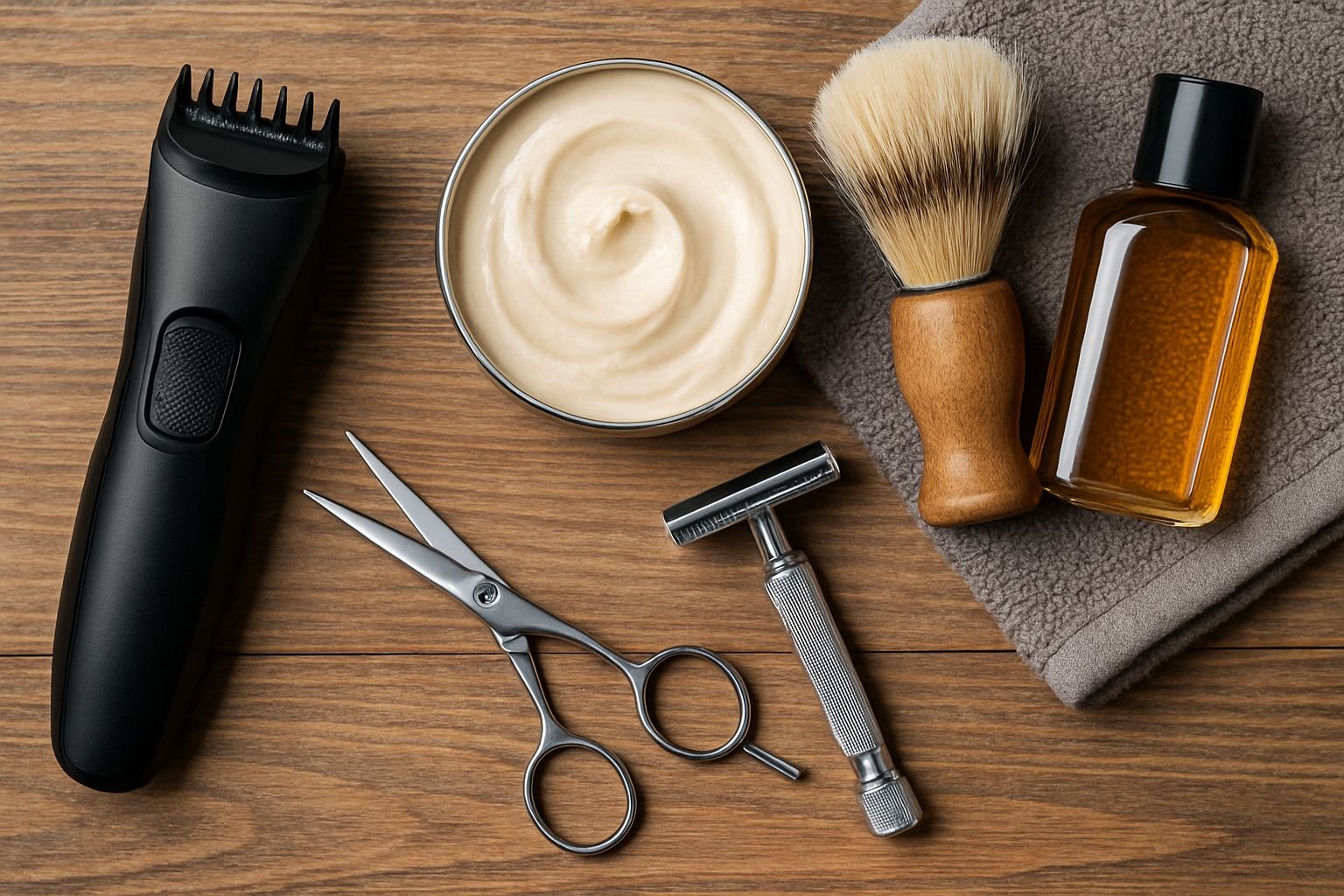
A complete kit gives you a coordinated system rather than a random collection of products with potentially conflicting formulas. Look for kits that include a gentle beard wash, a conditioning beard oil built around jojoba or argan base oils, a balm for light hold and barrier support, and a quality boar-free brush for even distribution. The brush matters more than most men realize — synthetic or plant-based bristle brushes distribute product evenly through the beard while exfoliating the skin beneath, which directly supports barrier health and prevents product buildup that can feed irritation.
Step 2: Upgrade to Precision Grooming Tools That Reduce Skin Trauma
Cheap combs and dull blade trimmers cause micro-abrasions along the skin surface every time you use them. Those tiny injuries are entry points for irritants and pathogens — and in a beard environment, they accumulate fast. Investing in a quality stainless steel comb with smooth, polished teeth and a sharp precision trimmer with a hypoallergenic blade reduces the mechanical stress on your skin significantly.
The Kent Handmade Comb range and the Bravura London precision tools are examples of products specifically designed with skin contact in mind. Saw-cut combs — where each tooth is individually cut and finished rather than injection-molded — have no sharp seam edges that catch and drag hair. That single upgrade alone can reduce daily scalp and follicle irritation by a meaningful degree. For those interested in allergen-friendly grooming products, consider exploring a paraben-free beard softener as well.
Step 3: Switch to Fragrance-Free or Lightly Scented Daily Products
If you’re not ready to go completely fragrance-free, choose products scented with a single, low-risk essential oil rather than a synthetic fragrance blend. Cedarwood, sandalwood, and vetiver essential oils are among the lower-sensitization-risk options — avoid citrus-based scents, which are photosensitizing and more likely to cause reactions with sun exposure. Always check that “fragrance” or “parfum” does not appear as a standalone ingredient — that’s the red flag term that signals an undisclosed chemical blend.
Step 4: Keep Your Routine Consistent to Avoid Skin Disruption
Your skin adapts to what you consistently apply to it. Constantly switching products — even between clean, well-formulated options — prevents your skin from stabilizing and makes it harder to identify what’s working. Commit to a chosen routine for a minimum of four weeks before evaluating results. Track any changes in itching, redness, or flaking so you have an objective read on whether your skin barrier is recovering. Consistency is the unsexy but non-negotiable foundation of allergen-reduced grooming.
Common Grooming Mistakes That Make Irritation Worse
Even with the right products in your kit, routine habits can quietly undo all the progress you’re making on the allergen front. The two most common offenders aren’t dramatic mistakes — they’re things most men do without thinking, every single day.
Overwashing Strips Natural Oils From Beard and Skin
Washing your beard daily with a surfactant-based cleanser — even a gentle one — removes the natural sebum that protects both your hair shaft and the skin beneath it. That sebum isn’t something you want to eliminate. It’s your first line of defense against environmental irritants, and it’s what keeps your beard feeling conditioned without product buildup. Limit beard washing to two or three times per week maximum. On off-days, a warm water rinse is enough to remove dust and light buildup without stripping your barrier. If your beard feels tight or dry after washing, that’s not clean — that’s damaged. For more tips on maintaining a healthy beard, check out this ultimate men’s beard care guide.
Constantly Switching Products Prevents Skin Adaptation
There’s a real cost to the habit of chasing the next best thing in grooming. When you switch products frequently, your skin never gets the chance to stabilize around a consistent chemical environment. Each new formula introduces different preservatives, emulsifiers, and active ingredients that your skin has to re-evaluate and adapt to. For men with sensitive or reactive skin, this constant adjustment period is where most of the irritation actually lives. Pick a well-formulated, clean kit, stay with it for at least four weeks, and let your skin barrier do what it’s designed to do — recover and strengthen.
Your Purchasing Power Shapes the Grooming Industry
The men’s grooming market responds to what men actually buy. Every time a cruelty-free, low-allergen beard kit outsells a conventional product loaded with synthetic fragrance and parabens, it sends a direct signal to formulators and brand developers about what the market wants. The shift toward cleaner, ethically produced grooming products isn’t driven by regulation alone — it’s driven by informed consumers making deliberate choices at the point of purchase.
This matters beyond your own bathroom. Brands that see consistent demand for transparent, allergen-conscious formulas invest more in clean ingredient research, better sourcing, and third-party certifications that raise the standard for the entire category. Choosing a cruelty-free beard kit isn’t just a personal skin health decision — it’s a vote for the kind of grooming industry you want to exist. And the more men understand the science behind what they’re putting on their skin, the harder it becomes for brands to hide behind clever marketing and vague ingredient labels.
Frequently Asked Questions
The questions below come up constantly among men making the switch to allergen-conscious beard care. The answers cut through the confusion and give you exactly what you need to know.
Are All Cruelty-Free Beard Products Also Fragrance-Free?
No — cruelty-free and fragrance-free are completely separate distinctions. A product can carry Leaping Bunny certification and still contain synthetic fragrance blends that are among the most common skin sensitizers in cosmetics. If fragrance reduction is your goal, you need to check the ingredient list independently of any cruelty-free claim. Look for products that either list no fragrance at all, or name a specific essential oil as the scent source rather than the catch-all term “fragrance” or “parfum.”
Can a Cruelty-Free Beard Kit Still Cause an Allergic Reaction?
Yes, it can. Cruelty-free status reduces the likelihood of certain high-risk ingredients being present, but it doesn’t guarantee a reaction-free experience for every individual. Natural ingredients — including essential oils, plant extracts, and even some carrier oils — can trigger contact dermatitis in sensitized individuals. Tea tree oil, for example, is a common natural ingredient with a documented sensitization rate. If you’re highly reactive, patch testing any new product on the inside of your wrist for 48 hours before full application is always the safest approach, regardless of how clean the formula is.
How Long Does It Take for Skin Irritation to Improve After Switching Products?
Most men see a meaningful reduction in itching and redness within two to four weeks of consistently using a clean, barrier-supportive beard kit. The skin barrier — the stratum corneum — has a natural renewal cycle of approximately 28 days, meaning a full cellular turnover needs to occur before you see complete improvement. If irritation persists beyond six weeks despite using genuinely clean products, it’s worth consulting a dermatologist to rule out an underlying condition like seborrheic dermatitis or psoriasis, which require targeted treatment rather than product adjustments alone. For more tips on maintaining a healthy beard, check out our Ultimate Men’s Beard Care Guide.
Is Cruelty-Free the Same as Vegan in Beard Care Products?
These two terms overlap but are not interchangeable. Cruelty-free means no animal testing was conducted on the product or its ingredients. Vegan means no animal-derived ingredients are present in the formula. A product can be cruelty-free but still contain beeswax, lanolin, or honey — none of which involve animal testing, but all of which are animal-derived. Conversely, a product could theoretically contain no animal-derived ingredients but still test on animals, though this combination is increasingly rare among brands pursuing ethical positioning. For those interested in allergen-friendly options, consider exploring a paraben-free beard softener that aligns with ethical and allergy-conscious choices.
For men managing skin sensitivity, the vegan distinction actually carries additional practical value beyond the ethical one. Common animal-derived beard balm ingredients like lanolin (wool wax) have a documented contact sensitization rate — meaning switching to a fully vegan formula removes a specific category of known allergen risk entirely. If you’re dealing with persistent reactions and haven’t tried a vegan-certified beard kit, it’s worth the switch as a targeted experiment.
Do Cruelty-Free Beard Products Work as Well as Conventional Ones for Styling Hold?
This is one of the most persistent misconceptions about clean grooming products, and it’s largely outdated. Early cruelty-free and natural beard formulas did sometimes sacrifice performance for ingredient purity — but modern formulation technology has closed that gap significantly. Plant-derived waxes like candelilla and carnauba deliver firm, workable hold comparable to beeswax-based balms. Shea butter and mango butter provide the emollient texture and pliability that men expect from a premium balm.
Where cruelty-free products genuinely differ from some conventional alternatives is in the type of hold they deliver. Clean formulas tend to provide a more natural, flexible hold rather than the stiff, high-gloss finish associated with products containing heavy synthetic polymers or petroleum derivatives. For most beard styles — from short, shaped beards to full, natural looks — that flexible hold is actually preferable. It keeps your beard looking groomed without the artificial stiffness that makes a beard feel and look like it’s been lacquered.
Finally, remember that choosing a cruelty-free beard styling kit contributes to a more ethical grooming industry.
In summary, investing in a cruelty-free beard styling kit is a step towards better grooming practices and healthier skin.
Choosing wisely means looking for a cruelty-free beard styling kit that aligns with your skin’s needs.
For those seeking gentler grooming options, a cruelty-free beard styling kit is the perfect solution.
When evaluating grooming options, a cruelty-free beard styling kit should be at the top of your list.
Don’t forget to check for a cruelty-free beard styling kit when you’re upgrading your grooming products.
Prioritize your grooming with a cruelty-free beard styling kit to ensure the best experience for your skin and beard.
In conclusion, a cruelty-free beard styling kit not only supports your skin but also reflects your values.
A cruelty-free beard styling kit is your best bet for achieving a smooth, manageable beard that looks great.
Make your daily routine easier and more effective by integrating a cruelty-free beard styling kit.
Ultimately, a cruelty-free beard styling kit offers a combination of performance and ethics that is hard to beat.
For a truly personalized grooming experience, a cruelty-free beard styling kit is indispensable.
Make the leap to a cruelty-free beard styling kit for a healthier, more comfortable grooming experience.
Switching to a cruelty-free beard styling kit can be one of the best decisions for your grooming routine.
With a cruelty-free beard styling kit, you not only care for your appearance but also for your skin’s well-being.
Enhancing your grooming routine with a cruelty-free beard styling kit aligns with better skin health and ethical standards.
When it comes to maintaining a healthy beard, a cruelty-free beard styling kit is invaluable.
Choosing a cruelty-free beard styling kit is a step towards more thoughtful grooming choices.
You’ll find that a cruelty-free beard styling kit enhances both the look and feel of your beard.
Transitioning to a cruelty-free beard styling kit is a wonderful step towards better grooming practices.
A quality cruelty-free beard styling kit will help maintain the natural balance of your skin while nourishing your beard.
Investing in a cruelty-free beard styling kit can significantly improve the comfort level of your grooming regimen.
A cruelty-free beard styling kit is essential for those seeking effective yet gentle grooming solutions.
Using a cruelty-free beard styling kit not only enhances your grooming routine but also cares for your skin.
Embrace the benefits of a cruelty-free beard styling kit that meets your grooming needs without compromising on safety.
Choosing a cruelty-free beard styling kit means prioritizing your skin’s health while also making an ethical decision.
For those who care about the ingredients in their grooming products, a cruelty-free beard styling kit is the smart choice.
Implementing a cruelty-free beard styling kit into your daily regime can lead to healthier skin and a better beard.
Make sure your grooming products include a cruelty-free beard styling kit to ensure you’re treating your skin with care.
With the right cruelty-free beard styling kit, you’ll notice a difference not just in your skin but also in your confidence.
Don’t underestimate the power of a cruelty-free beard styling kit; it can transform your grooming experience.
Whether you’re new to grooming or looking to upgrade your routine, a cruelty-free beard styling kit is an excellent investment.
For great results, always choose a cruelty-free beard styling kit that fits your particular grooming needs.
A comprehensive cruelty-free beard styling kit includes oils and balms that can help maintain your beard’s health while being mindful of skin sensitivities.
When you choose a cruelty-free beard styling kit, you are making an ethical choice that benefits both your skin and the environment.
In addition to soothing your skin, a cruelty-free beard styling kit enhances the overall appearance of your beard. Opting for a cruelty-free beard styling kit is a wise choice for anyone seeking healthier grooming options.
Many men have found relief from skin irritation by switching to a cruelty-free beard styling kit. This type of kit offers a thoughtful selection of ingredients that cater specifically to those with sensitive skin.
Using a cruelty-free beard styling kit can make a significant difference in your grooming routine. A cruelty-free beard styling kit not only reduces irritation but also ensures a gentle touch for sensitive skin.
More FAQs
What is a cruelty-free beard styling kit?
A cruelty-free beard styling kit uses natural, non-irritating ingredients to reduce allergens and protect sensitive skin.
Is a beard kit better for sensitive skin?
Yes, especially if it avoids synthetic fragrances and harsh chemicals.
How do I stop beard irritation fast?
Switching to a cruelty-free beard styling kit and reducing product overload can help within days.
BestProductsForMen.org participates in affiliate programs, which means we may earn a commission if you click on a link and make a purchase. This comes at no additional cost to you. We only recommend products we personally trust, use, or believe will provide value to our readers.
Our goal is to provide honest, helpful reviews and recommendations so you can make informed decisions.
Leave a Reply