
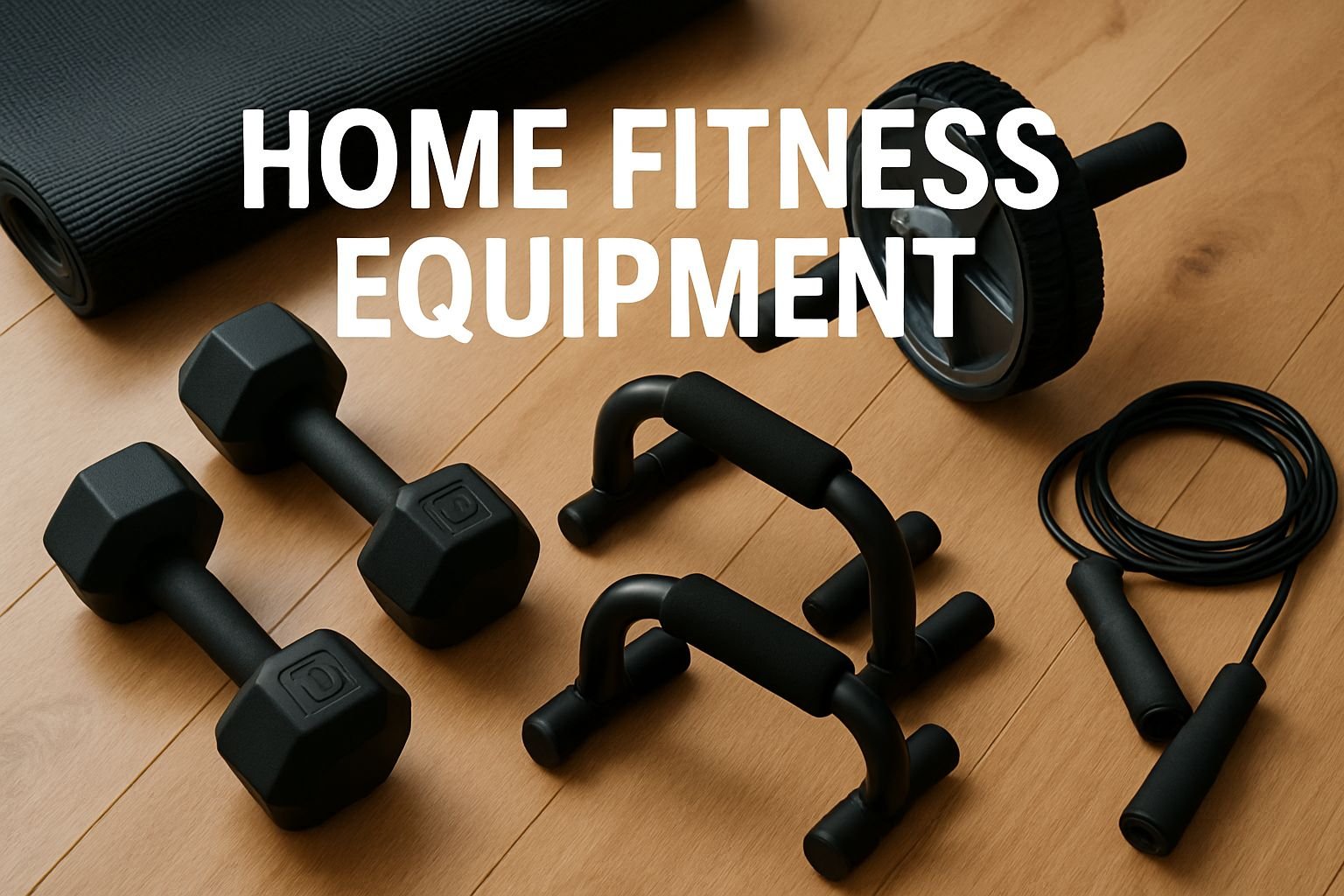
- You don’t need a full gym to build serious muscle — a few well-chosen compact pieces can replace an entire weight room.
- Adjustable dumbbells, resistance bands, and a folding bench are the three most space-efficient investments any man can make for strength training at home.
- The right compact equipment can handle progressive overload, the #1 driver of muscle growth, without requiring more than 50 square feet of space.
- Multi-function gear always wins — a single adjustable dumbbell set can replace up to 15 pairs of fixed dumbbells while fitting in a closet.
- There’s a smarter way to build your compact home gym from scratch — and the order in which you buy matters more than most men realize.
You can build a powerful, muscular physique without ever stepping foot in a commercial gym — and you don’t need a dedicated room to do it.
The home fitness space has exploded with genuinely effective compact equipment designed specifically for strength, not just cardio. Whether you’re working with a spare bedroom corner, a garage wall, or even a living room that doubles as your training floor, the right gear makes it all possible. Fitness Equipment Reviews is one resource that tracks the latest innovations in home strength training, helping men cut through the noise and invest wisely.
What Makes Strength Equipment Truly “Compact”
Compact doesn’t just mean small. A piece of equipment earns the label when it delivers a high training return relative to the physical footprint it demands — whether that’s floor space when in use, or storage space when put away.
The best compact strength equipment for men checks three boxes: it handles meaningful resistance levels, it serves multiple muscle groups or movement patterns, and it stores without becoming a permanent fixture in your living space. If it only does one of those three things, it’s probably not worth the floor real estate.
Floor Space vs. Storage Space: Know the Difference
These are two separate considerations that most buyers confuse. Floor space is how much room the equipment occupies during active use — this affects whether you can actually perform the movement safely. Storage space is what it demands when not in use. A folding weight bench, for example, might need a 4×2 foot footprint when deployed but can stand upright against a wall in under 12 inches of depth when folded.
Always measure both. A piece of gear that stores flat under a bed but requires a 10×10 area to use safely is still a space problem if your room is only 8×10.
Weight Capacity and Resistance Range Matter More Than Size
A compact piece of equipment that maxes out at 20 lbs of resistance isn’t going to build serious strength for most men past the beginner stage. Before buying anything, check the upper resistance ceiling. Adjustable dumbbells should ideally reach at least 50 lbs per hand. Resistance bands should include options up to 150–200 lbs of tension. Cable alternatives should allow for progressive loading over months, not just weeks.
Multi-Function Equipment Beats Single-Purpose Every Time
This is non-negotiable for compact setups. A preacher curl machine has one job. A sturdy adjustable bench paired with dumbbells can cover chest press, rows, shoulder press, Bulgarian split squats, incline curls, tricep kickbacks, and more — all from a 4-square-foot platform. When space is limited, every piece needs to earn its spot through versatility.
1. Adjustable Dumbbells
If you could only buy one piece of compact strength equipment, adjustable dumbbells would be it. They’re the backbone of nearly every effective home strength program, and the best modern sets are engineered to be fast, durable, and genuinely space-efficient. For more options, check out the best compact home gyms available today.
Why Bowflex SelectTech 552s Replace an Entire Dumbbell Rack
The Bowflex SelectTech 552 adjusts from 5 to 52.5 lbs in 2.5 lb increments up to 25 lbs, then 5 lb increments beyond that — giving you 15 different weight settings in a single dumbbell footprint. A traditional rack covering the same range would hold roughly 15 pairs of dumbbells and stretch 6 to 8 feet across your floor. The SelectTech 552s fit on a single stand that’s roughly 24 inches wide. That’s not a minor difference — it’s the difference between a usable room and a dedicated gym space. For those looking to maximize their home workout area, this is an excellent piece of compact home gym equipment.
What to Look For Before Buying Adjustable Dumbbells
Not all adjustable dumbbells are built equally, and a few key specs separate the ones worth owning from the ones that break after six months of real use.
- Adjustment mechanism: Dial systems (like Bowflex) are fast but can be fragile if dropped. Pin-and-sleeve systems are more durable but slower to adjust.
- Weight range: Look for a minimum upper limit of 50 lbs per hand for intermediate lifters. Advanced athletes should look at the NÜOBELL 80lb set, which reaches 80 lbs per dumbbell.
- Build material: Steel and urethane construction outlasts plastic housing by years under regular use.
- Adjustment speed: If switching weights takes more than 10 seconds, it kills workout flow. Test or research this before buying.
- Warranty: Reputable brands offer 2–5 year warranties. Anything less is a red flag.
2. Power Tower Pull-Up and Dip Station
A power tower is one of the most underrated compact strength tools available. It looks like a single piece of equipment, but it functions as a multi-station upper body gym — delivering pull-ups, chin-ups, dips, knee raises, and push-up variations all from a single vertical frame that typically takes up no more than 3×4 feet of floor space.
Upper Body Muscle Groups a Power Tower Hits
The muscle coverage from a quality power tower is genuinely impressive. Pull-ups and chin-ups target the latissimus dorsi, biceps, and rear deltoids. Dips load the pectorals (especially lower chest), triceps, and anterior deltoids heavily. Vertical knee raises and leg lifts hammer the core, particularly the hip flexors and lower abs. For men focused on building a wide back and thick arms, a power tower delivers direct, heavy compound loading with just bodyweight — or with a dip belt for added resistance.
| Exercise | Primary Muscle | Secondary Muscle |
|---|---|---|
| Pull-Up | Latissimus Dorsi | Biceps, Rear Delts |
| Chin-Up | Biceps | Lats, Forearms |
| Dip | Pectorals (Lower) | Triceps, Front Delts |
| Vertical Knee Raise | Hip Flexors | Lower Abs, Core |
| Push-Up Station | Pectorals | Triceps, Shoulders |
The Weider Power Tower and the CAP Barbell Power Tower are two of the most reliable options in the mid-range price bracket, both supporting up to 300 lbs of user weight while keeping the overall unit footprint under 15 square feet. For men who want to invest in a more premium build, the Marcy TC-3508 adds a padded back support and adjustable height grips that accommodate taller athletes more comfortably. If you are looking to maximize your workout space, consider setting up a small space home gym with these compact strength equipment options.
3. Resistance Bands
Resistance bands have earned a serious reputation in the strength training world — and it’s not because they’re easy. Heavy-duty loop bands like the Rogue Monster Bands generate up to 200 lbs of resistance at full stretch, making them a legitimate tool for building muscle mass, not just a warmup accessory.
What makes bands particularly valuable in a compact setup is their near-zero storage footprint. A complete set of five bands — covering light, medium, heavy, and extra-heavy resistance — rolls up into a bag the size of a water bottle. They’re also one of the few resistance tools that allow accommodating resistance, meaning the load increases as you approach the strongest part of the lift, which can actually improve strength gains compared to fixed-weight training alone.
- Rogue Monster Bands: Industry-standard loop bands ranging from 10 to 170+ lbs of resistance, made from natural latex with reinforced edges.
- Fit Simplify Resistance Loop Bands: A budget-friendly five-pack option ideal for accessory work and mobility training.
- WODFitters Pull-Up Assistance Bands: Specifically designed to assist pull-up progressions while adding compound pulling resistance.
- SPRI Xertube Resistance Bands: Handle-equipped tube bands that work well for rows, curls, presses, and cable-style movements.
For men who want to use bands as a primary strength tool rather than a supplement, pairing a heavy loop band with a power rack attachment point or a door anchor unlocks dozens of pressing, pulling, and hinging movements that closely mimic cable machine exercises.
How Heavy-Duty Bands Like Rogue Monster Bands Match Free Weight Resistance
The science behind band resistance is more compelling than most men expect. When you stretch a Rogue Monster Band — specifically the red band, which generates between 35 and 85 lbs depending on stretch length — you’re working against a force that increases through the range of motion. This mirrors the strength curve of many compound lifts, where your muscles are actually capable of producing more force at the top of a movement than at the bottom. Fixed dumbbells don’t adjust for that. Bands do. For a more complete setup, consider incorporating compact home gym equipment to maximize your workout space.
At full extension, a single Rogue Monster Band X (purple) generates up to 175 lbs of resistance. Stack two bands on a barbell or anchor point and you’re looking at compound loading that challenges even advanced lifters. The key difference from free weights is that bands never cheat gravity — every inch of the movement demands active muscular control, which actually increases time under tension, a critical factor in hypertrophy.
Best Resistance Band Exercises for Men Who Want Muscle, Not Cardio
Bands aren’t just for warmups or physical therapy — when loaded correctly, they’re a legitimate hypertrophy tool. The exercises that translate best to muscle building with heavy bands are the ones that closely replicate barbell and cable movements: banded deadlifts, pull-aparts, standing rows, chest presses anchored to a door, overhead tricep extensions, and face pulls. These movements create consistent tension across large muscle groups and can be programmed with the same progressive overload principles used in traditional weight training.
The single most underrated band exercise for men focused on back development is the banded pull-apart. Using a medium-resistance band like the Rogue Monster Band (red) held at shoulder width, performing 4 sets of 15 to 20 slow, controlled reps directly targets the rear deltoids, rhomboids, and lower trapezius — muscles that most men chronically underwork and that are critical for both posture and shoulder health.
4. Folding Weight Bench
A flat floor limits what you can do with dumbbells more than most men realize. Without an adjustable surface, you lose the pressing angle variations that selectively target different portions of the chest, the elevated foot position for tricep dips, and the stable platform needed for rows, step-ups, and split squats. A folding weight bench solves every one of those problems while folding down to roughly the size of a large suitcase.
The difference between a cheap folding bench and a quality one isn’t just comfort — it’s safety. Benches rated below 500 lbs of total weight capacity (user bodyweight plus load) can flex, wobble, or fail mid-set. For serious training, stick to benches with a 600 lb or higher rating, steel tube framing at least 1.5mm thick, and non-slip feet that hold position on both rubber flooring and hardwood.
When folded, the best compact benches stand upright against a wall in as little as 10 inches of depth — effectively invisible in a room until you need them. That combination of full functionality and near-zero storage footprint is what makes the folding bench one of the highest-value compact purchases any man can make for a home strength setup.
Why the Flybird Adjustable Bench is the Gold Standard for Small Spaces
The Flybird Adjustable Weight Bench has earned near-universal praise in the compact home gym space for good reason. It adjusts across seven back positions (0°, 30°, 45°, 60°, 75°, 85°, and 90°) and three seat positions, supports up to 620 lbs, and folds flat in under five seconds. At 19.2 lbs, it’s light enough to move between rooms but rigid enough to handle serious pressing loads. For the price point — typically between $130 and $160 — nothing else in its category comes close to matching the feature set.
Incline, Flat, and Decline: Why Angle Variety Builds More Muscle
Chest development stalls when you only train at one angle. Flat pressing emphasizes the mid-chest (sternal head of the pectoralis major). Incline pressing — ideally at 30 to 45 degrees — shifts emphasis toward the clavicular (upper) head, building the shelf of muscle that fills out the top of the chest. Decline pressing targets the lower chest fibers and tends to allow heavier loads due to a stronger mechanical position. Men who only ever press flat are leaving a significant portion of their chest development untrained.
The same principle applies to shoulder and arm training. A 45-degree incline dumbbell curl creates a longer stretch on the bicep through the bottom of the movement, producing greater mechanical tension than a standard standing curl. Adjustable bench angles aren’t just a convenience feature — they’re a fundamental tool for complete muscle development.
5. Pull-Up Bar
A pull-up bar is arguably the most space-efficient strength tool ever made. It mounts to a doorframe, takes up zero floor space, and delivers direct loading to the lats, biceps, and core with nothing more than bodyweight. For men who haven’t built the strength for full pull-ups yet, looping a resistance band over the bar for assistance makes it immediately accessible at any fitness level.
Doorframe vs. Wall-Mounted: Which One Should You Choose
Doorframe pull-up bars like the Iron Gym Total Upper Body Workout Bar are the most popular entry point — they install in seconds with no tools, no drilling, and no permanent modification to your home. They typically support between 250 and 300 lbs and work for most standard doorframes between 24 and 36 inches wide. The limitation is stability: at heavier bodyweights or when adding a weight vest, doorframe bars can flex or shift, reducing confidence and safety during dynamic movements like kipping or muscle-up progressions.
Wall-mounted bars like the Rogue Jammer Pull-Up Bar are a different category entirely. Bolted directly into wall studs, they support 1,000 lbs or more, accommodate multiple grip widths, and stay completely rigid under any load. The trade-off is permanence — installation requires drilling and appropriate stud placement. For men who are serious about calisthenics or plan to add a weight belt for loaded pull-ups, wall-mounted is the right call. For renters or those who want flexibility, a quality doorframe bar handles the basics without compromise.
6. Kettlebells
Kettlebells occupy a unique category in compact strength training — they combine the resistance of a free weight with the movement mechanics of a cable machine, all in a single cast-iron handle that stores in a corner. A single well-chosen kettlebell can drive strength, power, and conditioning simultaneously in ways that dumbbells and barbells simply can’t replicate. For those interested in a versatile option, consider exploring an adjustable kettlebell that can be tailored to your workout needs.
Why One 35lb Kettlebell Can Replace Multiple Machines
The 35 lb (16 kg) kettlebell — the classic “one pood” weight used in traditional Russian training — sits at the sweet spot for most intermediate male athletes. It’s heavy enough for loaded swings, cleans, and presses that build real strength, but light enough to maintain form during higher-rep conditioning work. More importantly, the offset center of gravity created by the kettlebell’s design forces stabilizer muscles to work harder than they would with a dumbbell of identical weight, increasing the overall training stimulus per rep. For those looking to maximize their home workout, consider exploring compact home gym equipment that complements kettlebell training.
A single 35 lb kettlebell replaces the need for a lat pulldown machine (swings and cleans train the posterior chain and lats through hip hinging), a cable row (single-arm rows with a kettlebell), a leg press (goblet squats load the quads and glutes effectively without a rack), and a shoulder press station. That’s four pieces of commercial gym equipment condensed into a 35 lb ball of iron that fits under a desk.
For men who want a two-kettlebell setup — the most practical compact configuration — pairing a 35 lb and a 53 lb (24 kg) covers the full spectrum from accessory work to heavy compound training. The Rogue Kettlebells and Rep Fitness Kettlebells are both cast from a single piece of iron with no seams or welds, making them the most durable options available at a reasonable price per pound. If you’re setting up a gym in a small space, you might also want to explore more compact home gym equipment options.
The Four Kettlebell Moves Every Man Should Know
Four movements cover almost every muscle group in the body and form the foundation of any effective kettlebell program. The kettlebell swing builds explosive posterior chain power through the hamstrings, glutes, and lower back. The goblet squat loads the quads, glutes, and core while teaching proper squat mechanics. The Turkish get-up develops shoulder stability, hip mobility, and total-body coordination simultaneously. The single-arm press builds shoulder and tricep strength while demanding core anti-rotation stability that bilateral pressing never trains.
Master these four movements with progressive load increases over 12 to 16 weeks and you will build measurable strength and muscle — with nothing more than a single kettlebell and 6 square feet of floor space.
7. Cable Machine Compact Alternatives
Cable machines are beloved in commercial gyms for one reason: they provide constant tension through a full range of motion at any angle, enabling exercises that free weights simply can’t replicate. Compact cable alternatives have advanced significantly in recent years, and the best units now deliver a training experience that’s almost indistinguishable from a full-size cable stack — in a fraction of the footprint.
How the RitFit FPC-100 Fits a Full Cable System Into Minimal Space
The RitFit FPC-100 Functional Trainer is one of the most space-efficient legitimate cable machines on the market. At just 48 inches wide and 24 inches deep, it offers dual adjustable pulleys with a weight stack of up to 150 lbs per side — providing enough resistance for serious lat pulldowns, cable rows, chest flyes, tricep pushdowns, and face pulls. The dual-pulley design means both arms can be trained simultaneously or independently, which is critical for identifying and correcting strength imbalances between sides.
What makes the FPC-100 particularly valuable for compact setups is its 19-position adjustable pulley system, allowing cable angles from floor level to overhead. This single machine can replicate a low pulley for cable rows, a mid pulley for chest presses, and a high pulley for lat pulldowns — covering the function of three to four separate machines in a unit that occupies roughly the same floor space as a standard refrigerator. For men who want the feel of cable training at home without dedicating half a room to equipment, this is the most practical option available.
Cable vs. Free Weights: Which Builds More Functional Strength
Both tools build strength — but they do it differently, and the distinction matters for how you program your training. Free weights like dumbbells and kettlebells force your stabilizer muscles to work continuously throughout every rep, because the load is unsupported and moves freely in three-dimensional space. This builds raw, transferable strength that carries over to real-world movement patterns. Cable machines, on the other hand, provide constant tension through the entire range of motion at any angle — something free weights can’t match due to the effect of gravity pulling load straight down.
For a compact home setup, the smartest approach is to treat them as complementary rather than competing. Use free weights for compound pressing and hinging movements where stabilizer recruitment and natural movement patterns matter most. Use cable alternatives for isolation work, pulling movements, and any exercise where constant tension produces a better stimulus than gravity-dependent loading. Together, they cover every training need a man has for building functional, aesthetic strength.
How to Build a Full Strength Routine With Compact Equipment
Having the right equipment is only half the equation. The other half is organizing that equipment into a training structure that actually produces results over time. The good news is that a compact home setup — adjustable dumbbells, a folding bench, a pull-up bar, and a set of resistance bands — is more than enough to run a serious, progressive strength program. The framework that works best for most men training at home is a push, pull, legs split run three to four days per week.
A Simple Push, Pull, Legs Split That Works in Any Room
A push, pull, legs structure divides your training by movement pattern rather than individual muscles, which means every session is efficient, recovery is optimized, and no major muscle group gets neglected. Push days cover the chest, shoulders, and triceps using bench presses, dumbbell shoulder presses, and tricep extensions. Pull days target the back and biceps through pull-ups, dumbbell rows, and banded face pulls. Leg days hit the quads, hamstrings, glutes, and calves with goblet squats, Romanian deadlifts with dumbbells or bands, and split squats using a bench for elevation.
Running this split three days per week with a rest day between each session gives every muscle group 48 to 72 hours of recovery — the minimum required for hypertrophy adaptation. Advanced trainees can run it six days per week by completing two full rotations, which doubles weekly training volume without increasing session length or complexity.
Progressive Overload Without Heavy Iron: How to Keep Getting Stronger
Progressive overload is the fundamental principle behind all strength and muscle gains — your body only adapts when the training stimulus exceeds what it has previously handled. In a traditional gym, this typically means adding weight to a barbell. In a compact home setup, progressive overload works through multiple variables that are just as effective when applied consistently.
The five most practical overload methods for compact home training are: adding reps to the same weight (moving from 8 to 12 reps before increasing load), reducing rest periods between sets to increase training density, slowing the eccentric (lowering) phase of each rep to increase time under tension, moving to a heavier band or dumbbell increment when rep targets are consistently met, and adding a weight vest for bodyweight movements like pull-ups, dips, and push-ups. Rotating these variables systematically across a 12-week training block produces continuous strength gains without ever needing a barbell or a squat rack.
How Much Space You Actually Need to Train Effectively at Home
The minimum functional training space for a compact strength setup is smaller than most men expect. For floor-based movements — deadlifts, squats, push-ups, kettlebell swings — you need a clear area of approximately 6 feet by 6 feet. That’s 36 square feet, roughly the size of a large bathroom. Pressing and rowing movements with dumbbells while seated or lying on a bench require a similar footprint that largely overlaps with the same area.
Vertical space matters too, particularly for overhead pressing and pull-up bar installation. Standard residential ceiling heights of 8 feet are sufficient for most exercises, but men over 6 feet tall should verify overhead clearance before performing standing presses or kipping movements under a doorframe bar. An 8-foot ceiling with a mounted pull-up bar leaves approximately 5.5 feet from the bar to the floor — enough for men up to 6’2″ to hang freely without their feet touching the ground.
Storage space for the equipment itself is a separate calculation. A Flybird Adjustable Bench folded upright takes roughly 10 inches of wall depth. A pair of Bowflex SelectTech 552 dumbbells on a stand occupy approximately 24 inches of width and 20 inches of depth. A resistance band set stores in a single bag. A kettlebell sits in a corner. In total, a complete compact strength setup for a man at the intermediate level can be stored in a space smaller than a standard wardrobe — and deployed for training in under two minutes.
- Training floor space needed: Minimum 6×6 feet (36 sq ft) of clear area
- Ceiling height minimum: 8 feet for overhead pressing and pull-up bar clearance
- Bench storage footprint: ~10 inches deep when folded upright against a wall
- Dumbbell set footprint: ~24 inches wide, 20 inches deep on a stand
- Full setup storage total: Comparable to a single wardrobe or large closet space
The Smartest Way to Start Your Compact Home Gym
Start with one piece of equipment that covers the most training ground, then build outward. For most men, that means adjustable dumbbells first, then a folding bench, then a pull-up bar or resistance band set — in that order. This sequence lets you begin training immediately after your first purchase, add capability with each subsequent investment, and avoid the common mistake of buying everything at once and overwhelming the available space before you know how you’ll actually use it. A complete, functional compact home gym that can support years of serious strength training can be assembled for between $400 and $800 total — less than four months of a mid-range gym membership, with no commute and no waiting for equipment.
Frequently Asked Questions
Building a compact home gym raises practical questions that don’t always have obvious answers. The sections below address the most common concerns men have before committing to home-based strength training, with direct, specific answers grounded in real training experience.
What Is the Single Most Effective Piece of Compact Strength Equipment for Men?
Adjustable dumbbells — specifically a set that reaches at least 50 lbs per hand, like the Bowflex SelectTech 552 or the NÜOBELL 80lb set. No other single piece of compact equipment covers as many exercises, muscle groups, resistance levels, and training styles in as small a footprint. From chest pressing to deadlifts, rows to shoulder raises, curls to goblet squats, a quality adjustable dumbbell set handles it all.
Can You Build Serious Muscle With Just Compact Home Equipment?
- Resistance is resistance — your muscles respond to mechanical tension regardless of whether it comes from a barbell, a dumbbell, a band, or a cable.
- Progressive overload is achievable without a barbell through rep progression, tempo manipulation, reduced rest, and incremental weight increases.
- Compound movements are fully accessible at home — pull-ups, dips, dumbbell presses, rows, squats, and hinges cover every major muscle group.
- Time under tension with slower eccentric phases can match or exceed the hypertrophy stimulus of heavier, faster commercial gym training.
Yes — and the evidence from both sports science and real-world training backs this up. Muscle hypertrophy is driven by mechanical tension, metabolic stress, and muscle damage. All three can be generated effectively with compact equipment when training is structured with consistent progressive overload and sufficient weekly volume per muscle group.
The limiting factor in most home gym programs isn’t the equipment — it’s the programming. Men who train with a structured, progressive plan using compact equipment consistently outperform men who train randomly with access to a full commercial gym. The tools matter far less than the plan behind how you use them.
That said, there are realistic limits. Men chasing elite-level powerlifting totals or Olympic weightlifting performance will eventually outgrow a compact setup. But for the vast majority of men whose goals are to build a muscular, lean, strong physique and maintain it for life, compact home equipment is not a compromise — it’s a completely sufficient training environment.
Studies on resistance training have consistently shown that loads as low as 30% of one-rep maximum, when taken close to muscular failure, produce hypertrophy outcomes comparable to heavier training at 70–85% of one-rep maximum. This means even moderate resistance from bands and adjustable dumbbells, when applied intelligently, produces the same muscle-building results as heavy barbell work.
How Much Should a Man Spend to Build a Compact Home Gym?
A genuinely effective compact home gym can be built for between $400 and $800, depending on the quality tier you choose. At the entry level, a Bowflex SelectTech 552 set runs approximately $350 to $400, a Flybird Adjustable Bench costs around $130 to $160, and a doorframe pull-up bar adds another $30 to $50. That three-piece setup — under $600 total — is sufficient for a full-body strength program that can produce results for years. For more ideas on setting up a gym in limited space, check out our guide on small space home gym setup.
Upgrading to a premium tier with the NÜOBELL 80lb set, a commercial-grade folding bench, a wall-mounted pull-up bar, and a set of Rogue Monster Bands brings the total to approximately $1,200 to $1,500. This level of investment provides equipment that matches or exceeds the training capability of most commercial gym floors — and pays for itself within six to twelve months compared to ongoing gym membership costs.
Is Compact Equipment Suitable for Heavy Lifters and Advanced Athletes?
For most advanced athletes, yes — with one important caveat. The upper resistance ceiling of compact equipment needs to match your current strength levels. A man who squats 300 lbs will outload a standard adjustable dumbbell set quickly for lower body work, but can still benefit enormously from compact equipment for upper body training, accessory work, and conditioning. Advanced lifters should prioritize high-capacity adjustable dumbbells like the NÜOBELL 80lb set, add a weight vest for bodyweight movements, and consider a compact functional trainer like the RitFit FPC-100 to maintain cable-based loading at intensities that match their development.
What Is the Minimum Space Needed for a Functional Home Strength Setup?
The absolute minimum is a clear floor area of 6 feet by 6 feet — 36 square feet — with at least 8 feet of ceiling height. This accommodates all floor-based movements, bench work, and standing exercises within the same footprint. It’s enough space for a complete full-body training session using dumbbells, a bench, and resistance bands without ever feeling constrained.
If your only available space is smaller than 36 square feet — say, a narrow hallway or a small alcove — the best approach is to focus exclusively on equipment that requires no floor space during use: a wall-mounted pull-up bar, a set of resistance bands anchored to a door, and a single kettlebell. This stripped-down setup can still deliver meaningful strength training for the upper body, core, and posterior chain, even in genuinely tight quarters.
If you’re serious about building strength at home without sacrificing your living space, the right compact equipment makes every square foot count — and the gains you build will be anything but small. Explore the full range of compact strength solutions and expert home gym guidance at Fitness Equipment Reviews, where helping men train smarter in less space is exactly what they do.
Leave a Reply