
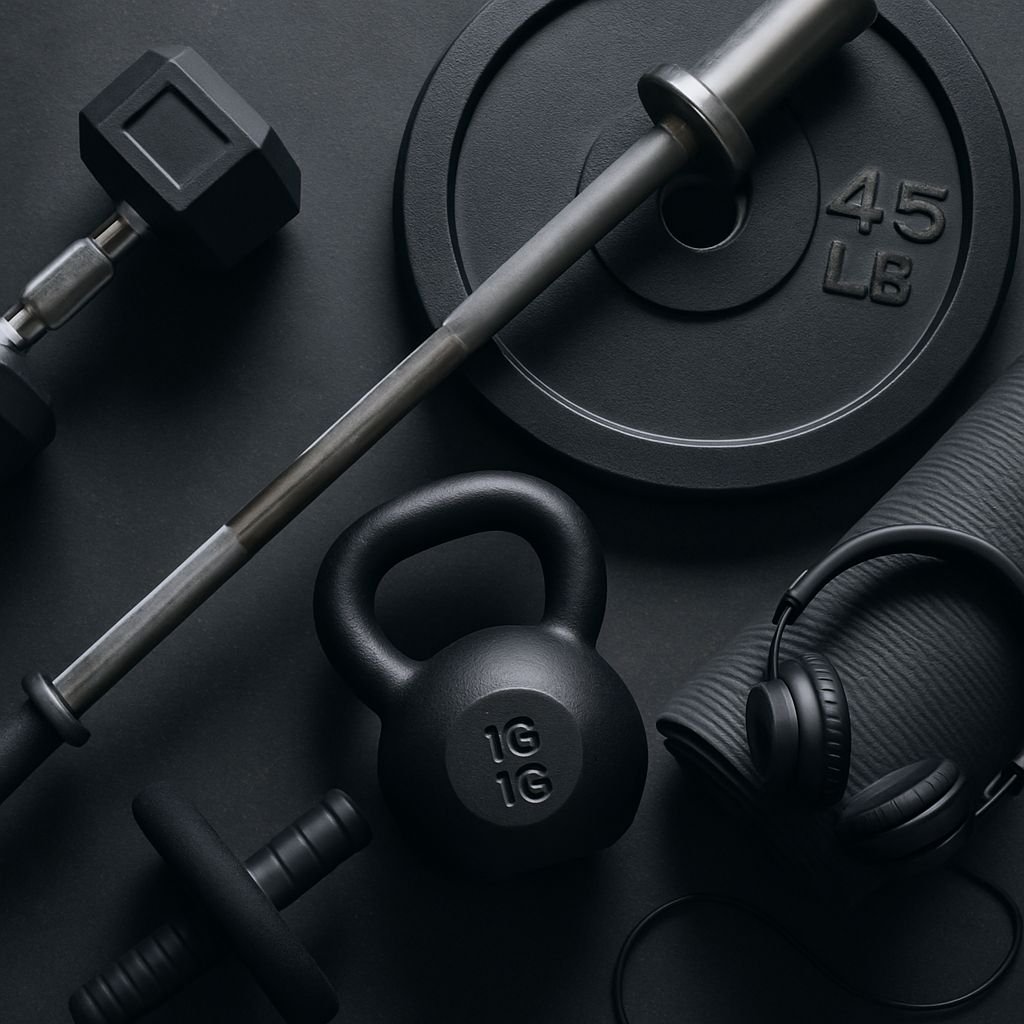
- You don’t need a full gym to get a full workout — the right compact equipment can deliver cardio, strength, and flexibility training in as little as a 6×6 foot space.
- Adjustable dumbbells and resistance bands are the highest-value small-space investments, replacing entire racks of equipment with a single compact unit.
- Not all compact equipment is created equal — key specs like footprint dimensions, weight capacity, and storage design separate the best from the rest.
- Sunny Health & Fitness offers a wide range of space-efficient home gym solutions purpose-built for apartments, condos, and small rooms.
- One piece of equipment can do more than you think — keep reading to find out which single item fitness experts say is the most versatile small-space tool available.
You Don’t Need a Big Space to Get a Big Workout
Small spaces don’t mean small results — they just mean smarter equipment choices.
Whether you’re working out in a studio apartment, a spare bedroom, or a corner of your living room, building an effective home gym is absolutely possible. The fitness equipment industry has shifted hard toward compact, multi-use designs that make dedicated gym rooms feel optional, not essential. Sunny Health & Fitness is one brand leading that charge, offering space-conscious gear designed specifically for real homes, not warehouse-sized facilities.
Why Small-Space Fitness Equipment Has Improved Dramatically
Ten years ago, compact home gym equipment meant cheap resistance bands and wobbly plastic steppers. Today, it means precision-engineered adjustable dumbbells that replace 30 individual weights, treadpads with whisper-quiet motors, and foldable bikes with commercial-grade resistance systems. Manufacturing improvements, smarter materials, and real consumer demand from apartment dwellers have pushed the industry forward fast.
The result? Equipment that genuinely performs — no compromises required.
What to Look for Before You Buy
Before spending a dollar, there are a few non-negotiables to check off. First, measure your actual available floor space, including ceiling height if you’re considering anything vertical like a pull-up bar or a rowing machine with an elevated drive. Then match your equipment to your primary goal — cardio, strength, flexibility, or a combination. Finally, think about storage: does the equipment fold, stack, or collapse when not in use?
Here’s a quick checklist before making any compact equipment purchase:
- Floor footprint — Check the product’s exact dimensions and compare them to your measured space
- Storage design — Does it fold flat, hang on a wall, or stack neatly in a corner?
- Weight capacity — Always verify this matches or exceeds your body weight for safety
- Noise level — Critical for apartment dwellers with downstairs neighbors
- Versatility — Can it support multiple exercise types, or is it single-purpose?
- Assembly requirements — Some compact equipment arrives nearly complete; others require significant setup
1. Mini Stepper
The mini stepper is one of the most underrated pieces of compact cardio equipment available, and it consistently punches above its weight class in terms of results per square foot.
Why It Works for Small Spaces
A standard mini stepper has a footprint of roughly 12 x 14 inches — smaller than a laptop bag. It sits on the floor, requires zero installation, and slides under a bed or couch when you’re done. Unlike a treadmill or stationary bike, there’s no frame towering above it, which makes it ideal for rooms with low ceilings or crowded layouts.
Many models, including the Sunny Health & Fitness Mini Stepper with Resistance Bands (SF-S0897), include built-in resistance band handles so you can work your upper body simultaneously. That combination of lower-body stepping and upper-body pulling turns a simple cardio tool into a near-full-body trainer. For those interested in a small space home gym setup, this versatile equipment is a great addition.
Muscles Worked and Cardio Benefits
Each stepping motion primarily targets your glutes, quadriceps, hamstrings, and calves. When you add resistance band rows or bicep curls, you also bring in your back, shoulders, and arms. From a cardio standpoint, consistent stepping elevates your heart rate into a moderate-intensity zone, making it an effective tool for improving cardiovascular endurance and burning calories without high-impact stress on your joints.
How to Use It Effectively
For best results, aim for 20–30 minute sessions at a steady pace, keeping your core engaged and your back upright rather than hunched forward. If you want to increase intensity, increase step depth rather than speed — a deeper range of motion recruits more of the glute and hamstring. Pairing the mini stepper with the included resistance bands for rows or overhead presses during your session turns it into a surprisingly demanding circuit.
2. Adjustable Dumbbells
If there’s one piece of equipment that belongs in every small home gym, it’s a set of adjustable dumbbells. A single pair can replace up to 15 individual dumbbells, saving enormous amounts of floor space without sacrificing a single pound of training range.
How They Replace an Entire Dumbbell Rack
Traditional dumbbell racks run anywhere from 5 to 8 feet wide and hold fixed-weight pairs from 5 lbs up to 50 lbs or more. Adjustable dumbbells consolidate that entire range into one compact unit that usually occupies less than a square foot of floor space. The weight-change mechanism — whether dial, pin, or quick-release — lets you move between exercises and weight levels in seconds.
Key benefits of switching to adjustable dumbbells:
- Replace 15+ individual dumbbells with a single pair
- Footprint typically under 18 x 8 inches per dumbbell tray
- Compatible with standard bench press, curl, row, and shoulder press movements
- Most systems include a storage tray that doubles as a stand
- Weight range on premium models spans from 5 lbs to 90 lbs per hand
REP Fitness QuickDraw vs. PowerBlock: Which Is Better
| Feature | REP Fitness QuickDraw | PowerBlock Elite EXP |
|---|---|---|
| Weight Range | 5–80 lbs | 5–90 lbs (expandable) |
| Adjustment Mechanism | Quick-release pin | Selector pin with color coding |
| Shape | Traditional hex dumbbell shape | Block/square shape |
| Storage Footprint | Compact tray included | Compact tray included |
| Best For | Users who prefer a traditional dumbbell feel | Users who want maximum weight range in minimum space |
| Price Range | Mid-to-high | Mid-to-high |
Both are excellent options. The REP Fitness QuickDraw wins on feel — it handles like a traditional dumbbell, which makes it more comfortable for exercises like lateral raises or chest flyes. The PowerBlock Elite EXP wins on expandability; you can add weight kits later to push the range up to 90 lbs per hand without buying a new unit. For more ideas on setting up a minimalist strength home gym, check out our guide.
For most apartment-based lifters doing a mix of upper and lower body work, either model will serve them well for years.
3. Resistance Bands
Resistance bands are the ultimate zero-footprint training tool — they weigh almost nothing, store in a drawer, and can challenge your muscles through a surprisingly wide range of exercises.
What makes resistance bands particularly valuable for small spaces isn’t just their size — it’s their versatility. A single set of loop bands or tube bands with handles can cover squats, chest presses, rows, shoulder raises, bicep curls, and hip abductions. That’s essentially a full-body strength session from a product that fits in a Ziploc bag. For more ideas on setting up a compact workout area, check out this small space home gym setup.
Full-Body Exercises You Can Do With Resistance Bands
The range of movements you can perform with resistance bands is genuinely impressive. Anchor a tube band to a door frame and you have a cable machine substitute for chest presses, rows, and tricep pushdowns. Step on a loop band and you can perform squats, deadlifts, lateral walks, and hip thrusts. No anchor? No problem — wrap it around your hands for shoulder presses, bicep curls, and face pulls. The key is matching band resistance to the exercise: lighter resistance for isolation moves like lateral raises, heavier resistance for compound movements like squats or rows.
Why Living.Fit Resistance Bands Stand Out
The Living.Fit resistance band set earns consistent high marks for durability and resistance consistency. Unlike cheaper latex bands that snap or lose tension over time, Living.Fit bands use layered natural latex construction that holds its resistance rating reliably through extended use. Their sets typically include five resistance levels ranging from 10 lbs to 50+ lbs, and each band is color-coded for easy identification mid-workout. For small-space users who want a full-body training tool that costs under $50 and stores in a kitchen drawer, this set is a hard option to beat. For more ideas on optimizing your workout space, check out this small-space home gym setup.
4. Treadpad or Compact Treadmill
Walking and running remain two of the most effective cardiovascular exercises available, and a treadpad brings both into a small apartment without the massive footprint of a traditional treadmill. The treadpad design strips away the bulky frame and console, leaving a low-profile motorized belt that sits nearly flush with the floor and slides under a bed or sofa when not in use.
For anyone who relies on outdoor running but loses motivation in bad weather, a treadpad is a game-changing addition to a small home gym. The ability to walk during work calls, clock low-impact cardio while watching TV, or sneak in a 20-minute run before work — all from your living room — makes consistent cardio dramatically more achievable.
Treadpad vs. Traditional Treadmill: Space and Performance
| Feature | Treadpad | Traditional Treadmill |
|---|---|---|
| Average Footprint | Approx. 60 x 20 inches | 70–84 x 28–36 inches |
| Storage | Slides under bed or sofa | Folds upright or stays fixed |
| Console/Display | Minimal or app-connected | Full built-in display |
| Max Speed | Typically 6–8 mph | 10–12+ mph |
| Incline Options | Fixed or limited incline | Motorized multi-level incline |
| Price Range | $300–$800 | $600–$3,000+ |
| Noise Level | Lower | Higher |
Best Use Cases for Apartment Dwellers
Treadpads shine brightest for walkers and light joggers rather than serious runners chasing speed. If your primary cardio goal is daily step count, low-impact fat burning, or active recovery between strength sessions, a treadpad delivers everything you need at a fraction of the space and cost. Apartment dwellers with noise restrictions will especially appreciate the quieter motor operation compared to full-size treadmills.
Echelon Stride 6s-10: What Makes It Compact-Friendly
The Echelon Stride 6s-10 is one of the most space-efficient motorized treadmills available for home use. It folds completely flat to just 10 inches tall, making it one of the few motorized units that genuinely slides under a standard bed frame. The belt surface measures 55 x 20 inches, which is adequate for walking and light jogging, and the unit supports speeds up to 10 mph with a 300 lb weight capacity.
The Echelon Stride 6s-10 connects to the Echelon Fit app, giving users access to live and on-demand walking and running classes without needing a built-in screen eating up additional space. For a motorized treadmill that folds flat and performs reliably, it’s one of the most practical apartment-friendly options currently available.
5. Compact Exercise Bike
A compact exercise bike delivers serious cardiovascular conditioning without demanding serious floor space — and modern designs have closed the performance gap between home bikes and commercial studio equipment significantly.
Cardio Without Leaving Your Living Room
Cycling is a low-impact, high-efficiency cardio method that works your quads, hamstrings, glutes, and calves while keeping joint stress minimal. A compact upright or semi-recumbent bike gives you all of that in a footprint that typically runs between 40 and 50 inches long and 20 inches wide — small enough to fit in a bedroom corner or at the end of a sofa. For more ideas on setting up a gym in limited space, check out this guide on small space home gym setups.
Unlike treadpads, compact bikes are fully self-contained and don’t require clearance behind or in front of the unit for movement. This makes them particularly well-suited to rooms where floor layout is tight or irregularly shaped.
One underrated advantage of a compact bike is how naturally it pairs with other activities. You can read, work on a laptop stand, or stream a workout class while pedaling at a moderate resistance level — making it easier to accumulate cardio minutes on days when motivation is low. That kind of low-barrier accessibility is exactly what separates people who use their home gym equipment consistently from people who let it collect dust.
- Upright bikes — Most compact footprint, closest to an outdoor road cycling position
- Semi-recumbent bikes — Slightly larger but more back support, ideal for longer sessions
- Desk bikes — Ultra-compact pedal-only units designed for use while working seated
- Spin-style compact bikes — Heavier flywheel, more intense ride, slightly larger frame
For pure space efficiency, an upright compact bike is your best bet. For comfort during longer rides, the semi-recumbent design gives you lumbar support that makes 45-minute sessions far more sustainable.
What Sets the NordicTrack X24 Apart for Small Spaces
The NordicTrack Commercial S22i Studio Cycle offers a 22-inch HD touchscreen, automatic resistance adjustment synced to instructor cues, and a footprint of just 55.9 x 21.9 inches. While it’s on the premium end of compact bikes, the integration of live iFIT classes, a -10% to +20% incline simulation, and a 350 lb weight capacity makes it a genuine commercial-grade training tool in a home-compatible size. If budget allows, it eliminates the need for a separate screen or streaming device entirely.
6. Adjustable Kettlebell
A single adjustable kettlebell might be the most functional strength tool you can own for a small space — and that’s not an overstatement.
Traditional kettlebells come in fixed weights, meaning a complete set from 8 kg to 32 kg could easily occupy an entire shelf and cost several hundred dollars. An adjustable kettlebell consolidates that entire range into one unit that sits in the corner of a room and weighs in at a fraction of the cost and space.
Why One Kettlebell Can Replace Many
Kettlebell training is inherently functional — the offset center of gravity challenges stabilizer muscles that dumbbells and machines simply don’t reach. Swings, cleans, Turkish get-ups, goblet squats, and windmills all target multiple muscle groups simultaneously, making a single kettlebell workout incredibly time-efficient. With an adjustable model, you can move from a light weight for Turkish get-ups to a heavier load for swings without needing separate implements cluttering your floor. For those looking to maximize their workout in limited space, consider exploring small space home gym setups that complement kettlebell training.
PowerBlock Adjustable Kettlebell: Key Features
The PowerBlock Adjustable Kettlebell adjusts from 35 lbs to 62 lbs using a fast-change pin selector system, replacing four individual kettlebells in a package that takes up roughly 12 x 10 inches of floor space. The weight plates are contained within the shell of the unit, giving it a balanced feel that mimics a traditional cast-iron kettlebell more accurately than many competitors. It’s built from durable ABS plastic housing with a steel handle — the handle diameter and finish are designed to be grip-friendly even during high-rep swings when your palms are sweating.
One practical detail worth noting: because the weight is contained inside the shell rather than hanging below an exposed handle like a traditional kettlebell, the PowerBlock Adjustable Kettlebell has a slightly different center of gravity feel during ballistic movements like swings and cleans. Most users adapt within a session or two, and the space-saving trade-off is well worth the brief adjustment period. For small-space lifters who want serious strength and conditioning capability without a rack full of iron, this is one of the smartest single investments available. For more ideas on optimizing your workout area, check out this small-space home gym setup.
Best Kettlebell Exercises for a Small Space Workout
Kettlebells are uniquely suited to small spaces because most movements are performed standing in place or with minimal lateral movement. The following exercises cover your entire body without requiring you to move more than a foot in any direction:
- Kettlebell Swing — Hinge at the hips, drive through your glutes, and let the bell float to chest height. Targets posterior chain and elevates heart rate fast.
- Goblet Squat — Hold the bell at your chest with both hands and squat deep. Excellent for quads, glutes, and core stability.
- Single-Arm Row — Brace one hand on a chair or wall, row the kettlebell to your hip. Targets lats and rear delts.
- Turkish Get-Up — A slow, controlled full-body movement performed lying down then rising to standing. Develops shoulder stability, hip mobility, and total-body coordination.
- Overhead Press — Clean the bell to rack position and press overhead. Builds shoulder and tricep strength.
- Around-the-World — Pass the bell around your body in a circle. Builds grip strength and core control.
Three to four sets of each movement, performed in a circuit format with minimal rest, delivers a genuinely demanding full-body session in under 30 minutes — all within a 6×6 foot square.
How to Maximize a Small Workout Space
Having the right equipment is only half the equation. How you organize and use your space determines whether your small home gym actually gets used every day or becomes an expensive storage shelf.
Smart Storage Solutions for Compact Equipment
The goal is zero visual clutter when you’re not working out. Resistance bands hang neatly on a single hook behind a door. Adjustable dumbbells sit on their included trays and tuck under a bench or table. A mini stepper slides under a bed. A treadpad lays flat beneath a sofa. Kettlebells sit in a low corner with a rubber mat underneath to protect your floor. Vertical wall-mounted storage racks are also worth investing in if your floor space is critically limited — they keep mats, bands, and accessories off the ground entirely and are typically installable with four screws.
How to Structure a Full-Body Routine in a Tiny Room
The most effective small-space workout structure is a three-day-per-week full-body circuit using the equipment you already own. Day one might combine resistance band work with a mini stepper cardio block. Day two focuses on kettlebell and adjustable dumbbell strength movements. Day three mixes treadpad walking intervals with bodyweight core work. Rotating these sessions keeps your muscles challenged across all movement patterns — push, pull, hinge, squat, and carry — without ever needing more floor space than you already have.
Keeping Motivation High Without a Dedicated Gym Room
One of the biggest challenges with small-space training isn’t the equipment — it’s the psychological barrier of working out in a space that doubles as your living room or bedroom. The most effective fix is a clear transition ritual: lay out your mat, put on your workout playlist, and change into your gym clothes before every session. These small cues train your brain to shift into workout mode even when your environment doesn’t change dramatically. For those looking to optimize their space, consider investing in compact home gym equipment that can easily be stored away when not in use.
Streaming workout content also helps enormously. Connecting a compact bike, treadpad, or open floor space to a platform like iFIT, Peloton Digital, or YouTube fitness channels gives your sessions structure and variety that prevents the stagnation that kills home gym motivation over time. Accountability — whether through a training app, a workout partner checking in remotely, or simply logging sessions in a notebook — turns small-space training from a temporary setup into a lasting habit.
Small Space, Real Results
The right six pieces of compact equipment — a mini stepper, adjustable dumbbells, resistance bands, a treadpad, a compact bike, and an adjustable kettlebell — cover every training goal from fat loss to muscle building to cardiovascular health, all within the footprint of a standard parking space. Small-space fitness has never been better equipped, and the only thing standing between you and a fully functional home gym is knowing exactly what to buy. Explore the full range of compact, high-performance home gym solutions at Sunny Health & Fitness to find gear purpose-built for spaces just like yours.
Frequently Asked Questions
Still have questions about building a home gym in a tight space? Here are straight answers to the most common ones.
What Is the Best Workout Equipment for a Small Apartment?
The best workout equipment for a small apartment is a combination of adjustable dumbbells and resistance bands as your foundation, paired with one compact cardio tool — either a mini stepper or a treadpad depending on your goals. These three items together cover strength training, cardio conditioning, and flexibility work in a package that stores in a corner or under a bed.
Can You Build Muscle With Compact Home Gym Equipment?
Yes — building muscle with compact home gym equipment is entirely achievable, and the science backs it up. Muscle growth (hypertrophy) is driven by mechanical tension, metabolic stress, and muscle damage. All three can be achieved using adjustable dumbbells, resistance bands, and kettlebells, provided you apply progressive overload consistently.
Progressive overload simply means gradually increasing the challenge over time. With adjustable dumbbells, that means incrementally increasing the weight. With resistance bands, it means stepping up to a heavier resistance band or increasing reps and time under tension. The mechanism is the same as a commercial gym — the equipment is just more compact. For those looking to maximize their workout space, consider exploring a compact strength equipment setup that doesn’t require a gym.
Research consistently shows that resistance band training produces comparable muscle and strength gains to free weight training when matched for effort and progressive overload. A 2019 study published in the Journal of Human Kinetics found that elastic resistance training produced similar results in upper and lower body strength development compared to conventional weight training over an 8-week period.
- Train each muscle group 2–3 times per week for optimal hypertrophy
- Aim for 3–5 sets of 8–15 reps per exercise at a challenging resistance
- Increase resistance or reps every 1–2 weeks to ensure progressive overload
- Prioritize compound movements like squats, rows, and presses before isolation work
- Rest 48–72 hours between sessions targeting the same muscle group
The short answer: yes, you can absolutely build real, visible muscle using compact home gym equipment. The longer answer is that your consistency and programming matter far more than the size of your gym.
How Much Space Do You Actually Need for a Home Workout?
You need surprisingly little. For bodyweight training and resistance band work, a 6 x 4 foot clear floor area is enough to perform the majority of exercises effectively. Add a mini stepper or compact cardio tool and you’re looking at roughly a 6 x 6 foot zone. A full dumbbell and kettlebell setup with storage trays fits comfortably in a 8 x 6 foot space.
The key is ensuring that your chosen floor area has at least 8 feet of ceiling clearance for any overhead pressing or jumping movements. Beyond that, a rubber or foam mat to define your workout zone and protect your floor is the only additional infrastructure most small-space home gyms genuinely need.
Is a Mini Stepper or Resistance Bands Better for Cardio?
These two tools serve different cardio purposes, and the better choice depends entirely on how you define cardio and what your fitness goals are. For those with limited space, considering apartment workout equipment might help in making a decision.
- Mini stepper — Delivers continuous, sustained cardiovascular effort. Best for steady-state cardio, calorie burning, and improving aerobic base.
- Resistance bands — Better suited to circuit-style cardio where strength and heart rate elevation are combined. Can be used for metabolic conditioning but not traditional sustained cardio.
If your primary goal is improving cardiovascular endurance or daily step count, the mini stepper wins. It keeps your heart rate consistently elevated for 20–40 minutes in a way that resistance bands simply cannot replicate on their own.
However, if you want a tool that does double duty — building strength and spiking heart rate through high-rep circuits — resistance bands are the more versatile choice overall. Performing fast-paced resistance band squats, rows, and presses back-to-back with minimal rest creates a metabolic conditioning effect that closely mirrors HIIT training.
The ideal small-space solution? Own both. A mini stepper and a resistance band set together cost under $100 combined in most cases, take up almost no storage space, and cover both sustained cardio and metabolic strength training comprehensively.
What Is the Most Versatile Piece of Small-Space Fitness Equipment?
Resistance bands earn the title of most versatile small-space fitness equipment, and it’s not particularly close. No other single category of equipment matches their combination of exercise variety, portability, storage footprint, price point, and training adaptability.
A complete resistance band set weighing under a pound can perform over 30 distinct exercises covering every major muscle group in your body. They work for rehabilitation and mobility work at light resistance, strength training at moderate resistance, and metabolic conditioning at high resistance with fast tempos. They travel in a backpack, store in a kitchen drawer, and work outdoors, indoors, or in a hotel room.
When it comes to creating a home gym, space can often be a limiting factor. However, with the right equipment, you can still achieve a comprehensive workout without needing a lot of room. Consider investing in compact home gym equipment that is designed to be both efficient and space-saving. These tools not only help maximize your workout potential but also ensure that your living space remains uncluttered and functional.
Leave a Reply