
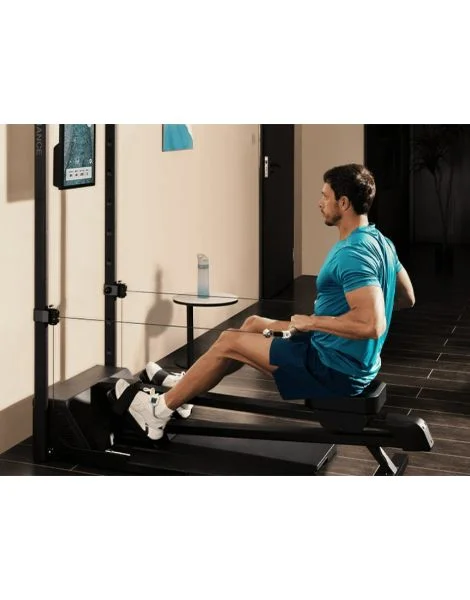
- Fofana is best for action-oriented people who want to grab a system and train without a second thought — minimal setup, maximum flexibility.
- Promeed is built for structured thinkers who stay consistent when they have a clear plan telling them exactly what to do next.
- Both systems are genuinely compact — but they differ significantly in resistance range, progression design, and how intuitive they are out of the box.
- The system you’ll actually stick with is the one that matches how your brain works, not just how your muscles work — this article breaks that down completely.
- One of these systems has a clear edge for beginners, and it might not be the one you’d expect — keep reading to find out which one.
Picking the wrong compact strength system doesn’t just waste money — it kills your momentum before you ever build any.
Fofana and Promeed are two of the most talked-about compact strength systems right now, and for good reason. Both promise serious results in a small footprint. But they’re built on completely different philosophies, and understanding that difference is what separates a purchase you’ll love from one you’ll shove under the bed after three weeks.
Key Takeaways: Fofana vs Promeed at a Glance
| Feature | Fofana | Promeed |
|---|---|---|
| Best For | Self-directed trainers | Structured program followers |
| Setup Time | Fast, minimal steps | Moderate, guided setup |
| Resistance Range | Flexible, customizable | Progressive, pre-defined |
| Best Skill Level | Intermediate to advanced | Beginner to intermediate |
| Portability | Highly portable | Portable with structure |
Fofana or Promeed — Here’s the Answer in 30 Seconds
If you hate being told what to do and just want to train, get Fofana. If you need a system that removes every guessing game from your workout, Promeed is the move. That’s the short version — but the details matter a lot more than most comparison articles let on.
The Core Difference Between Fofana and Promeed
On the surface, these two systems look similar. Both are compact, both target full-body strength, and both are designed to replace or supplement a traditional gym setup. But the moment you start using them, the difference becomes obvious.
Fofana Is Built for Freedom and Speed
Fofana is designed around the idea that the best workout is the one you actually do. The system is built for speed — you grab it, you train, you’re done. There’s no long setup process, no required app, and no prescribed routine you have to follow. It hands you the tools and gets out of your way. For those interested in maximizing their workout space, consider exploring small space home gym setups.
That’s a genuine advantage for experienced lifters who already know how to program their own sessions. The resistance is flexible and customizable, meaning you can dial in intensity based on what you need that day rather than following a fixed progression chart. For action-oriented people, this kind of freedom isn’t just convenient — it’s motivating. If you’re looking to enhance your home workouts, consider exploring compact home gym equipment that offers similar flexibility and customization.
Promeed Is Built for Structure and Progression
Promeed takes the opposite approach. It’s built around a guided experience — pre-defined resistance progressions, structured workout plans, and a clear path from where you are to where you want to be. The system essentially thinks for you, which sounds limiting until you realize how many people quit their home gym setup because they didn’t know what to do next.
Who Should Choose Fofana
The right fit here isn’t about which system is objectively better. It’s about which one matches how you actually operate. If you’re deciding between Fofana and another portable home gym, consider how each fits your workout style.
You Want to Train Without Overthinking It
Fofana removes friction. If your biggest barrier to training is decision fatigue — staring at your equipment wondering what to do with it — Fofana solves that by being so intuitive that the workout practically starts itself. Pick it up, do the work, put it down.
You Prefer Building Your Own Routine
People who already understand compound movements, progressive overload, and how to structure a weekly training split will get far more out of Fofana’s open-ended design. The system supports what you already know how to do rather than constraining you inside someone else’s program.
You Need Something Fast to Set Up and Use
If your training window is 30 minutes between work and dinner, you can’t afford a 10-minute setup ritual. Fofana is ready when you are. No cables to route, no app to load, no tutorial to watch before your first rep. It’s the kind of system that eliminates every excuse before you can make one.
Who Should Choose Promeed
Promeed isn’t for everyone — and that’s exactly what makes it so effective for the people it is built for. If you’ve ever bought home fitness equipment, used it three times, and watched it collect dust, Promeed’s structured approach is designed specifically to break that cycle.
The system works best for people who thrive on clear direction. When the guesswork is removed — when you know exactly which exercise comes next, what resistance to use, and how many reps to hit — consistency becomes dramatically easier. That’s the core promise of Promeed, and it delivers on it.
You Need a Plan That Tells You Exactly What to Do
Promeed’s pre-defined progression system means you never walk up to your equipment wondering what today’s session looks like. The plan is already there. You just execute it. For people who struggle with self-programming, this is genuinely game-changing — it’s the difference between training three days a week consistently and training sporadically whenever motivation strikes.
The resistance levels in Promeed are also sequenced intentionally. You don’t jump between intensities based on how you feel. The system builds you up methodically, which means your body is always being challenged at the right level rather than accidentally plateauing or overreaching.
You Tend to Overthink and Quit Without Structure
There’s a specific type of person who buys great equipment and still doesn’t train — not because they’re lazy, but because they spend more time planning than doing. Promeed is engineered to short-circuit that pattern entirely.
When the decision is already made for you, there’s nothing to overthink. You show up, you follow the system, and over time the results compound. It sounds simple because it is — and that simplicity is a feature, not a limitation. If you’re deciding between Fofana and Promeed, this approach might be exactly what you need.
Real Talk: The best compact strength system isn’t the one with the most features. It’s the one you use consistently for 90 days straight. Promeed’s structured design makes that consistency dramatically more achievable for most people — especially those who are newer to self-directed home training.
If you’ve tried free-form home workouts before and found yourself skipping sessions because you “didn’t know what to do,” that’s your clearest signal that Promeed’s guided approach will serve you far better than Fofana’s open canvas.
How Each System Performs as a Compact Strength Tool
Philosophy aside, what actually matters is how these systems feel when you’re using them — how many exercises they support, how easy they are to carry, and whether they hold up after months of consistent use.
Exercise Variety and Resistance Options
Fofana supports a wide range of upper and lower body movements with fully customizable resistance, making it adaptable to virtually any training style. Promeed covers comparable movement patterns but channels them through a curated exercise library that prioritizes progression over variety — fewer choices, but each one selected with purpose.
Portability and Setup Time
Both systems are genuinely compact and travel-friendly, but Fofana has a slight edge in raw portability. It’s lighter, breaks down faster, and requires no external guidance to reassemble. Promeed travels well too, but its structured components mean setup takes marginally longer — a minor trade-off for the programming clarity it provides.
Durability and Build Quality
Compact doesn’t have to mean fragile, and both systems understand that. Fofana uses a sturdy, resistance-focused build that holds up well under daily training loads without showing significant wear over time.
Promeed’s components are similarly durable, with particular attention paid to the resistance mechanisms — the parts that take the most stress during progressive overload training. In testing, both systems held up through repeated use without the kind of degradation you’d expect from budget-tier equipment.
Where Promeed earns extra points is in the quality of its instructional materials. The guidance that comes with the system is clear, detailed, and genuinely useful — not the kind of vague booklet you flip through once and never open again. For beginners especially, that adds real long-term value to the overall package. If you’re looking to complement your learning, consider exploring home workout equipment for beginners to enhance your fitness journey.
Progression Over Time
This is where the two systems diverge most sharply. Fofana gives you the resistance range to progress — but the progression itself is on you. If you understand periodization and know how to add load intelligently over weeks and months, that’s a strength. If you don’t, it’s a gap that can quietly stall your results without you even realizing it.
Promeed builds progression directly into the system. The resistance sequencing is deliberate, meaning your body is consistently being pushed past its current capacity in a controlled, repeatable way. For anyone who has ever hit a plateau on home equipment and had no idea why, that built-in structure is worth more than any individual feature comparison can capture.
The Honest Verdict: Which One Actually Gets Results
Both systems work. That’s not a cop-out — it’s the most important thing to understand before you buy. The question has never been whether Fofana or Promeed can build real strength in a compact footprint. They both can. The question is which one will actually get used three months from now.
If you already train consistently, know your programming, and want a system that keeps up with your pace, Fofana is the cleaner choice. It’s fast, flexible, and built for people who don’t need hand-holding to show up. But if consistency has ever been your weak point — if motivation ebbs and flows and you’ve got unused equipment somewhere in your house right now — Promeed is the smarter investment. The structure it provides isn’t a crutch. It’s the mechanism that turns intention into habit.
Frequently Asked Questions
These are the questions that come up most often when people are deciding between these two systems — answered directly, without the runaround. For more information on optimizing your home gym setup, check out our guide on small space home gym setup.
Can Fofana and Promeed Both Replace a Full Gym?
For the majority of home fitness goals — building functional strength, improving muscle definition, maintaining conditioning — yes, both systems are capable of replacing a commercial gym setup entirely. Neither will replicate a full rack of barbells or a cable machine with 20 weight stack options, but for bodyweight-plus-resistance training across all major muscle groups, both cover the bases well. The gap between “compact home system” and “full gym” is far smaller than most people assume once they’re actually training consistently. For those interested in optimizing their space, consider exploring compact home gym equipment that can fit in any room.
Which System Is Better for Beginners?
Promeed has a clear edge for beginners, and it comes down to one thing: it removes the decisions that trip up new trainees most often. When you’re just starting out, you don’t yet know how to structure a session, how much resistance to use, or how to progress week over week. Promeed answers all of those questions before you even have to ask them.
Fofana isn’t a bad choice for beginners — but it requires more self-awareness and willingness to research proper programming. Without that foundation, the freedom it offers can actually work against you. Here’s a quick breakdown of how beginner-readiness stacks up:
- Promeed: Comes with structured plans, clear resistance progressions, and detailed instructional guidance — ideal for someone training independently for the first time.
- Fofana: Intuitive to use but open-ended in design — works best for beginners who pair it with an external program or coach.
- Both systems: Include enough exercise variety to build a complete beginner-to-intermediate training routine without additional equipment.
- Learning curve: Promeed is lower out of the box; Fofana rewards users who invest time in understanding programming basics first.
The bottom line for beginners: Promeed will keep you moving forward without requiring you to become a self-taught strength coach on day one. That matters more than most people give it credit for when they’re first starting out. For more options, check out home workout equipment for beginners.
That said, if you’re a beginner who already has access to a good training program — whether through a coach, an app, or a well-researched plan — Fofana’s flexibility won’t hold you back. Pair it with solid programming and it performs just as well for early-stage trainees.
How Long Before You See Results With Either System?
General Strength Training Timeline (Consistent Training, 3–4x Per Week):
📅 Weeks 1–2: Neuromuscular adaptation — your body learns the movements. Strength gains begin even before visible changes.
📅 Weeks 3–4: Noticeable improvements in endurance, rep counts, and workout consistency.
📅 Weeks 5–8: Early visible muscle definition, measurable strength increases, and improved recovery between sessions.
📅 Weeks 9–12: Significant strength and physique changes for most users training at appropriate intensity with progressive overload applied.
The timeline above applies to both systems — the equipment doesn’t change human physiology. What changes is how reliably each system gets you to week 12 without dropping off. Promeed’s structure makes it statistically more likely that a typical user completes a full 12-week cycle, simply because the plan removes the friction that causes most people to quit in weeks three or four. For those with limited space, small space home gym setups can also support consistent training without the need for extensive equipment.
Fofana users who stay consistent will see identical results on the same timeline. The difference is purely behavioral — Promeed engineers consistency in, while Fofana relies on the user to generate it themselves.
The most honest answer: results come from consistent training with progressive overload, regardless of which system you’re using. Choose the one that makes consistency feel easier for you personally, and the results will follow on schedule.
Can You Travel With Either of These Systems?
Yes — both Fofana and Promeed are compact enough to pack for travel, which is one of their biggest advantages over traditional home gym equipment. Fofana is slightly lighter and breaks down with fewer components, making it marginally easier to throw in a bag for a work trip or vacation. Promeed travels well too, though its structured components require a bit more care during packing to keep everything organized. Either way, you’re not leaving your training behind when you travel — and that continuity matters more for long-term results than most people account for. For more on compact fitness solutions, check out best home compact strength equipment.
Do You Need Any Extra Equipment With Fofana or Promeed?
Neither system requires additional equipment to deliver a complete full-body workout. Both are designed to be standalone compact strength solutions — that’s the whole point of the compact system category.
That said, some users choose to pair either system with a quality exercise mat for floor-based movements, or a pull-up bar for added upper body variety. These are enhancements, not requirements. The core training experience of both Fofana and Promeed is complete without any add-ons.
If budget is a consideration, start with just the system itself. Most users find they don’t need anything else once they’re into a consistent routine — and adding equipment before you’ve established the habit is one of the most common ways people end up with a cluttered spare room and an abandoned fitness goal.
Ready to build real strength in a compact footprint? Fofana gives you the freedom and flexibility to train on your terms — grab it and get started today. For those with limited space, consider checking out our guide on small space home gym setups to maximize your workout area.
When setting up a home gym, it’s crucial to optimize the space effectively. Many people struggle with finding equipment that fits into small areas without compromising on functionality. For those looking to maximize their workout space, considering a small space home gym setup can be incredibly beneficial. This approach ensures that you have all the necessary equipment without overcrowding your living area.
Leave a Reply