
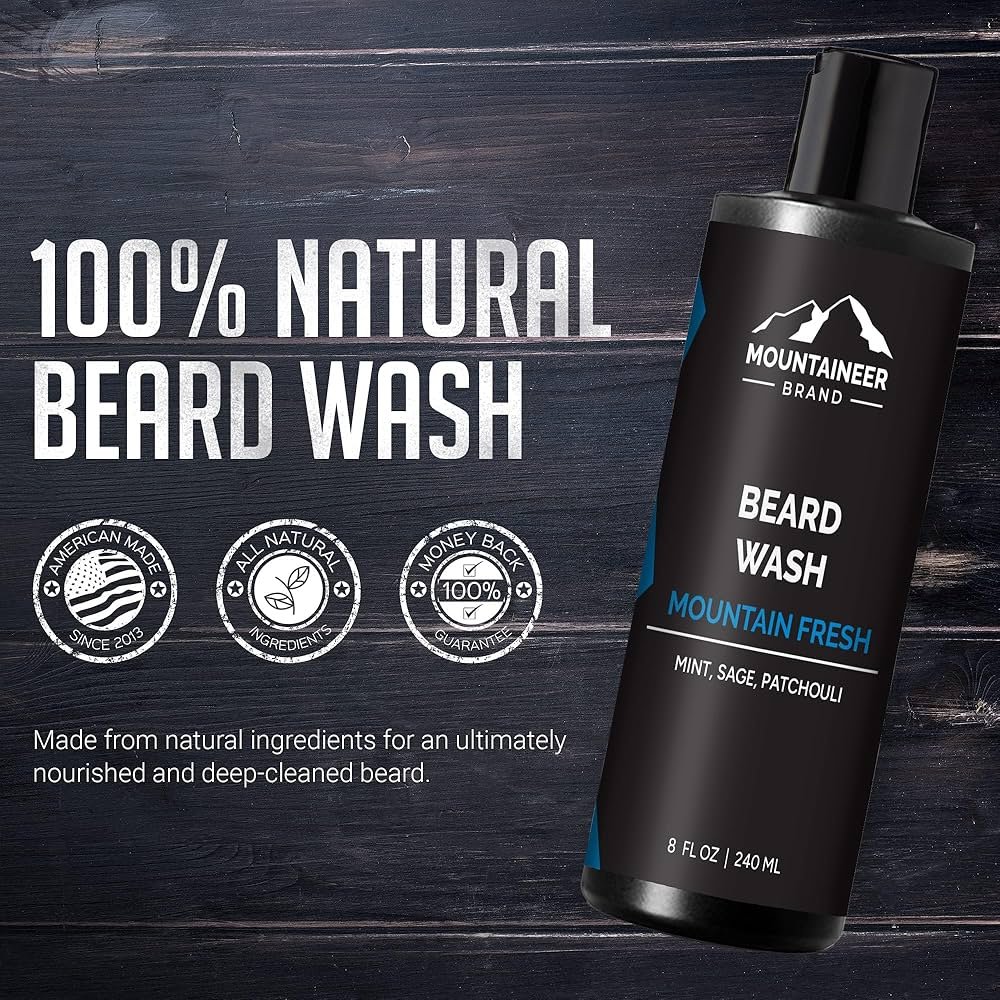
Finding the right beard wash for sensitive skin can make the difference between constant irritation and a clean, comfortable beard. This guide breaks down how all-natural beard wash helps reduce allergens and protect your skin.
In This Guide
- Most conventional beard washes contain sulfates, parabens, and synthetic fragrances — ingredients that strip natural oils and trigger skin irritation, dryness, and allergic reactions.
- All-natural beard washes use plant-based cleansers and natural moisturizers like aloe vera, jojoba oil, and coconut oil to clean and hydrate without disrupting your skin barrier.
- “All-natural” does not automatically mean allergen-free — certain essential oils and botanical extracts can still cause reactions in sensitive skin types.
- Switching to a natural beard wash can reduce itchiness, beardruff, and irritation — but knowing how to read ingredient labels is the key to finding a product that actually works for your skin.
- There’s a right and wrong way to wash your beard — and most men are unknowingly making their skin sensitivity worse with their current routine.
Your beard wash could be silently wrecking your skin — and most men have no idea it’s happening.
The grooming aisle is packed with products that look premium but are loaded with ingredients that do more harm than good. If you’ve been dealing with persistent beard itch, flaky skin underneath your beard, or redness that won’t quit, the product you’re using to clean your beard is the most likely culprit. Barbudo Beard Products has built its entire wash line around avoiding exactly these kinds of problematic ingredients, and understanding why matters more than most men realize.
Your Beard Wash Might Be the Problem

Most men treat beard wash like it’s interchangeable with any other soap. It isn’t. The skin beneath your beard is different — it’s more prone to dryness, more sensitive to product buildup, and harder to rinse thoroughly. When you repeatedly apply a wash loaded with harsh surfactants and synthetic additives to that skin, you create a cycle of irritation that’s genuinely difficult to break without changing what you’re using.
How Conventional Beard Washes Disrupt Your Skin Barrier
Your skin barrier is a thin protective layer made up of natural oils, dead skin cells, and lipids. Its entire job is to keep moisture in and irritants out. Conventional beard washes — especially those built around sodium lauryl sulfate (SLS) or sodium laureth sulfate (SLES) — chemically strip this barrier every time you wash. The result isn’t just temporary dryness. Repeated stripping causes micro-damage that makes your skin increasingly reactive to everyday allergens like pollen, dust, and even the water you wash with.
The deeper issue is that your skin never fully recovers between washes when this cycle continues. It produces excess sebum trying to compensate, which can clog follicles and actually slow beard growth. Switching to a gentler, natural cleanser breaks this cycle — sometimes within just a few weeks.
Why Synthetic Fragrances Are the #1 Allergen Culprit
Fragrance is listed as a single ingredient on product labels, but it can legally represent a blend of up to hundreds of individual chemical compounds — none of which need to be disclosed. According to the American Contact Dermatitis Society, fragrance is one of the most common causes of allergic contact dermatitis in grooming products. For beard care specifically, this is a serious problem because the product sits against your face for hours after application. For more information on maintaining a healthy grooming routine, check out this men’s beard care guide.
Symptoms triggered by synthetic fragrance aren’t always obvious. You might notice a slow-building redness, intermittent itching, or a dry patch that keeps coming back in the same spot under your jawline. Many men treat these symptoms with moisturizer without ever identifying the actual source. Eliminating synthetic fragrance from your beard wash is often the single biggest improvement you can make.
Common Synthetic Fragrance Compounds to Watch For:
Compound Name Found In Known Effect Linalool Scented beard washes, balms Oxidizes on skin, triggers contact allergy Limonene Citrus-scented products Common sensitizer, especially when oxidized Cinnamal Spiced or warm-scented washes Strong allergen, causes redness and swelling Eugenol Clove or woodsy fragrances Irritant and allergen in concentrated form Geraniol Floral-scented grooming products Moderate sensitizer on broken skin
The Link Between Sulfates, Parabens, and Skin Sensitivity
Sulfates generate that satisfying lather most men associate with feeling “clean,” but that foam comes at a cost. SLS and SLES are aggressive surfactants that don’t distinguish between dirt and the natural sebum your skin needs. Parabens — preservatives like methylparaben and propylparaben — extend shelf life but are well-documented irritants in men with sensitive or eczema-prone skin. Together, these two ingredient categories are the primary reason so many men experience chronic beard discomfort without ever connecting it to their wash.
What All-Natural Beard Wash Actually Contains
Natural beard washes are formulated around a completely different philosophy. Rather than stripping and then trying to restore, they clean gently while actively preserving the moisture and oil balance your skin already maintains. The ingredients do double duty — cleansing and conditioning at the same time. For more information on maintaining a healthy beard, consider reading about paraben-free beard softeners that are ideal during allergy season.
Understanding what’s actually inside these products helps you evaluate them honestly rather than just trusting a “natural” label.
Why Use Beard Wash for Sensitive Skin
Plant-Based Cleansers vs. Chemical Surfactants
The most common plant-based cleanser used in natural beard washes is decyl glucoside — a mild surfactant derived from coconut and corn glucose. Unlike SLS, it doesn’t ionically bond with skin proteins, meaning it removes surface dirt and oil without disrupting the lipid layer underneath. Coco-glucoside is another popular option with similar properties and an exceptionally low irritation profile.
The trade-off is that these cleansers produce less lather. That takes some adjustment mentally, because most men equate foam with effectiveness. But cleansing power has nothing to do with bubble production — it’s about how a surfactant interacts with oil and water at a molecular level.
Here’s a side-by-side comparison of how these surfactant types differ in real-world use:
- Sodium Lauryl Sulfate (SLS): High lather, aggressive oil stripping, known to disrupt skin barrier and trigger irritation in sensitive skin types
- Sodium Laureth Sulfate (SLES): Slightly milder than SLS, still a synthetic surfactant with documented sensitization potential
- Decyl Glucoside: Low lather, gentle cleansing, biodegradable, and rated as non-irritating by the Environmental Working Group (EWG)
- Coco-Glucoside: Coconut-derived, very mild, often used in baby and sensitive-skin formulations
- Sodium Cocoyl Isethionate: Derived from coconut fatty acids, produces moderate lather while remaining skin-compatible
Once you understand what you’re actually washing with, the difference between natural and conventional products becomes impossible to ignore.
Natural Moisturizers: Aloe Vera, Coconut Oil, and Jojoba
The best all-natural beard washes don’t just clean — they deliver moisture while rinsing. Aloe vera gel is one of the most effective at this, carrying a high water content that hydrates the skin surface without feeling heavy or leaving residue. Coconut oil contributes medium-chain fatty acids (primarily lauric acid) that have natural antimicrobial properties, helping to reduce the bacteria buildup that causes beard odor and skin breakouts. Jojoba oil — technically a liquid wax — closely mirrors human sebum in molecular structure, which is why it absorbs without clogging pores and is one of the safest moisturizing ingredients for facial skin. Choosing the right beard wash for sensitive skin helps prevent long-term irritation and dryness.
Essential Oils: Benefits and Allergy Risks to Watch For
Essential oils are where natural formulations get complicated. Tea tree oil, peppermint, lavender, and eucalyptus all offer genuine benefits — antimicrobial action, scalp stimulation, and anti-inflammatory effects. But in concentrations above 1–2%, several of these same oils become sensitizers. Tea tree oil at high concentrations is a documented allergen. Peppermint can cause contact dermatitis in men with menthol sensitivity. The benefit of essential oils in beard wash is real, but the concentration and your individual sensitivity both matter significantly.
All-Natural Does Not Always Mean Allergen-Free
This is the part of natural grooming that doesn’t get talked about enough. The word “natural” triggers an automatic association with safe, gentle, and universally tolerated — but botanicals are some of the most potent allergens on earth. Poison ivy is natural. So is poison oak. The source of an ingredient doesn’t determine its allergen potential; your immune system’s response to it does. Understanding this distinction is what separates smart natural grooming from just swapping one problematic product for another.
Common Natural Ingredients That Still Trigger Reactions
Natural Ingredients With Known Allergen Potential:
Ingredient Commonly Found In Potential Reaction Tea Tree Oil Natural beard washes, acne treatments Contact dermatitis at concentrations above 1% Lavender Oil Scented natural grooming products Allergic reaction in linalool-sensitive individuals Chamomile Extract Soothing beard washes and balms Cross-reactive with ragweed allergies Peppermint Oil Cooling beard washes Contact dermatitis in menthol-sensitive skin Wheat Protein Strengthening beard conditioners Reactions in gluten-sensitive individuals Coconut Oil Nearly all natural beard products Comedogenic for some; rare IgE-mediated allergy
Chamomile is one of the most overlooked allergens in natural grooming. It belongs to the Asteraceae plant family — the same family as ragweed, chrysanthemums, and daisies. If you experience seasonal hay fever triggered by ragweed pollen, there’s a meaningful chance your immune system will cross-react to chamomile extract on your skin. This reaction typically presents as redness, swelling, or intense itching along the jawline and neck — areas where beard wash has the most contact time.
Coconut oil deserves its own mention because it appears in nearly every natural beard product on the market. For most men it’s completely fine, but it is technically comedogenic — meaning it can block pores in men whose skin is prone to that. True IgE-mediated coconut allergy is rare, but it exists. If you’ve tried multiple natural beard washes and still experience breakouts or cystic irritation beneath the beard, coconut oil is worth eliminating as a variable.
Wheat-derived proteins like hydrolyzed wheat protein are often added to beard washes for their strengthening and conditioning effects on beard hair. For men with gluten sensitivity or wheat allergies, topical exposure to these proteins can trigger localized skin reactions — and in rare cases, more systemic responses. Always check for these ingredients if you have a known wheat allergy, even in products marketed as natural or organic. For more information on maintaining a healthy beard, consider reading this men’s beard care guide.
How to Patch Test a New Beard Wash Correctly
Apply a small amount of the product to the inside of your wrist or behind your ear — not directly on your beard area first. Leave it on for 24 to 48 hours without washing it off, and watch for redness, swelling, itching, or any change in skin texture. If no reaction appears after 48 hours, the product is generally safe for broader use. If you do notice a reaction, document which ingredients are in the product so you can identify the specific trigger and avoid it in future formulations.
How to Read a Beard Wash Ingredient Label
The ingredient label on a beard wash is one of the most useful tools you have — and most men never look at it. Cosmetic ingredient lists follow a standardized format regulated by the International Nomenclature of Cosmetic Ingredients (INCI) system, which means every product sold in regulated markets lists ingredients in a consistent, comparable way. Once you understand the basic rules, you can evaluate any product in about 60 seconds.
Ingredients Listed First Are Present in the Highest Amounts
Cosmetic ingredients are listed in descending order by concentration. Whatever appears first makes up the largest percentage of the product — usually water (listed as Aqua) followed by the primary cleanser or base ingredient. The further down the list an ingredient appears, the lower its concentration in the final formula.
This matters enormously when evaluating natural claims. A product might advertise argan oil prominently on its packaging, but if argan oil appears near the bottom of a 25-ingredient list, it’s present in trace amounts — likely below 1% — and contributing almost nothing functionally. The ingredients that actually affect your skin are the ones in the first five to eight positions on the label.
Red Flag Ingredients to Avoid on Any Label
Regardless of how a product is marketed, these are the specific ingredients worth avoiding if you have sensitive or reactive skin: sodium lauryl sulfate (SLS), sodium laureth sulfate (SLES), methylparaben, propylparaben, butylparaben, synthetic fragrance (listed simply as Parfum or Fragrance), formaldehyde-releasing preservatives like DMDM hydantoin and imidazolidinyl urea, polyethylene glycols (PEGs), and benzalkonium chloride. Any one of these appearing in the first half of an ingredient list is a strong signal to look elsewhere.
What Hypoallergenic and Fragrance-Free Labels Actually Mean
“Hypoallergenic” is a marketing term with no standardized legal definition in the United States. It means the manufacturer believes their product is less likely to cause allergic reactions — but there is no required testing or certification behind that claim. “Fragrance-free” is more meaningful: it indicates no fragrance compounds were intentionally added. However, it does not mean the product has no scent, because some base ingredients like coconut oil and shea butter carry a natural mild odor. “Unscented,” by contrast, can actually mean fragrance was added to mask the natural smell of other ingredients — which is the opposite of what sensitive-skin users want. For more information on products suitable for sensitive skin, check out this cruelty-free beard styling kit.
Certifications Worth Looking For on Natural Products
Third-party certifications provide a meaningful layer of verification that marketing claims alone cannot. Look for COSMOS Organic or COSMOS Natural certification (governed by ECOCERT), NSF/ANSI 305 certification for personal care products containing organic ingredients, and USDA Organic certification on specific ingredient claims. The Environmental Working Group’s (EWG) Verified mark indicates a product has been screened against their database of over 4,000 ingredients of concern. These certifications don’t guarantee zero allergen risk, but they do confirm the product has been independently reviewed against a defined safety standard.
Beard Wash Routine for Sensitive or Allergy-Prone Skin
Getting your routine right matters just as much as choosing the right product. Even the gentlest all-natural beard wash can cause problems if you’re using it incorrectly — too frequently, with water that’s too hot, or without a proper follow-up routine to restore moisture. Here’s how to build a routine that actively supports your skin rather than working against it.
1. Wash 2–3 Times Per Week With Lukewarm Water
Daily beard washing is one of the most common mistakes men with sensitive skin make. Even with a gentle natural formula, daily washing reduces your skin’s sebum levels faster than they can be naturally replenished — leaving the skin underneath your beard dry, tight, and more reactive. Two to three washes per week gives your skin barrier adequate recovery time between cleansing cycles.
Water temperature is a variable that gets ignored almost entirely. Hot water increases blood vessel dilation and skin permeability — meaning it opens your skin up to absorb more of whatever you’re washing with, including any irritants that might be present. It also accelerates moisture loss after washing. Lukewarm water, between 98–105°F, is the effective range for cleaning without triggering inflammatory responses in sensitive skin.
On non-wash days, a simple warm water rinse is enough to remove surface debris and food particles without disrupting your oil balance. Your beard doesn’t need a full cleanse every day — it needs consistent hydration and occasional targeted cleaning.
Timing also plays a role. Washing your beard at night rather than in the morning gives your skin several hours to recover and re-balance before being exposed to environmental allergens, UV radiation, and pollution during the day. It’s a minor adjustment that makes a consistent difference in how your skin feels over time.
Weekly Beard Wash Schedule for Sensitive Skin:
Day Routine Notes Monday Full natural beard wash Follow with beard oil and optional balm Tuesday Warm water rinse only Pat dry gently, apply beard oil Wednesday Warm water rinse only Apply beard oil if skin feels dry Thursday Full natural beard wash Follow with beard oil and optional balm Friday Warm water rinse only Pat dry gently, apply beard oil Saturday Full natural beard wash Good day for a deeper conditioning treatment Sunday Rest day — no wash or rinse needed Let your skin’s natural oils fully rebalance
2. Massage Into Skin Beneath the Beard, Not Just the Hair
Most men apply beard wash the same way they’d apply shampoo — working it through the visible hair. But the real target is the skin underneath. Beardruff, folliculitis, and persistent itching all originate at the skin level, not in the beard hair itself. Use your fingertips (not your nails) to work the wash down through the beard in small circular motions, making direct contact with the skin beneath. This also stimulates blood flow to the follicles, which supports healthier beard growth over time.
Spend at least 60 seconds on the massage phase rather than just lathering and rinsing immediately. Natural cleansers based on glucosides need adequate contact time to effectively lift sebum buildup and dead skin cells from the follicle openings. A rushed 10-second application followed by an immediate rinse isn’t giving the active ingredients enough time to do their job — which is a common reason men feel their natural beard wash “doesn’t clean as well” as conventional options.
3. Follow With a Non-Comedogenic Beard Oil
After washing and gently patting your beard dry, your skin is at its most receptive to absorbing moisture — and also at its most vulnerable to dryness. Applying a non-comedogenic beard oil within two to three minutes of washing locks in hydration before moisture can evaporate from the skin surface. Jojoba oil and argan oil are the gold standard here: both have comedogenic ratings of zero to one, meaning they absorb cleanly without blocking follicles. Avoid beard oils built around coconut oil as a primary carrier if you’re prone to clogged pores — despite being natural, it carries a higher comedogenic rating of four.
Two to four drops is enough for most beard lengths. Warm the oil between your palms first, then press it into the skin beneath your beard using the same fingertip technique from your wash step. Work outward through the hair from root to tip. This approach conditions both the skin and the beard hair in a single application without leaving the surface greasy.
4. Apply Fragrance-Free Beard Butter to Lock in Moisture
Beard butter sits on top of the beard oil layer and acts as a sealant, slowing moisture evaporation throughout the day. For sensitive skin, the key specification here is fragrance-free — most commercial beard butters are heavily scented, which reintroduces exactly the kind of fragrance exposure you’ve worked to eliminate from your wash step. Look for formulas built around shea butter, mango butter, or cocoa butter as the primary base, with no added Parfum or Fragrance on the ingredient list. A pea-sized amount worked through the beard adds a light hold, reduces frizz, and keeps the moisture you’ve built up from dissipating within the first few hours of your day.
Warning Signs Your Beard Wash Is Causing Irritation
These symptoms don’t always appear immediately after switching to a new product — sometimes they develop slowly over days or weeks of repeated exposure. Knowing what to look for stops the damage cycle before it becomes a chronic issue. For more information on maintaining a healthy beard, check out our men’s beard care guide. Watch for these specific signals:
- Persistent redness or flushing along the jawline, neck, or cheeks that appears within 30 minutes of washing and takes hours to fully subside
- Flaking or white buildup at the base of beard hairs that returns within 24–48 hours of washing — this is beardruff caused by a disrupted skin barrier, not poor hygiene
- Tightness or dryness immediately after rinsing that moisturizer only temporarily relieves
- Recurring itchiness in the same spot — especially under the jaw or along the upper lip — that intensifies after washing rather than before
- Papules or small bumps appearing along the beard line within 12–24 hours of washing, which may indicate follicular irritation from a surfactant or fragrance compound
- Increased beard hair breakage or brittleness despite regular conditioning — a sign that the wash is stripping structural proteins from the hair shaft along with surface dirt
If you identify two or more of these symptoms after using a specific product, discontinue use immediately and allow your skin at least one week to recover before introducing a replacement. Continuing to use an irritating product while trying to counteract the effects with moisturizer is a common but ineffective approach — the source of the problem needs to be removed, not managed around. For further guidance, consider reading beard care for sensitive skin tips to avoid irritation and allergies.
Smarter Grooming Starts With Safer Ingredients
Every decision you make about what goes on your beard and the skin beneath it compounds over time — for better or worse. Swapping a sulfate-heavy conventional wash for a genuinely well-formulated all-natural option isn’t just a trend-driven upgrade; it’s a practical move that directly reduces your daily allergen load, preserves the skin barrier that protects your face, and creates conditions where your beard can actually grow and look its best. The information exists to make that switch confidently — you just need to know where to look and what to look for on the label. For those new to beard care, consider exploring beard grooming kits for beginners to get started.
Frequently Asked Questions
Can all-natural beard wash still cause an allergic reaction?
Yes, all-natural beard wash can still cause an allergic reaction. Natural does not mean hypoallergenic — botanical ingredients like tea tree oil, lavender, chamomile, and even coconut oil are known allergens for certain individuals. The origin of an ingredient doesn’t determine your immune system’s response to it. Always patch test a new product on the inside of your wrist for 24–48 hours before applying it directly to your beard area, regardless of how natural or gentle the formula is marketed to be.
How long does it take to see improvement after switching to natural beard wash?
Most men notice a measurable reduction in itchiness, dryness, and flaking within two to four weeks of consistently using a well-formulated natural beard wash. The skin beneath your beard needs time to stop the overproduction of sebum that was compensating for repeated stripping, and for the skin barrier to gradually rebuild its lipid layer.
The first week after switching can occasionally feel like things are getting worse before they get better — especially if your skin was deeply stripped by previous product use. This is a temporary adjustment period, not a sign the new product is wrong for your skin. Stick with it through at least three to four full weeks before drawing a conclusion.
Results also depend heavily on the rest of your routine. If you’re using a natural beard wash but following it with a synthetic-fragrance-heavy beard oil or balm, you’re reintroducing the irritants you just removed. A full routine audit — wash, oil, and balm — gives you the clearest picture of what’s actually working and what isn’t.
Is fragrance-free beard wash the same as unscented beard wash?
No, fragrance-free and unscented are not the same thing, and the distinction matters significantly for sensitive skin. Fragrance-free means no fragrance compounds were intentionally added to the formula. The product may still have a mild natural scent from its base ingredients — shea butter, for example, has a faint nutty odor — but no synthetic or natural fragrance blend was used.
Unscented, on the other hand, can mean that a masking fragrance was added specifically to neutralize the natural smell of other ingredients. That masking agent is still a fragrance compound, still present in the formula, and still capable of triggering a reaction in fragrance-sensitive skin. For men managing contact dermatitis or fragrance allergies, fragrance-free is always the safer choice over unscented.
How often should men with sensitive skin wash their beard?
Men with sensitive skin should wash their beard two to three times per week, not daily. Daily washing — even with a gentle natural formula — reduces sebum levels faster than the skin can naturally replenish them, which leads to a cycle of dryness, compensatory oil overproduction, and increased skin reactivity.
On non-wash days, a warm water rinse is sufficient to remove surface debris without disrupting the oil balance you’ve worked to maintain. If your lifestyle involves heavy physical activity or significant sweat exposure, a gentle water-only rinse after workouts is appropriate — but reserve a full wash for your scheduled two to three weekly sessions unless specific circumstances require otherwise.
Do I still need beard oil if I use an all-natural beard wash?
Yes, beard oil is still necessary even when using an all-natural beard wash. Even the gentlest cleansers remove some level of natural sebum from the skin during the washing process. Beard oil replaces and supplements that moisture immediately after washing, before the skin’s own oil production catches up. Skipping it — especially in the two to three minutes directly after washing — leaves your skin in a temporary moisture deficit that compounds over time.
The type of beard oil you choose matters as much as whether you use it. For sensitive or allergy-prone skin, single-ingredient carrier oils are the safest starting point because they eliminate the variable of multiple potential allergens in a blended formula. Jojoba oil and argan oil are consistently the most well-tolerated options across a wide range of skin types.
If you’ve been experiencing breakouts or follicular irritation specifically after applying beard oil, the issue may be comedogenic ingredients in your current oil rather than beard oil as a category. Consider these low-comedogenic options as a replacement:
- Jojoba Oil — Comedogenic rating: 0–1. Closely mirrors human sebum, absorbs quickly, and is extremely well-tolerated by sensitive skin
- Argan Oil — Comedogenic rating: 0. Rich in vitamin E and oleic acid, anti-inflammatory, and leaves no greasy residue
- Hemp Seed Oil — Comedogenic rating: 0. High in linoleic acid, which has been shown to support skin barrier repair in studies reviewed by dermatology journals
- Rosehip Seed Oil — Comedogenic rating: 1. Contains natural retinoids and omega fatty acids that support skin cell turnover beneath the beard
- Squalane (plant-derived) — Comedogenic rating: 0–1. Exceptionally stable, lightweight, and compatible with virtually all skin types including rosacea-prone skin
Pairing any of these with your natural beard wash creates a complete, low-irritant routine from cleanse to finish. The goal is a system where every product you apply actively supports your skin rather than creating another variable you have to manage around.
Once that foundation is in place, beard grooming stops being a source of frustration and becomes something that genuinely works in your favor — cleaner skin, healthier growth, and a beard that actually looks the way you’ve been working toward.
Barbudo Beard Products specializes in natural men’s grooming formulations — from allergen-conscious beard washes to fragrance-free conditioning oils — built specifically for men who want effective results without the ingredient compromises.
Leave a Reply