
BestProductsForMen.org participates in affiliate programs, which means we may earn a commission if you click on a link and make a purchase. This comes at no additional cost to you. We only recommend products we personally trust, use, or believe will provide value to our readers.
Our goal is to provide honest, helpful reviews and recommendations so you can make informed decisions.
Mood tracking apps for introverted men are one of the simplest ways to improve mental health, reduce overthinking, and build emotional awareness.
- Mood-tracking apps give introverted men a private, structured way to process emotions without the pressure of verbal communication.
- Apps like Moodfit use data and pattern recognition — the exact kind of system-based thinking that clicks for analytical personalities.
- Research published in JMIR Mental Health confirms that mood-tracking tools help users identify emotional triggers and behavioral patterns over time.
- Mood trackers complement therapy but don’t replace it — knowing when you need both is a critical part of the journey.
- Keep reading to find out exactly how to build a tracking habit that actually sticks — and the one setup mistake that kills progress before it starts.
Most introverted men don’t need a therapist telling them to “open up more” — they need a system that works with how their brain already operates.
Tracking your mood privately and consistently is one of the most practical mental health tools available today — and it fits naturally into the way introverted men already think. This article breaks down exactly why these apps work, which one stands out, and how to use one without it becoming another abandoned app on your phone.
Most Men Don’t Need to “Open Up” — They Need a System
The standard mental health advice aimed at men — talk more, share your feelings, be vulnerable — assumes that the barrier is willingness. For introverted men, that’s rarely the real problem. The real problem is that verbal emotional expression often feels unnatural, performative, and disconnected from how they actually process the world. A system that captures emotional data quietly, consistently, and privately fits far better than an open-ended conversation ever could.
Why Introverted Men Struggle with Traditional Mental Health Advice
Introversion isn’t a disorder or a deficiency — it’s a cognitive style. Introverted men tend to process experiences internally, think before speaking, and recharge through solitude rather than social interaction. Traditional mental health support, built largely around verbal therapy and group sharing, often runs directly against these tendencies, creating friction that makes it easy to disengage entirely.
Internal Processing vs. Talking It Out
When an introverted man experiences stress, anxiety, or low mood, his first instinct is rarely to call someone. It’s to sit with it, analyze it, and figure it out alone. That internal processing style is powerful — but without structure, it can spiral into rumination, where the same thoughts loop without resolution. Mood-tracking apps give that internal process a container: somewhere to put the observation so it stops circling.
Why “Just Be More Open” Fails Introverted Men
Telling an introverted man to “just open up” is like telling someone who’s never run before to go run a marathon — technically possible, but practically useless without a structured path. Emotional vulnerability doesn’t come from advice; it develops through repeated low-stakes exposure over time. Logging a mood once a day is that low-stakes exposure. It builds emotional literacy quietly, without the social pressure that shuts the process down before it starts.
The Link Between Introversion and Emotional Suppression
Emotional suppression — actively pushing down or ignoring emotional states — is more common in men broadly, but introverted men face a specific compounding factor: their natural inward focus can make it easy to intellectualize emotions rather than actually process them. Over time, this creates a gap between what’s happening internally and what a person can articulate or act on. That gap is where mood-tracking apps do their most important work.
The pattern is subtle but damaging. A man might notice he’s irritable every Sunday evening but never connect it to dreading Monday’s social demands at work. A mood tracker surfaces that connection without requiring him to talk about it with anyone.
What Mood-Tracking Apps Actually Do
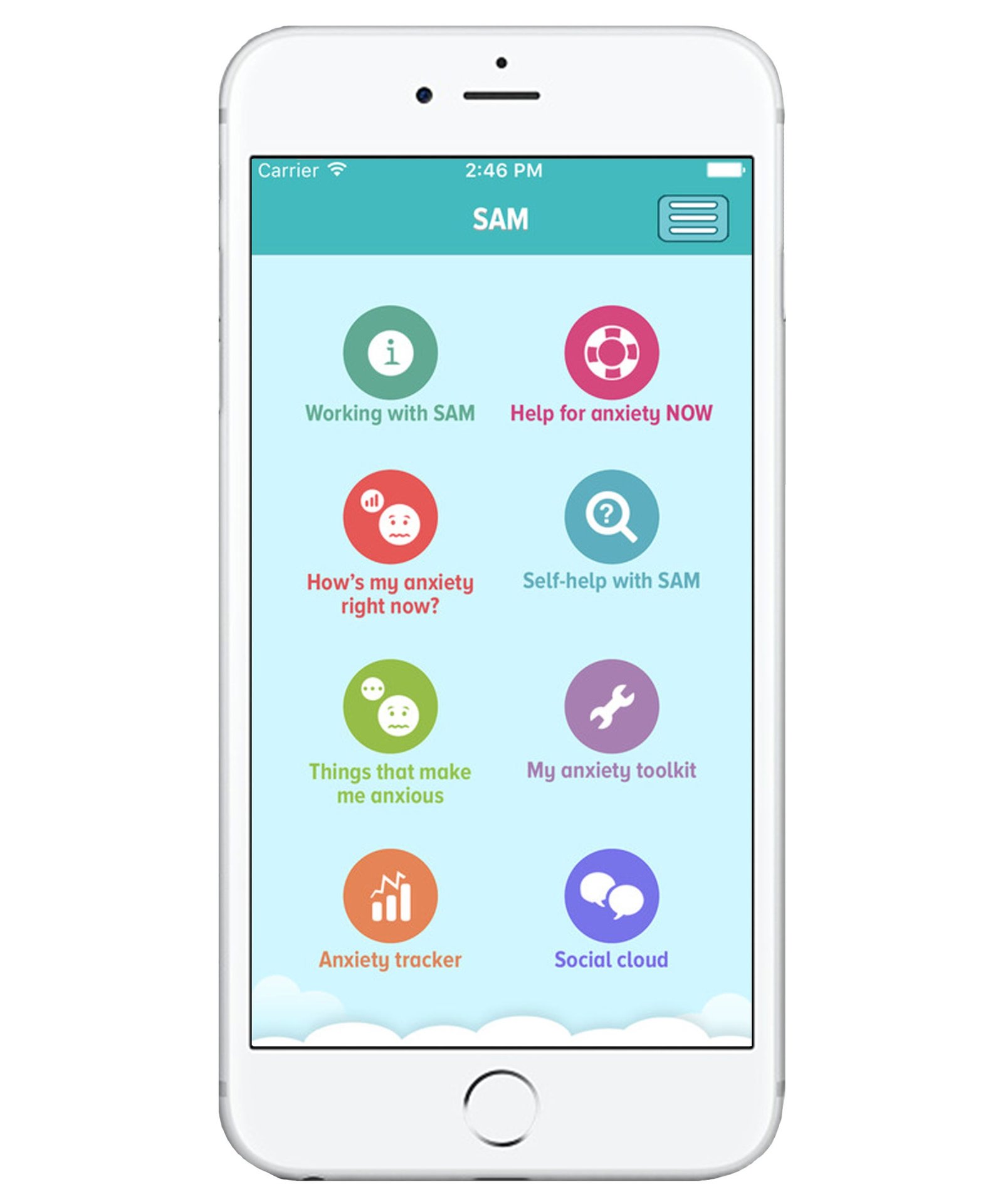
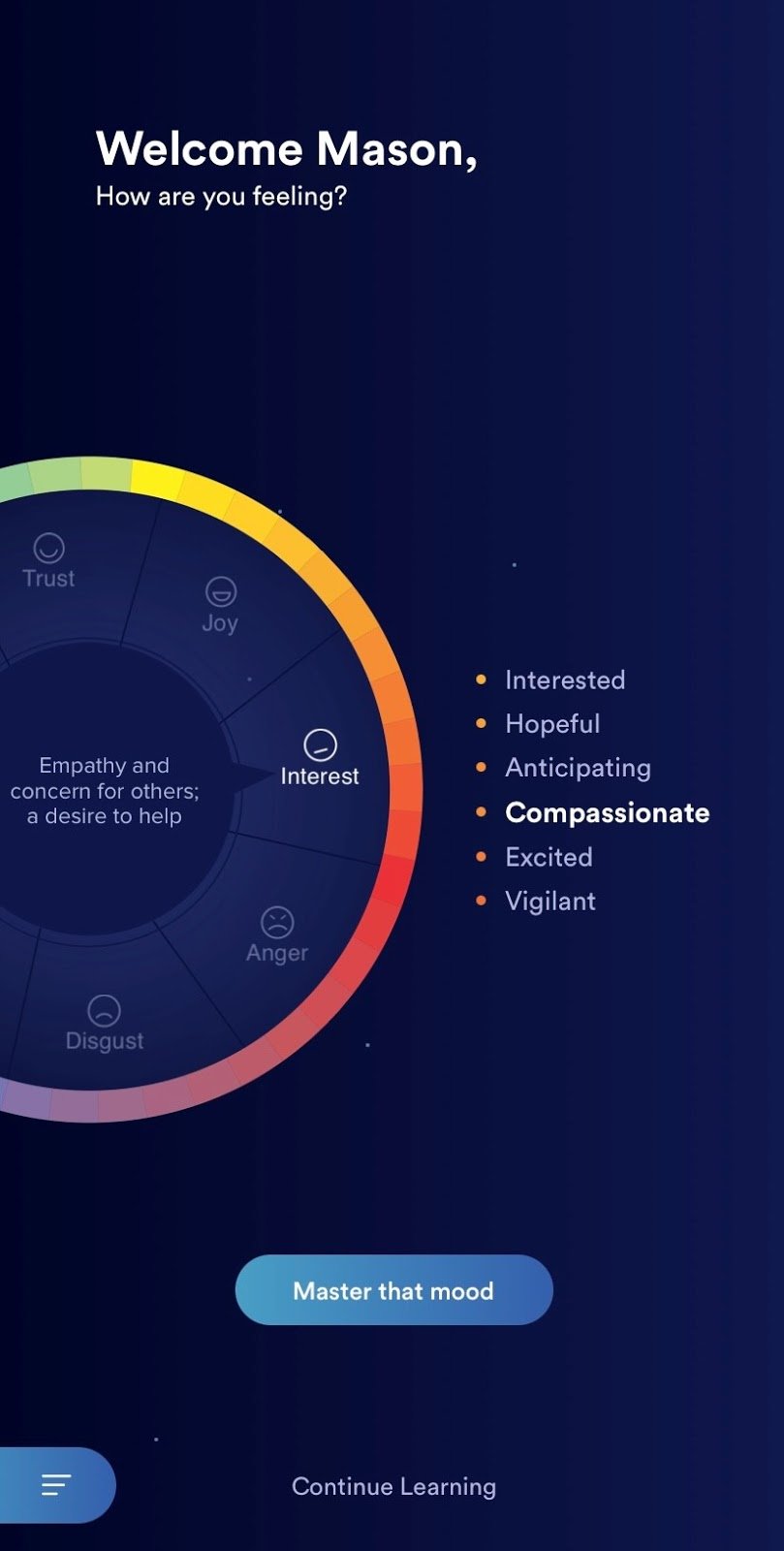
“Mood Tracker Apps For Anxiety …” from www.refinery29.com
At the most basic level, a mood-tracking app lets you log how you feel at regular intervals throughout the day or week. But the real mechanism isn’t the logging — it’s the accumulation. Over days and weeks, individual data points become visible patterns, and visible patterns become actionable insight. That shift from vague emotional noise to structured self-knowledge is exactly what makes these tools effective for men who prefer data over dialogue. For those interested in exploring the best options available, check out this list of best mood tracker apps.
Mobile apps take the concept further than a paper journal ever could. Interactive features, customizable tracking categories, push notification reminders, and built-in analytics turn a simple habit into a genuine mental health dashboard — available privately, on demand, in your pocket. For those interested in enhancing mental clarity, exploring wearable brain stimulators can be a complementary tool.
Logging Emotions Without Needing Words
Most quality mood-tracking apps don’t ask you to write an essay about your feelings. They offer quick-tap emoji scales, sliding intensity meters, and checkbox symptom lists that take under sixty seconds to complete. This low-friction format is critical for introverted men who resist emotional expression when it feels forced or time-consuming. The barrier to entry stays low enough that the habit actually forms.
Apps like Moodfit let users log mood alongside specific factors — sleep quality, exercise, social interaction, nutrition — so the data captured is multidimensional from day one. You’re not just recording “I felt anxious.” You’re building a dataset that eventually shows when, how often, and under what conditions anxiety appears.
How Pattern Recognition Replaces Guesswork
The single most valuable thing a mood-tracking app does is replace emotional guesswork with observable patterns. Without tracking, most people operate on assumptions: “I’m just a stressed person,” or “I always feel worse in winter.” With consistent tracking, those assumptions get tested against real data — and they often turn out to be partially or completely wrong.
Example Pattern Discovery:
A user logs mood for 30 days and notices mood scores consistently drop two points on days following fewer than six hours of sleep — but only on workdays, not weekends. This reveals that the issue isn’t sleep alone; it’s sleep combined with social obligation. That’s a finding no amount of vague introspection would have surfaced as clearly.
This is the kind of insight that changes behavior. Not because someone told you what to do, but because your own data showed you what was actually happening. For analytical, systems-oriented thinkers, that evidence-based self-knowledge is far more motivating than any external advice.
Why Data-Driven Self-Awareness Clicks for Analytical Thinkers
Introverted men frequently score high in analytical thinking — they prefer evidence, systems, and logical frameworks over emotional intuition. Mood-tracking apps speak that language directly. When emotional wellbeing becomes measurable, it becomes manageable. The same mindset used to optimize a workout routine or a budget can now be applied to mental health, which removes the stigma and replaces it with something far more motivating: a problem that can actually be solved.
The Mental Health Benefits Backed by Evidence
Mood-tracking isn’t just a productivity habit dressed up as mental health care — the benefits are real and documented. A 2021 study published in JMIR Mental Health by Schueller, Neary, Lai, and Epstein examined how people actually use mood-tracking apps in practice, finding that users developed clearer awareness of their emotional states and gained more perceived control over their mental health outcomes. That sense of control matters enormously for men who struggle when mental health feels abstract or unmanageable.
The benefits compound over time. Consistent tracking builds what psychologists call emotional granularity — the ability to distinguish between similar emotional states with increasing precision. Instead of just knowing you feel “bad,” you start recognizing the difference between anxious-bad, depleted-bad, and frustrated-bad. Each distinction opens a different door for how to respond.
Identifying Triggers Before They Escalate
One of the most practical mental health benefits of mood tracking is early trigger identification. Most emotional crises don’t arrive without warning — they build gradually through accumulated stressors that go unnoticed until they hit a breaking point. Daily check-ins create a continuous early warning system.
|
Common Trigger |
What It Looks Like in Data |
Actionable Response |
|---|---|---|
|
Poor sleep |
Mood scores drop consistently after <6 hrs sleep |
Prioritize sleep hygiene on high-demand weeks |
|
Social overload |
Anxiety spikes after consecutive social days |
Schedule recovery time proactively |
|
Skipped exercise |
Irritability rises on sedentary days |
Set a minimum movement threshold daily |
|
Work deadline pressure |
Low mood clusters around end-of-month periods |
Reduce discretionary commitments during those windows |
The power here isn’t the trigger itself — it’s the timing. Seeing a pattern three days before it peaks gives you a window to intervene. That’s fundamentally different from reacting after the fact, which is what most men without tracking systems are forced to do.
Mood-tracking apps like Moodfit include dedicated trigger-logging features that let users tag specific life events alongside mood scores. Over time, the app builds a personalized map of what drives emotional highs and lows — something no generic mental health advice can replicate because it’s built entirely from your own data.
Reduced Anxiety Through Predictability and Control
Anxiety thrives in uncertainty — and for introverted men who already spend significant mental energy navigating a world that favors extroversion, unpredictability is a constant drain. Mood tracking introduces a layer of predictability that directly counters that drain. When you can look at two weeks of data and say “my anxiety reliably spikes on Thursday afternoons,” the anxiety itself becomes less threatening because it’s no longer a mystery. You’ve removed the uncertainty, and with it, a significant portion of the fear.
Control — even perceived control — is one of the most powerful anxiety-reduction mechanisms in psychology. Mood-tracking apps hand that control back to the user in a format that requires no external validation, no group discussion, and no vulnerability in front of another person. That’s not a workaround. For many introverted men, it’s the only format that actually works.
Building Emotional Vocabulary Over Time
Most men who struggle to articulate their emotional states aren’t emotionally unavailable — they’re emotionally under-practiced. Emotional vocabulary, like any vocabulary, develops through repeated exposure and use. Every time a mood-tracking app prompts you to select from a range of emotional descriptors — not just “good” or “bad” but calm, irritable, overwhelmed, content, flat, restless — it’s quietly expanding the emotional language available to you. Over months, that expanded vocabulary starts showing up in how you think about and communicate your inner life, often without any deliberate effort.
How Consistent Tracking Supports Better Sleep and Stress Management
Sleep and mood exist in a two-way relationship — poor sleep worsens mood, and poor mood disrupts sleep. Mood-tracking apps that include sleep quality logging, like Moodfit, make this relationship visible by overlaying sleep data with mood scores across time. For introverted men who tend to push through fatigue rather than address it, seeing a clear visual correlation between a run of five-hour nights and a week of low mood scores creates the evidence-based case for behavioral change that telling yourself to “sleep more” never quite does.
Stress management follows the same logic. Lifestyle tracking features — covering exercise, nutrition, caffeine intake, and social load — allow users to build a complete picture of the factors influencing their mental state. When the data shows that three consecutive days of high social demand tanks your mood scores regardless of how well you slept, you have actionable information. You can start protecting recovery time the same way you’d protect any other high-priority commitment.
Mood Trackers vs. Therapy: What Each One Does Best
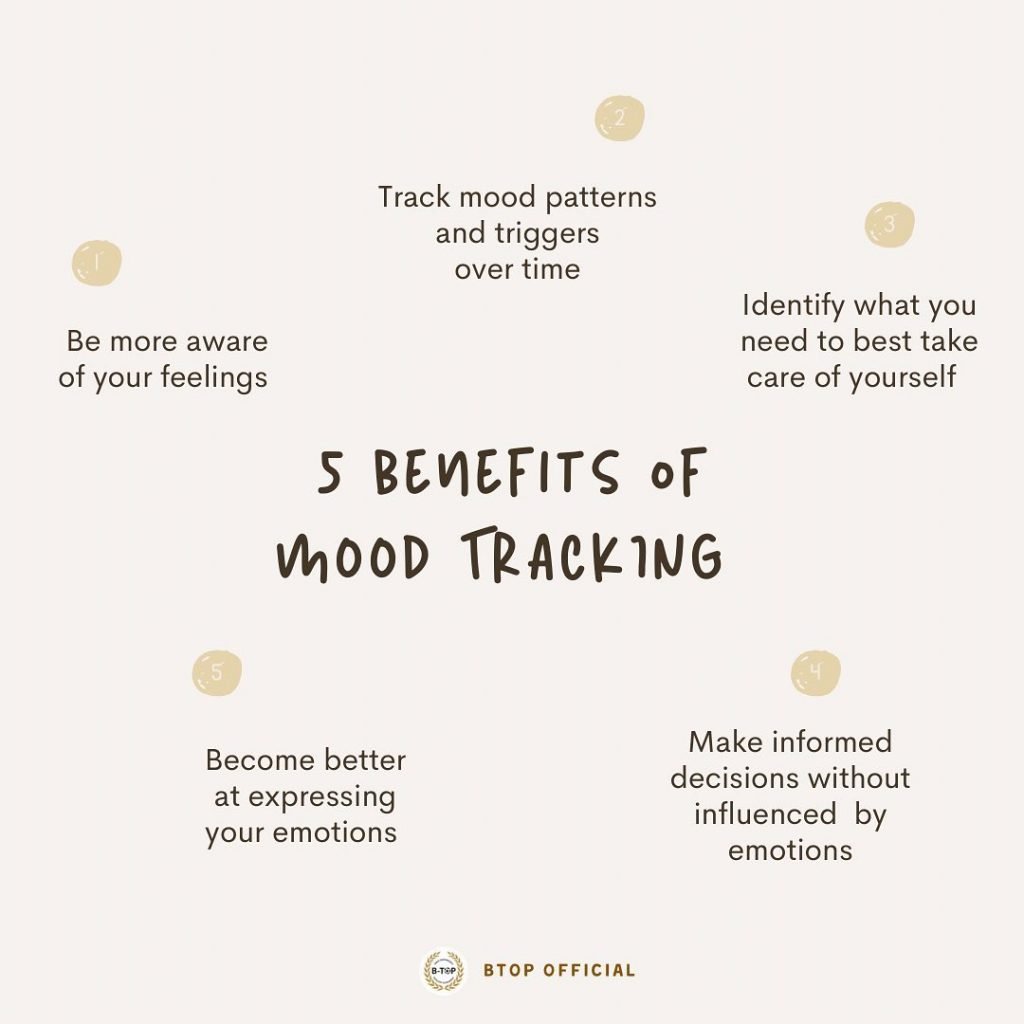
“What’s the point of a mood tracker …” from cheqmark.io
Mood-tracking apps and professional therapy are not competing options — they serve fundamentally different functions. Therapy provides trained clinical insight, interpersonal processing, and treatment for diagnosed conditions. Mood-tracking apps provide continuous self-monitoring, pattern visibility, and day-to-day behavioral support. Conflating the two leads either to over-relying on an app when clinical support is needed, or avoiding apps entirely because they “aren’t real therapy.” Both mistakes carry a cost. For those experiencing seasonal affective disorder, it’s important to understand how these tools can complement each other, especially for introverted men who may find it challenging to seek therapy.
The most effective mental health approach for introverted men usually involves both — with a clear understanding of what each tool is actually designed to do. A mood tracker captures the data. A therapist helps you interpret the patterns that data reveals in a clinical context, especially when those patterns point to something deeper than lifestyle stress.
Where Apps Fall Short Without Professional Support
Mood-tracking apps are powerful self-awareness tools, but they operate entirely within the boundary of what the user can observe about themselves. That boundary has real limits. Apps cannot diagnose conditions, cannot provide crisis intervention, and cannot replicate the relational healing that happens in a therapeutic relationship. When emotional patterns are severe, persistent, or point toward clinical conditions like major depressive disorder, bipolar disorder, or PTSD, an app is not a sufficient response.
There’s also a risk specific to analytical, introverted men: using data collection as a form of avoidance. Tracking becomes a substitute for action — logging the problem feels productive enough that actually addressing it gets delayed. A skilled therapist recognizes and challenges that pattern in ways an app simply cannot.
Watch for these signs that an app alone isn’t enough:
- Mood scores have been consistently low for more than two weeks without identifiable lifestyle triggers
- You’re experiencing intrusive thoughts, panic attacks, or significant sleep disruption
- Daily functioning — work, relationships, basic self-care — is being impaired
- You find yourself tracking obsessively but making no behavioral changes
- The data is revealing patterns you don’t know how to address on your own
How Apps Complement — Not Replace — Therapy
When used alongside therapy, mood-tracking apps significantly increase the value of each session. Instead of spending the first ten minutes of a therapy appointment trying to reconstruct how the past two weeks felt, you arrive with a detailed record — mood scores, identified triggers, sleep patterns, and behavioral notes — that lets the session move immediately into meaningful work. That’s not a small efficiency gain. It fundamentally changes what’s possible in the time available.
Some therapists actively encourage clients to use mood-tracking apps between sessions as a between-session support tool. The continuous data bridges the gap between weekly appointments, keeping the self-monitoring process active on days when no professional support is available — which is most days.
Think of the relationship this way: the app is the instrument panel, and therapy is the navigator. One gives you real-time data; the other helps you decide where to steer based on what that data means.
The Best Mood-Tracking App for Introverted Men Right Now: Moodfit
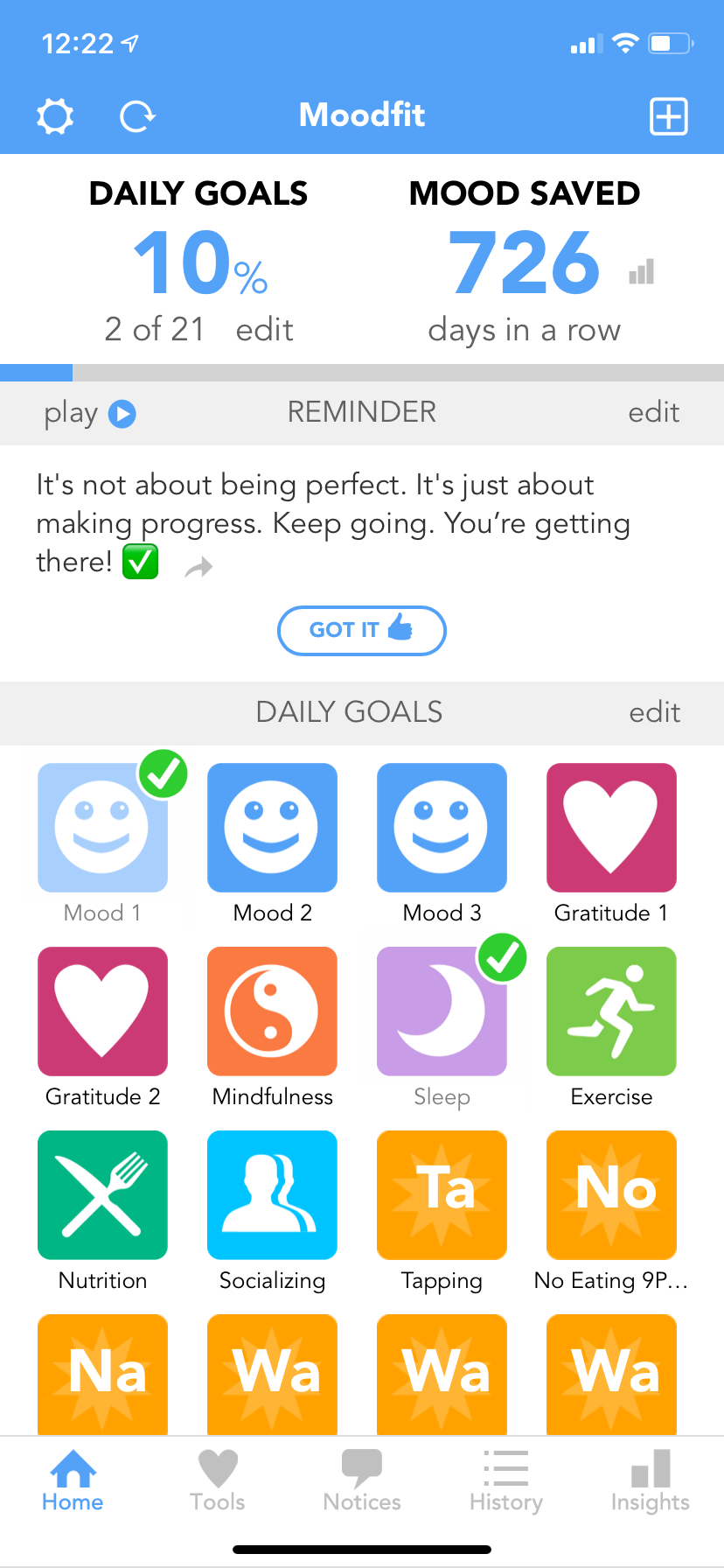
Moodfit consistently earns its position at the top of mood-tracking app recommendations — and for introverted men specifically, it’s the closest thing to a purpose-built mental health system available on a smartphone. Developed with input from mental health professionals, it goes far beyond basic mood logging to offer a comprehensive, customizable toolkit that respects user privacy and rewards analytical engagement with your own data.
The interface is clean and low-friction. There’s no social component, no public sharing, no gamification that turns your mental health into a performance. It’s private by design, which removes one of the biggest psychological barriers that keeps introverted men from engaging with wellness apps in the first place.
The core features that set Moodfit apart include:
- Mood logging with custom factors — Track mood alongside sleep, exercise, nutrition, medication, and any custom variables you define
- Thought records — A CBT-based tool for identifying and reframing negative thought patterns
- Gratitude journaling — Optional, low-pressure prompts that build positive emotional baseline over time
- Breathing and mindfulness exercises — Built-in tools for in-the-moment regulation without leaving the app
- Detailed analytics and charts — Visual pattern recognition across days, weeks, and months
- PHQ-9 and GAD-7 assessments — Clinically validated screening tools for depression and anxiety built directly into the app
- Customizable reminders — Set check-in prompts at whatever frequency and time works for your schedule
What makes this feature set particularly effective for introverted men is the depth of customization available. The app doesn’t impose a fixed emotional framework — it lets you define what you track, when you track it, and how you want to visualize the results. That level of control turns mood tracking from a passive habit into an active, personalized system, which can be especially beneficial for those dealing with seasonal affective disorder.
Why Moodfit Works for Private, Analytical Personalities
Moodfit’s data-first design philosophy aligns directly with how analytical, introverted men approach problem-solving. The app presents emotional information as measurable, chartable, and trend-based — removing the ambiguity that makes traditional emotional reflection feel unproductive. When you can see your anxiety scores plotted against sleep hours over a 30-day period, the connection between behaviors and mental states becomes concrete rather than conceptual. For more information, visit Moodfit’s official website.
Privacy is handled at a foundational level. The app uses password protection and stores data locally on the device rather than on external servers by default, giving users full ownership of their personal mental health information. For men who hesitate to engage with mental health tools out of concern for who might see their data, that architecture removes a real barrier.
Key Features That Make Daily Tracking Stick
The features that drive consistency in Moodfit are the ones that reduce friction at every step. Quick-entry mood logging takes under thirty seconds using an intuitive scale and optional emoji descriptors. Customizable push notifications arrive at user-defined times, so check-ins happen when they actually fit your routine rather than interrupting it. The weekly summary reports deliver insight without requiring the user to dig through raw data — the patterns surface automatically, which keeps engagement high even on low-motivation days.
Free vs. Premium: What You Actually Need
Moodfit’s free tier covers the core functionality most users need to get genuine value: mood logging, basic factor tracking, thought records, breathing exercises, and standard charts. For the majority of introverted men starting out with mood tracking, the free version is entirely sufficient for the first 30 to 60 days while the habit is being built.
The premium tier unlocks advanced analytics, unlimited custom factors, extended historical data access, and more detailed reporting — worth considering once you’ve established a consistent tracking habit and want deeper insight from your data. Starting with free and upgrading based on demonstrated personal value is the practical approach.
How to Build a Mood-Tracking Habit That Sticks
The biggest reason mood-tracking habits fail isn’t lack of motivation — it’s poor setup. Most people download an app, log their mood three times with no clear structure, forget about it for a week, and quietly delete it. The fix isn’t willpower. It’s designing the habit so that consistency happens by default rather than by effort. The following four-step framework is built specifically for the way introverted, systems-oriented men actually operate.
1. Pick One App and Commit for 30 Days
The single biggest setup mistake is trying multiple apps simultaneously or switching apps after a few days because something feels slightly off. Every app switch resets your data history — the very thing that makes mood tracking valuable. Pick one app, commit to 30 days, and treat the first two weeks as data collection rather than insight generation. The patterns you’re looking for need time to form before they become visible.
Moodfit is the strongest starting point for most introverted men, but the right app is ultimately the one you’ll actually use consistently. If a simpler interface helps you build the habit first, start there. The goal in month one is streak-building, not feature optimization. For those struggling with low moods, understanding seasonal affective disorder might provide additional insights. Here’s what that commitment actually looks like in practice:
- Download the app and complete the setup in one sitting — don’t leave it half-configured
- Log your mood at least once per day for 30 consecutive days before evaluating whether it’s working
- Resist the urge to add too many tracking factors in week one — start with mood, sleep, and one other variable
- Do not compare your data to anyone else’s — this system is built entirely around your patterns
- Review your data at the end of week two even if nothing obvious stands out yet
Thirty days of consistent data is the minimum threshold for meaningful pattern recognition. Below that threshold, you’re working with noise. Above it, you start seeing signal — and that’s when the habit stops feeling like effort and starts feeling like a tool you’d miss if it disappeared.
2. Set a Daily Check-In at the Same Time Every Day
Consistency of timing matters as much as consistency of frequency. When your check-in happens at a random time each day, it becomes a decision you have to make — and decisions require willpower that depletes over the course of the day. Anchor the check-in to an existing daily behavior instead. Right after your morning coffee, immediately before lunch, or as part of a wind-down routine before bed are the three timing windows that produce the highest long-term consistency rates.
Evening check-ins have a specific advantage for introverted men: they capture the full-day emotional arc rather than a single moment in time. Logging mood at 9 PM with a five-minute reflection on what drove the day’s emotional high and low produces richer data than a rushed thirty-second entry at 7 AM before your brain has processed anything. Set your app’s notification to your chosen time, and treat the first seven days as non-negotiable habit installation — no skipping, no catch-up logging the next morning.
3. Review Weekly Patterns, Not Just Daily Entries
Daily entries are raw data. Weekly reviews are where the insight lives. Block fifteen minutes at the end of each week — Sunday evening works well for most people — to scroll through the week’s entries and look for two things: what drove your highest mood scores, and what preceded your lowest ones. You’re not analyzing; you’re observing. The goal is to let the pattern surface rather than forcing a conclusion. For those interested in enhancing mental clarity during these reviews, exploring wearable brain stimulators might be beneficial.
Moodfit’s built-in weekly summary charts make this process straightforward — the visual overlay of mood scores against logged factors removes the need to do any mental math. After four weekly reviews, you’ll have enough data to start seeing cross-week patterns that single-week analysis would never reveal. That’s when the tool shifts from a journaling habit into a genuine self-knowledge system.
4. Adjust One Behavior Based on What the Data Shows
This is the step most people skip — and it’s the only step that produces real-world change. After your first full month of tracking, identify the single strongest pattern in your data and make one specific behavioral adjustment in response to it. Not five adjustments. One. If the data shows your mood consistently drops after fewer than seven hours of sleep, the adjustment is a fixed bedtime for the next 30 days. Measure whether it moves the score. This is how the system pays off — not through awareness alone, but through the feedback loop between data, action, and result.
One App, One Check-In, One Small Shift — That Is How This Works
Introverted men don’t need grand emotional gestures or dramatic breakthroughs. They need systems that work quietly, consistently, and privately — delivering real insight without requiring performance. A mood-tracking app, used with the simple framework above, is exactly that kind of system. One app. One daily check-in. One behavioral adjustment per month based on what your data actually shows. That’s the entire method. It’s not complicated — but executed consistently, it produces the kind of self-knowledge that most men spend years trying to develop through trial and error alone.
The difference between men who see results from mood tracking and those who don’t isn’t intelligence or emotional capacity. It’s structure. Build the structure first, and the self-awareness follows automatically — because the data does the heavy lifting that used to require either painful introspection or uncomfortable conversations. That tradeoff is exactly what makes this approach work for the men it was built for.
Frequently Asked Questions
Mood-tracking apps are still a relatively new category of mental health tool, and it’s natural to have questions about whether they’re worth the effort — especially if you’re approaching the concept with healthy skepticism. The questions below address the most common concerns directly, without overselling what these apps can and can’t do.
If your situation involves symptoms that go beyond everyday stress and low mood, always consult a qualified mental health professional. These apps are powerful supportive tools — but clinical needs require clinical care.
Do Mood-Tracking Apps Actually Work for Men Who Hate Talking About Feelings?
Yes — and they work because they don’t require talking about feelings in any traditional sense. Mood-tracking apps replace verbal emotional expression with structured data input: tapping a scale, selecting descriptors, checking boxes. That format bypasses the social discomfort that makes traditional emotional expression feel threatening for many men. The 2021 JMIR Mental Health study by Schueller et al. found that users developed clearer emotional awareness and greater perceived control over their mental health through consistent app use — outcomes achieved entirely through private, structured logging rather than interpersonal disclosure. For those interested in alternative mental health aids, wearable brain stimulators can also provide mental clarity.
Can a Mood-Tracking App Help With Anxiety and Depression?
Mood-tracking apps can meaningfully support the management of anxiety and depression symptoms by surfacing triggers, building emotional awareness, and providing CBT-based tools like thought records — all of which are incorporated into apps like Moodfit. Apps like MoodTools are specifically designed to help users recognize negative thought patterns and include the PHQ-9 depression screening test to flag symptom severity. However, for clinical anxiety disorders or major depressive disorder, professional treatment remains essential. Apps function best as a between-session support tool or an early-intervention system — not a replacement for diagnosis or treatment.
Are Mood-Tracking Apps Private and Secure?
Privacy standards vary by app, so it’s worth checking before you commit to one. Moodfit stores data locally on the device and uses password protection by default, meaning your mental health information stays on your phone rather than being transmitted to external servers. For introverted men who are protective of personal information — especially sensitive emotional data — that local-storage architecture is a significant advantage over cloud-first alternatives. Always review the app’s privacy policy before logging anything sensitive, and opt for apps that explicitly state local storage and no third-party data sharing.
Can Mood Trackers Help Men With Bipolar Disorder?
Mood tracking has a well-established role in bipolar disorder management — consistent logging helps users and their clinicians identify the early warning signs of both manic and depressive episodes before they escalate. Apps like Moodfit, which include customizable factor tracking and detailed historical charts, give men with bipolar disorder a structured way to monitor the mood variability that defines the condition. That said, bipolar disorder is a serious clinical condition that requires professional oversight. Mood-tracking apps in this context work best as a supplementary tool used in conjunction with psychiatric care — not independently. For those interested in exploring other mental health tools, you might consider wearable brain stimulators as a complementary approach.
How Long Before a Mood-Tracking App Shows Noticeable Results?
Most users begin noticing meaningful patterns between two and four weeks of consistent daily logging. The first week is primarily habit installation — the data is too sparse for reliable pattern recognition. By the end of week two, early correlations between behaviors and mood scores typically become visible. By the end of the first month, most users have enough data to make at least one specific behavioral adjustment with confidence. To explore some of the best options available, check out this list of mood-tracking apps.
Deeper insights — the kind that reveal multi-week cycles, seasonal patterns, or the compounding effects of lifestyle factors — generally require three to six months of consistent tracking. This is why the 30-day commitment is the starting benchmark, not the finish line. The tool gets more valuable the longer you use it, because the dataset grows and the patterns become increasingly precise. Understanding these seasonal patterns can be particularly beneficial for introverted men facing unique mental health challenges.
If you’re ready to stop guessing and start actually understanding what drives your emotional state, start building your private mood-tracking system today — the data you collect in the next 30 days could be the clearest picture of your mental health you’ve ever had. To find the right tools, consider exploring some of the best mood tracker apps available.
Exploring the Best Mood Tracking Apps for Introverted Men
BestProductsForMen.org participates in affiliate programs, which means we may earn a commission if you click on a link and make a purchase. This comes at no additional cost to you. We only recommend products we personally trust, use, or believe will provide value to our readers.
Our goal is to provide honest, helpful reviews and recommendations so you can make informed decisions.
Leave a Reply