BestProductsForMen.org participates in affiliate programs, which means we may earn a commission if you click on a link and make a purchase. This comes at no additional cost to you. We only recommend products we personally trust, use, or believe will provide value to our readers.
Our goal is to provide honest, helpful reviews and recommendations so you can make informed decisions.
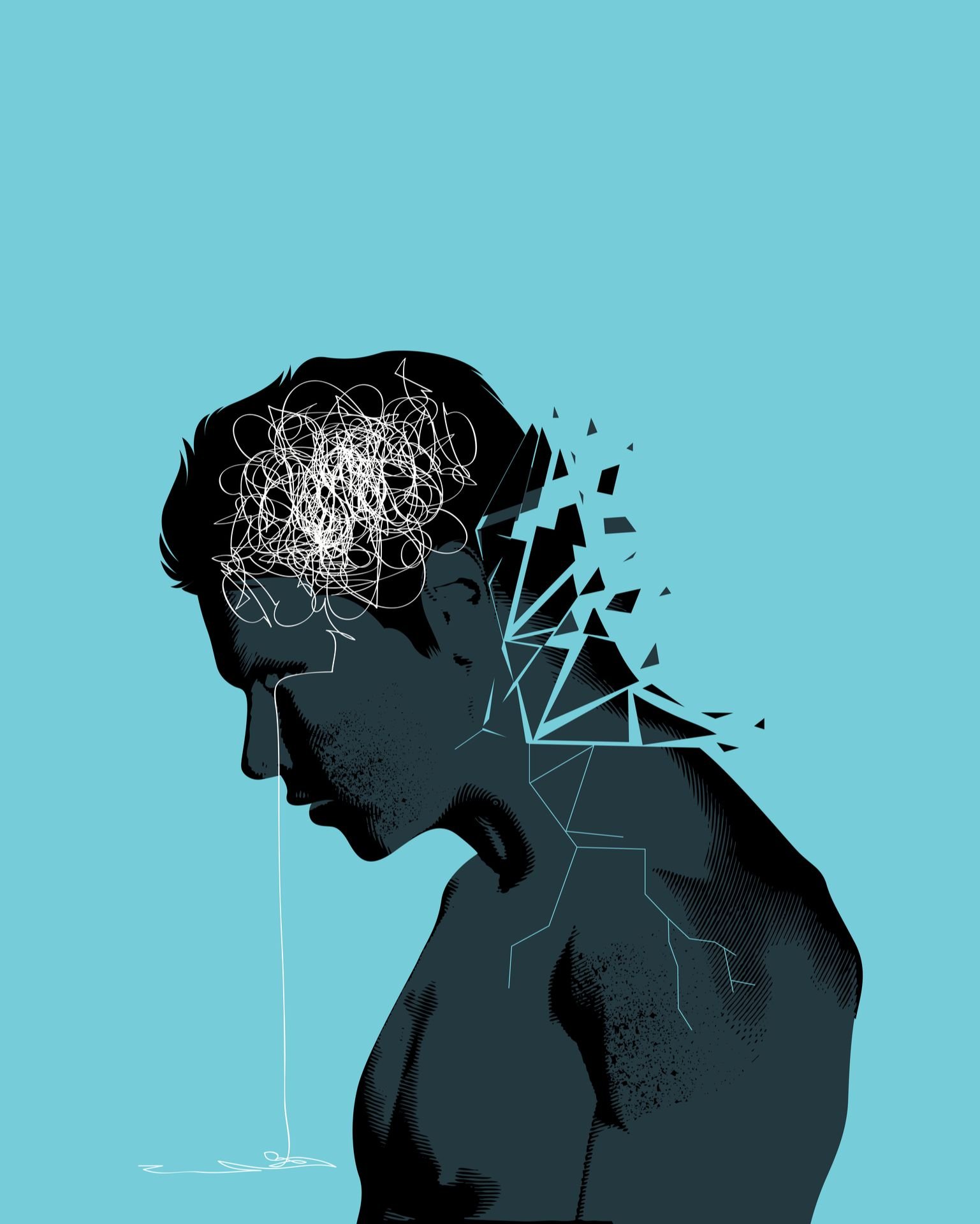
These are the best mental health apps for men who want better focus, less stress, and more control.
Article-At-A-Glance: Best Mental Health Apps for Men in 2026
- Most mental health apps are designed for general audiences — but the ones that actually work for men prioritize low friction, fast results, and science-backed methods over feel-good fluff.
- You don’t need a dozen apps — a focused stack of 2-3 tools targeting your specific pain points (focus, anxiety, sleep, or mood) will outperform any single all-in-one solution.
- BetterHelp and MindShift CBT are among the strongest options for men dealing with anxiety and emotional overload, but there’s a key difference between them most men overlook — covered below.
- Fewer than 5% of mental health apps have been evaluated in peer-reviewed research — knowing which ones are actually evidence-based could save you months of wasted effort.
- The best app is the one you’ll actually open — consistency with a good app will always beat occasional use of a perfect one.
Table of Contents
Men’s mental health is at a breaking point — and the app store is both part of the problem and part of the solution.
The gap between struggling and getting support has never been more dangerous for men. Social expectations, the stigma of asking for help, and plain old busyness mean most men white-knuckle through anxiety, poor focus, bad sleep, and low mood without ever addressing the root cause. Platforms dedicated to men’s mental wellness are stepping in to change that — and the right app, used consistently, can be a genuine turning point.

Most Men Are Struggling… And Most Apps Aren’t Built for Them
Here’s the honest problem with the mental health app market: most of it isn’t designed with men in mind. The color palettes are soft, the language is passive, and the onboarding assumes you already have a meditation practice. For men who are results-driven and skeptical of anything that feels like group therapy, that friction alone is enough to uninstall before the first session ends.
That doesn’t mean the tools don’t work. It means you need to know which ones were built — or at least well-suited — for the way men actually think and operate. The apps on this list were selected based on clinical credibility, ease of daily use, and real-world effectiveness for focus, anxiety, mood, and sleep.
Best Mental Health Apps for Men (Top Picks)
Before diving into individual apps, it helps to think in systems, not single solutions. The most effective approach is what you might call a Mental Clarity Stack — a small, intentional set of tools that each handle one specific job. Here’s how to think about it:
- Focus layer: An app that sharpens concentration during work or deep tasks
- Anxiety/stress layer: A tool that interrupts rumination and resets your nervous system
- Sleep layer: An app that improves the quality and consistency of your recovery
- Support layer: Access to a therapist or structured CBT program when self-help isn’t cutting it
You don’t need to fill every slot right away. Start with whichever layer is costing you the most — whether that’s the 2 a.m. anxiety spiral, the 3 p.m. brain fog, or the motivation that disappeared somewhere around last year. Pick the right tool for that problem first.
With that framework in mind, here are the best mental health apps for men in 2026 — broken down by what they actually do best.
1. Brain.fm — Best for Deep Work and Distraction Control
Brain.fm isn’t a meditation app — it’s a focus engine. Unlike background music or white noise, Brain.fm uses functional music engineered with AI to drive neural phase locking, a process where your brainwaves sync to specific rhythms that promote sustained concentration. The result is that you feel the difference within the first 10 to 15 minutes, which is rare in this category.
If your biggest mental health challenge shows up as an inability to concentrate, constant task-switching, or a brain that won’t shut up during important work, Brain.fm addresses all three without requiring any skill or learning curve. You open it, press play, and work. That low-friction entry point is exactly what makes it stick for men who don’t have patience for onboarding rituals. For more ways to improve your focus, check out these men’s wearable tech options.
2. Inflow — Best for Men with ADHD or Focus Challenges
Inflow is a structured self-management program built specifically for adults with ADHD, and it’s one of the few apps in this space developed with actual clinical input. It uses a cognitive behavioral therapy framework to help users understand how ADHD shows up in their daily life — at work, in relationships, and in their own internal dialogue — and gives practical tools to manage it. Sessions run between 3 and 15 minutes, which works well for the exact demographic it’s designed to help. For those interested in enhancing their concentration further, exploring focus communication improvement techniques can be beneficial.
3. Calm — Best for Daily Reset and Stress Relief
Calm has over 100 million downloads for a reason. While it’s often marketed toward a general audience, its sleep stories, breathing exercises, and guided meditations are genuinely effective for men who need a fast, reliable way to decompress after high-stress days. The Daily Calm feature — a single 10-minute session — is particularly useful as a consistent anchor point, something you can drop into your routine without overthinking it.
4. BetterHelp — Best Online Therapy App for Men
A lot of men know they need real support but never take the first step because traditional therapy feels inaccessible — the commute, the scheduling, the awkwardness of a first session. BetterHelp removes most of that friction. You fill out a short questionnaire, get matched with a licensed therapist, and can communicate via messaging, phone, or video — on your schedule, not theirs. If you’re interested in exploring more options, check out this guide to the best mental health apps.
This matters for men specifically because the flexibility of asynchronous messaging means you don’t have to carve out a full hour or show up somewhere. You can check in between meetings or at 11 p.m. when things get heavy. BetterHelp won’t replace long-term in-person therapy for complex issues, but as an entry point and ongoing support tool, it significantly lowers the bar to getting help.
5. MindShift CBT — Best Free App for Anxiety
App Snapshot: MindShift CBT
Developer: Anxiety Canada
Cost: Free
Best for: Generalized anxiety, social anxiety, panic, perfectionism
Core method: Cognitive Behavioral Therapy (CBT)
Standout features: Thought journal, coping cards, anxiety tracking, tailored anxiety type programs
Platform: iOS and Android
MindShift CBT was developed by Anxiety Canada and is one of the most clinically grounded free tools available. What sets it apart from generic mindfulness apps is that it lets you tailor the experience to your specific type of anxiety — whether that’s social situations, performance pressure, health worries, or generalized overthinking. That specificity matters because the CBT techniques that work for social anxiety aren’t the same ones that address perfectionism-driven burnout.
The coping cards feature is particularly underrated. These are personalized, reusable mental anchors you build during calm moments and pull up when things escalate. For men who tend to hit a wall when anxiety spikes — where logic goes out the window — having a pre-built, personal playbook to follow is surprisingly effective. And the fact that it’s completely free removes every excuse not to try it.
6. ShutEye — Best App for Sleep and Recovery
Sleep is one of the most overlooked variables in men’s mental health, and ShutEye is one of the most complete sleep tools available in app form. It combines a sleep tracker that monitors your cycles using your phone’s microphone and accelerometer, with a library of sleep-inducing audio content — ASMR, white noise, binaural beats, and guided relaxation. The sleep reports it generates give you actual data on how long you’re spending in each sleep phase, which is useful if you’ve ever woken up exhausted after 8 hours and couldn’t understand why. For those interested in wearable tech alternatives, you might explore Oura Ring alternatives to complement your sleep tracking efforts.
7. Daylio — Best Mood Tracker for Men Who Hate Journaling
App Snapshot: Daylio
Cost: Free (Premium ~$3.99/month)
Best for: Mood tracking, pattern recognition, habit building
Core method: Micro-journaling with emoji-based mood logging
Standout features: Activity correlation, mood statistics, streak tracking, no writing required
Platform: iOS and Android
Daylio solves one of the biggest barriers men have with traditional journaling — the blank page. Instead of writing, you tap a mood icon and select what you were doing. That’s it. Over time, Daylio builds a statistical picture of which activities correlate with your best and worst mental states, turning what feels like a passive habit into genuinely useful self-data.
The real value shows up after 2 to 3 weeks of consistent use. You start seeing patterns you’d never catch in real time — that your mood tanks every Sunday evening, or that workouts correlate strongly with your two best days of the week, or that a certain recurring meeting is quietly wrecking your afternoon. That kind of concrete, personal evidence is far more motivating for action than any generic advice.
For men who are data-driven and skeptical of anything that feels soft or abstract, Daylio speaks their language. It turns mental health tracking into something that looks more like performance monitoring — and that reframe alone makes it one of the stickiest tools on this list.
How to Pick the Right App Based on Your Biggest Problem
The worst mistake you can make is downloading five apps at once and using none of them consistently. The goal isn’t to build a comprehensive wellness routine overnight — it’s to identify the single problem costing you the most right now and attack it directly with the right tool.
Think of it this way: a mechanic doesn’t grab every tool in the shop for a single job. They diagnose the problem first, then pick the right instrument. The same logic applies here. Before you download anything, ask yourself which of these four areas is most affecting your daily quality of life — and start there.
If Your Main Issue Is Focus or Distraction

If you’re losing hours to distraction, struggling to finish tasks, or feeling mentally scattered by mid-morning, your focus layer needs the most attention. Brain.fm is the fastest-acting tool in this category — open it, put on headphones, and the engineered audio does the heavy lifting within minutes. For men who suspect ADHD or have already been diagnosed, pairing Brain.fm with Inflow gives you both an in-the-moment focus tool and a longer-term system for rewiring how you manage attention. For more information, check out this guide to the best mental health apps.
One important note: chronic distraction and brain fog are sometimes symptoms of poor sleep rather than a focus problem on their own. If you’re consistently getting less than 6 hours of quality sleep, address that first with ShutEye before assuming focus tools are your primary need.
If Your Main Issue Is Anxiety or Overwhelm

Anxiety in men often doesn’t look like textbook anxiety. It shows up as irritability, overworking, emotional shutdown, or a constant low-grade tension that never fully lifts. The tools that work best here are the ones that give your nervous system a specific, practiced off-ramp — not just something that tells you to breathe and relax.
The most effective pairing for anxiety is MindShift CBT for structured, skills-based intervention and Calm for daily nervous system reset. MindShift teaches you the cognitive mechanics of how anxiety works and gives you tools to interrupt it at the thought level. Calm handles the physiological side — bringing your heart rate and cortisol response down through breath and audio.
- MindShift CBT — use when anxiety is thought-driven, circular, or tied to specific situations
- Calm — use as a daily 10-minute reset, especially post-work or pre-sleep
- BetterHelp — escalate to this when anxiety is affecting your relationships, performance, or physical health
If anxiety is severe or has been persistent for more than a few months, no app replaces a licensed therapist. BetterHelp’s value here is making that step dramatically easier to take.
If Your Main Issue Is Low Mood or Motivation
Low mood and lost motivation are two of the most common — and most underreported — issues men deal with. The challenge is that when motivation disappears, so does the impulse to do anything about it. This is why the tools you choose here need to be the lowest friction options available.
Daylio is the right starting point because it asks almost nothing of you while still building momentum. A 10-second mood log once a day creates a streak, and that streak becomes a small but real anchor of daily intentionality. Over time, the pattern data it generates often surfaces the behavioral changes that make the biggest difference — more than any amount of motivational content ever could. For those looking to enhance their focus further, consider exploring communication improvement techniques that can complement your mood tracking.
If low mood persists beyond a few weeks or begins affecting your ability to function, pair Daylio with BetterHelp. A therapist can help distinguish between situational low mood and clinical depression — a distinction that significantly changes what kind of support you actually need.
If Your Main Issue Is Poor Sleep

Poor sleep is both a mental health symptom and a mental health cause — and it’s the one area where men are most likely to dismiss the impact. Consistently poor sleep degrades emotional regulation, decision-making, testosterone levels, and stress resilience faster than almost any other lifestyle factor.
ShutEye is the primary tool here. Start by running the sleep tracker for a week without changing anything — the data alone will show you exactly where your sleep is breaking down, whether that’s trouble falling asleep, waking in the night, or not reaching deep sleep stages. From there, use the app’s guided wind-down audio to begin building a consistent pre-sleep routine.
If anxiety is driving the sleep issues — the classic can’t-turn-the-brain-off problem — layer in Calm’s sleep stories or body scan meditations as part of that same wind-down routine. The combination of behavioral tracking and nervous system calming addresses both the mechanical and psychological sides of sleep disruption simultaneously.
What Makes a Mental Health App Actually Work for Men

Here’s something worth saying directly: fewer than 5% of mental health apps have been evaluated in peer-reviewed research. That means the majority of what’s in the app store is built on good intentions, decent UX, and marketing — not clinical evidence. Knowing what actually separates effective tools from expensive placebo is important before you invest your time or money.
Two factors consistently separate the apps that create real change from those that get deleted after two weeks — how much effort they require to use daily, and whether their core methods are grounded in established psychological science.
Low Friction and Fast Results Matter Most
The Friction Test: Before committing to any mental health app, ask yourself — “Would I open this at my worst moment?” If the answer requires more than 60 seconds to get to something useful, the friction is too high. The best apps are the ones you’ll actually use when you need them most, not just when you’re already feeling good.
Men are more likely to abandon tools that have long onboarding flows, require daily writing, or don’t show results within the first week. This isn’t a willpower issue — it’s a design issue. The apps that succeed are the ones built around what behavioral scientists call minimum viable behavior: the smallest possible action that still moves the needle.
Daylio’s one-tap mood log, Brain.fm’s instant play button, and Calm’s single daily session all pass this test. They’re designed to deliver something tangible — a feeling of calm, a sharper focus state, a completed habit — within the first few minutes of use. That immediate feedback loop is what builds the consistency that creates long-term change. For those interested in enhancing their focus, exploring men’s wearable tech for sleep and focus might offer additional tools to support these apps.
On the other hand, apps that lead with lengthy assessments, dense educational content, or vague outcomes tend to drop off sharply after the first week. If you’ve ever downloaded a mental health app and stopped using it within 10 days, friction was almost certainly the reason — not lack of motivation.
Science-Backed Methods vs. Feel-Good Fluff
The clinical gold standards in mental health support are Cognitive Behavioral Therapy (CBT), mindfulness-based stress reduction (MBSR), and structured behavioral activation — and the best apps on this list are built around at least one of these. MindShift CBT is the clearest example, using CBT frameworks developed and validated by Anxiety Canada. Inflow applies CBT principles specifically to ADHD self-management. Even Calm’s breathing exercises are grounded in the established science of parasympathetic nervous system activation.
What doesn’t work — regardless of how polished the app looks — is generic positive affirmation content, passive inspirational audio, or mood-boosting features with no behavioral or cognitive mechanism behind them. If an app can’t point to a specific psychological method it’s using, that’s a red flag worth taking seriously. Your time and mental energy are too valuable to spend on tools that make you feel temporarily better without building any real skill or resilience. For those interested in enhancing their focus and mental well-being, exploring options like men’s wearable tech can be beneficial.
When an App Is Not Enough
Apps are tools, not treatments. For men dealing with clinical depression, trauma, active suicidal ideation, substance dependency, or severe anxiety disorders, a well-designed app is not a substitute for professional intervention — and treating it as one can delay care that genuinely saves lives. For those interested in additional support, exploring communication improvement techniques may complement professional care.
The honest line to draw is this: if your mental health challenges are affecting your ability to work, maintain relationships, or get through daily life, you need a licensed professional in your corner — not just a better app. BetterHelp and similar platforms make that first step significantly easier, but they are a bridge to care, not a ceiling. If cost or access is a barrier, organizations like the Substance Abuse and Mental Health Services Administration (SAMHSA) offer free helpline resources at any hour. The National Suicide Prevention Lifeline is reachable by calling or texting 988 — no app required.
The Right App Used Consistently Beats the Perfect App Used Never
Stop searching for the perfect mental health app and start using a good one — today. The research on behavior change is unambiguous: consistency with an imperfect tool beats sporadic use of an ideal one every single time. Pick the app that addresses your most pressing problem right now, commit to using it daily for 30 days, and measure how you feel at the end of that window. That’s the entire strategy. Everything else is procrastination dressed up as optimization. For additional resources on improving your focus, consider exploring focus communication improvement techniques.
Frequently Asked Questions
If you’re still deciding where to start, these are the questions most men ask before committing to their first mental health app — answered directly.
Are mental health apps effective for men specifically?
Mental health apps are effective for men when they meet two conditions: low friction and a clinically grounded method. The research on digital mental health tools shows meaningful benefit for anxiety, mood, and stress management — particularly when the app uses CBT, mindfulness-based stress reduction, or structured behavioral techniques.
The challenge isn’t effectiveness — it’s fit. Many apps are designed for a general audience that skews toward users already comfortable with emotional self-reflection. Men who are newer to that process, or who are results-driven and skeptical of anything abstract, need apps that speak their language. That’s why tools like Daylio, Brain.fm, and MindShift CBT consistently outperform more generic wellness apps for male users — they deliver measurable, concrete outcomes rather than vague encouragement.
| App | Best For | Method | Cost | Friction Level |
|---|---|---|---|---|
| Brain.fm | Focus & deep work | Neural phase locking audio | Subscription | Very Low |
| Inflow | ADHD self-management | CBT-based program | Subscription | Low |
| Calm | Stress relief & sleep | Mindfulness / MBSR | Free + Premium | Very Low |
| BetterHelp | Online therapy access | Licensed therapist matching | Subscription | Low |
| MindShift CBT | Anxiety management | Cognitive Behavioral Therapy | Free | Low |
| ShutEye | Sleep tracking & recovery | Sleep cycle monitoring + audio | Free + Premium | Very Low |
| Daylio | Mood tracking | Micro-journaling / behavioral data | Free + Premium | Very Low |
The bottom line: yes, mental health apps work for men — but only when you pick the right one for the right problem and actually use it. The tool is only as effective as the consistency behind it. For those interested in optimizing their mental health and focus, exploring wearable tech for sleep and focus can be a beneficial addition.
Can I use multiple mental health apps at the same time?
Yes — but be strategic about it. The Mental Clarity Stack approach covered earlier works well precisely because each app handles one specific layer: focus, anxiety, sleep, or mood. Where men run into trouble is downloading five apps at once, spreading their attention thin, and building consistency with none of them. A smarter approach is to start with one app for 30 days, lock in the habit, then add a second tool that addresses a different need. Two apps used consistently will always outperform six apps used randomly. For those interested in integrating wearable tech to enhance their mental health regimen, explore these men’s wearable tech options that focus on sleep and concentration.
What is the best free mental health app for men in 2026?
MindShift CBT is the strongest completely free option available right now. Developed by Anxiety Canada, it uses evidence-based CBT techniques, allows you to tailor the experience to your specific type of anxiety, includes a thought journal and coping cards, and costs absolutely nothing. Daylio is a close second for men whose primary need is mood tracking and behavioral pattern recognition — the free version covers everything you need to build a meaningful habit. Both apps deliver clinical-grade utility without a paywall, which makes them the logical starting point for anyone not yet ready to invest in a subscription tool.
Do mental health apps replace therapy?
No. Mental health apps do not replace therapy — and any app that implies otherwise is overselling its capabilities. What the best apps do is lower the barrier to daily mental health practice, build skills between therapy sessions, and make professional support more accessible through platforms like BetterHelp. For mild to moderate stress, anxiety, or mood challenges, a well-chosen app can produce real, measurable improvement. For clinical conditions — depression, trauma, OCD, personality disorders, addiction — professional therapeutic care is essential, and apps function best as a complement to that care, not a replacement for it.
How long before a mental health app starts working?
It depends on the app and the problem it’s addressing. Brain.fm produces a noticeable shift in focus within 10 to 15 minutes of the first session — the effect is immediate and functional. Calm’s breathing exercises activate the parasympathetic nervous system within a single session, so you’ll feel something the first time you use it properly.
Longer-term tools like MindShift CBT and Inflow require more investment before the benefits compound. With consistent daily use, most men report meaningful reductions in anxiety symptoms and improved cognitive management within 3 to 4 weeks. The CBT skill-building process isn’t instant — it requires repetition to rewire habitual thought patterns — but the change it produces is more durable than any quick-fix tool.
Daylio works on a different timeline altogether. The mood tracking itself starts immediately, but the insight — the moment you see a clear pattern in your own behavioral data — typically emerges around the 2 to 3 week mark. That’s when the app shifts from feeling like a minor daily habit to actually influencing decisions, similar to how wearable tech can enhance focus.
The honest expectation for any mental health app is this: give it 30 days of consistent daily use before evaluating whether it’s working. One week isn’t enough data. Two weeks is borderline. Thirty days gives you a real picture of both the tool’s effectiveness and your own engagement with it — and that’s the only honest basis for deciding whether to continue, switch, or escalate to professional support. For more information, you can explore some of the best mental health apps available today.
Explore dedicated men’s mental health resources to find the right support structure — whether that’s an app, a therapist, or both working together to move you forward.
BestProductsForMen.org participates in affiliate programs, which means we may earn a commission if you click on a link and make a purchase. This comes at no additional cost to you. We only recommend products we personally trust, use, or believe will provide value to our readers.
Our goal is to provide honest, helpful reviews and recommendations so you can make informed decisions.
Leave a Reply